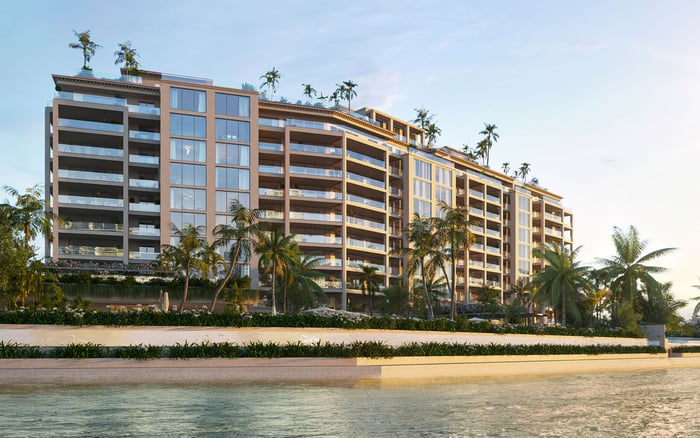
On Fisher Island, convenience is defined by controlled access, short internal routes, and the privileges attached to club membership. Buyers should evaluate the residence, ferry routine, amenity map, and dining access as one integrated ownership proposition.
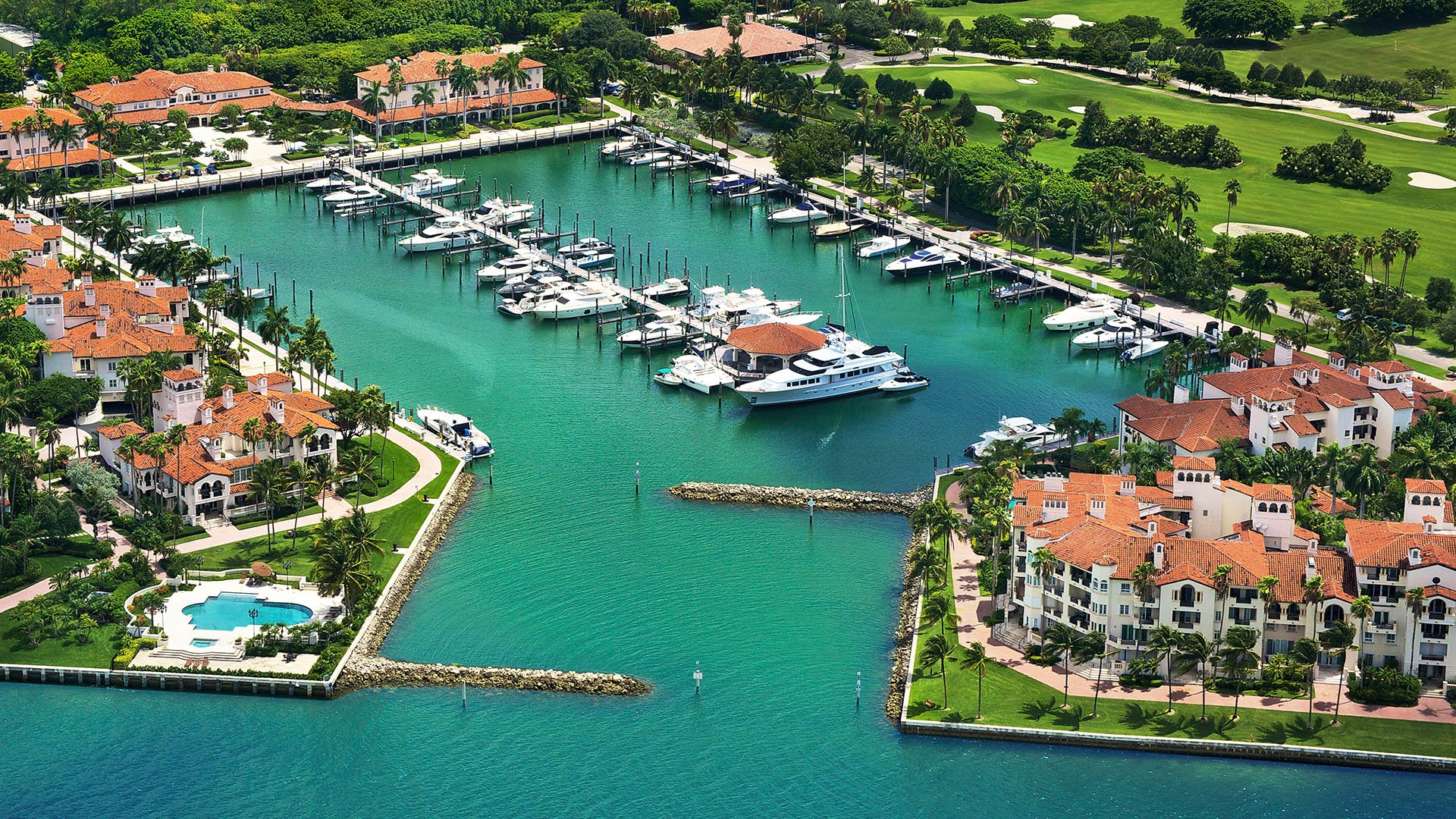
Fisher Island offers a form of privacy that directly shapes daily life. The 216-acre private island has no public road or bridge connecting it to the mainland. Residents ordinarily arrive by private ferry, with private yacht, helicopter, and seaplane access providing alternatives. The ferry operates 24 hours a day, with service approximately every 10 minutes for residents and pre-approved guests.
That framework is more than logistical; it is central to the value proposition. Every off-island dinner, school run, appointment, or shopping trip requires controlled transportation. For one household, that separation may represent the ultimate South Florida luxury. For another, it may introduce friction into an otherwise polished routine. The essential question is whether the island’s privacy complements the way an owner actually lives.
Walkability on Fisher Island does not mean stepping onto a public avenue lined with cafés and shops. It describes short internal journeys on foot or by golf cart among residences, the ferry landing, club facilities, beach, dining venues, and marinas. Conventional neighborhood walk scores reveal little about this private resort ecosystem.
Buyers should map each route rather than rely on a broad impression of proximity. Time the journey from the lobby or front door to the ferry, Beach Club, Vanderbilt Mansion, spa, children’s facilities, and preferred restaurants. Golf-cart circulation matters as much as pedestrian distance, particularly for households carrying sports equipment, beach belongings, or young children.
This is where two otherwise comparable properties can produce distinctly different lifestyle experiences. A residence close to the amenity core may encourage spontaneous use, while a more removed position may suit an owner who prioritizes residential separation. Neither is inherently superior. The better choice depends on routine.
Physical proximity does not guarantee access. Buyers should not assume that purchasing a residence automatically conveys full Fisher Island Club privileges. Membership status, approval, costs, waiting periods, guest policies, and current terms require separate written verification.
This distinction can materially alter the ownership equation because many desirable destinations are club-controlled. Membership can provide access to golf, extensive racquet facilities, restaurants, spa and wellness amenities, the private Beach Club, the Vanderbilt Mansion pool, children’s programming, member events, and two marinas. The sports offering includes a P.B. Dye-designed nine-hole course, 16 tennis courts, five pickleball courts, and two padel courts.
For buyers who expect recreation to shape both the day and the social calendar, club access is not a secondary amenity. It is part of the residence’s functional plan.
Private club dining allows members to remain on-island for casual and formal meals rather than arranging a ferry trip to Miami Beach or the mainland. Options include Porto Cervo for Italian cuisine, City View Cafe in the Vanderbilt Mansion, and a formal steakhouse within the mansion.
The practical benefit extends beyond restaurant choice. On-island dining can simplify an unplanned lunch, family evening, or hosted meal, subject to current membership, reservation, and guest rules. Buyers who entertain frequently should confirm how guests are cleared, which venues they may use, and whether advance coordination suits their preferred style of hosting.
A useful comparison begins with real routes. Buyers considering Palazzo del Sol or Palazzo della Luna can assess each candidate by the actual travel time to the places they expect to use most, rather than treating the island as a single point on a map.
The same discipline applies when reviewing The Links Estates at Fisher Island and The Residences at Six Fisher Island. The goal is not to infer superiority from a project name or general location. It is to test how a specific home connects with the ferry, waterfront recreation, preferred club venues, and household schedules.
For a second-home buyer, occasional access friction may feel negligible. A full-time household with recurring mainland commitments may reach a different conclusion. Marina access can be especially relevant to boating-oriented owners seeking to combine residence, slip, dining, wellness, and recreation within one controlled setting.
Visit at the times that matter: weekday rush periods, school-run hours, evenings, and weekends. Test the complete ferry process, not merely the crossing. Ask how residents coordinate security clearance for family, friends, contractors, and service providers. Then drive or walk the actual internal routes under realistic conditions.
Request written confirmation of club initiation costs, annual dues, approval requirements, waiting periods, guest policies, and whether any membership interest transfers with the residence. Also verify current access to every amenity important to the household.
On-island services, including a market, bank, post office, fire-rescue resources, and medical support, can reduce mainland errands but cannot eliminate them. The strongest purchase decision therefore weighs architecture and views alongside access, membership, mobility, dining, and the cadence of everyday life.
Is Fisher Island walkable in the conventional urban sense? No. Walkability primarily concerns short internal trips on foot or by golf cart, not access to mainland streets and businesses.
Is there a public road or bridge to Fisher Island? No. Mainland access requires the private ferry or another controlled mode of transportation.
How frequently does the ferry operate? It operates 24 hours a day, with service approximately every 10 minutes for residents and pre-approved guests.
Do guests need advance clearance? Yes. Owners should coordinate security access for visitors, contractors, and service providers before arrival.
Does buying a residence automatically include full club membership? Buyers should not assume it does. Membership status, approval, costs, and current terms must be verified separately.
What can club membership provide access to? Privileges can include dining, golf, racquet facilities, wellness amenities, marinas, the Beach Club, children’s facilities, and member events.
Why does dining access matter to ownership? Club dining can reduce the need to leave the island for meals, making everyday and hosted occasions more convenient.
What should boating-oriented buyers verify? They should confirm current marina arrangements, access terms, and the route between a shortlisted residence and the island’s two deep-water marinas.
Can on-island services eliminate mainland errands? No. The available market, bank, post office, emergency resources, and medical support reduce some trips but do not eliminate off-island needs.
What is the most useful pre-purchase test? Experience ferry access and internal routes at the hours your household is most likely to travel.
For a confidential assessment and a building-by-building shortlist, connect with MILLION.
If branded residences are on your mind — as a home or as an allocation — we would be glad to share what we are seeing, privately.
Begin a quiet conversation