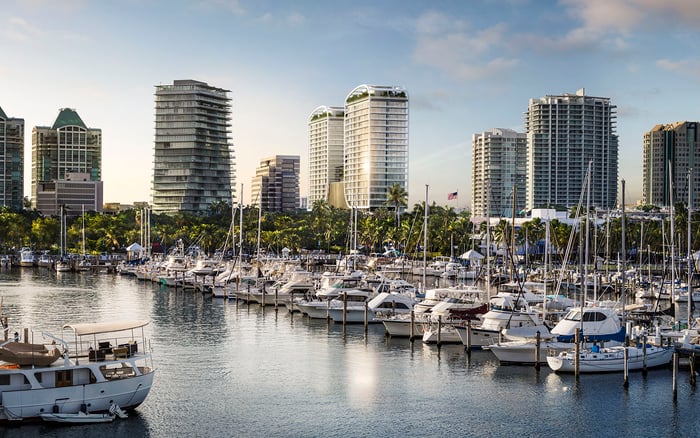
A disciplined review of reserve funding can reveal whether a Coconut Grove condominium is meeting future capital needs through predictable contributions or shifting costs to owners through assessments and debt.

In Coconut Grove, a condominium purchase is often evaluated through architecture, views, privacy, service and access to the bay. The association’s capital plan deserves equal scrutiny. Reserve funding determines how major shared components will be paid for, when owners may face additional demands and whether a polished property is supported by equally disciplined financial stewardship.
Florida law permits required structural reserves to be funded through regular assessments, special assessments, lines of credit or loans. Each method can be legitimate. The buyer’s task is not to favor cash over borrowing in every instance, but to understand why a method was selected, whether it aligns with the building’s latest structural plan and what obligation will attach to the unit after closing.
This inquiry applies across established resale opportunities and newer searches that may include Park Grove Coconut Grove or Four Seasons Residences Coconut Grove. Building age may change the questions, but it does not eliminate the need to review budgets, governing decisions and future capital obligations.
A large reserve balance matters only when measured against the building’s documented needs.
Structural integrity reserve study requirements generally apply to condominium buildings with three or more habitable stories. A SIRS addresses major shared components, including roofs, load-bearing walls, waterproofing, plumbing and fire-protection systems. By estimating remaining useful lives and replacement costs, it creates a baseline against which the association’s funding can be tested. An applicable building requires a new study at least once every 10 years.
Place the latest SIRS beside the current reserve schedule and annual budget. Confirm that planned contributions, component balances and timing align. A large cash balance alone does not establish adequacy, just as a low monthly condominium fee does not necessarily demonstrate efficiency. Low recurring charges may instead reflect insufficient reserve contributions.
Milestone timing warrants separate verification. Inspections generally begin at 30 years, or at 25 years for qualifying coastal buildings. A waterfront address or proximity to Biscayne Bay should not be treated as proof that the coastal schedule applies. Request the building’s actual determination and milestone-inspection documentation.
The initial SIRS deadline was extended from 2024 to 2025, with limited additional delay provisions tied to milestone inspections. Buyers should verify completion and status rather than rely on assumptions about a building’s compliance calendar.
Regular assessments incorporate reserve contributions into the annual budget and collect them through recurring owner payments. This structure offers the greatest predictability for household cash flow, provided the amount follows the SIRS plan and adjusts as capital needs change.
A special assessment is typically a targeted, one-time or limited-duration charge intended to address a reserve shortfall or specific capital project. It can meet an immediate need, but repeated special assessments may signal historic underfunding or deferred work. Determine the total amount, installment schedule, purpose, collection status and share allocated to the unit under consideration.
A line of credit can provide flexibility when timing is uncertain, while a loan can spread a defined obligation over a longer period. Both replace an immediate cash call with debt service and financing costs. If borrowing is used to remedy underfunded structural reserves, it must account for the cumulative previously waived or unfunded amount rather than an arbitrary portion of the gap.
For buyers comparing Vita at Grove Isle with other Coconut Grove options, the meaningful comparison is not monthly fees alone. It is the total expected cost of ownership, including regular contributions, approved assessments, debt service and reasonably visible capital demands.
Using a special assessment, line of credit or loan to fund required reserves requires approval by a majority of the association’s total voting interests. That threshold is not merely a majority of owners attending a meeting. Low participation or contentious governance can delay action and potentially increase the eventual cost of repairs.
Review the notices, ballots and minutes surrounding any funding decision. Confirm the vote count, authorization, purpose and implementation. If a special assessment, credit line or loan was approved after the existing SIRS was prepared, the study must be updated to reflect the revised funding method. An update may also be required before budget adoption when proposed funding does not align with the latest SIRS plan.
Florida’s reforms removed annual owner votes to waive funding for structural-integrity reserve items covered by SIRS requirements. A narrower temporary provision remains for qualifying associations. For budgets adopted on or before December 31, 2028, majority-owner approval may pause or reduce reserve contributions for up to two consecutive annual budgets while the association pays for repairs recommended by a recent milestone inspection. A new SIRS is required before regular contributions resume.
When an association has borrowed, request the outstanding balance, interest rate, maturity date, repayment source and the unit’s allocated share of debt service. Determine whether the rate is fixed or variable only if the loan documents provide that distinction, and review any collateral or collection mechanism described in those documents.
The purchase contract should clearly assign responsibility for an existing special assessment. Establish whether the seller will pay the balance, installments will remain with the unit or another allocation has been negotiated. This is a transaction-specific legal and financial question, not a detail to resolve after closing.
Investment analysis should test more than today’s carrying cost. Model the recurring fee alongside known assessment installments and debt service. If refinancing, maturity or a major component project is approaching, ask qualified advisers to evaluate how those events may affect liquidity and resale positioning. A refined residence can still carry a complex association balance sheet.
Request the latest SIRS, milestone-inspection report, reserve schedule, annual budget, financial statements, meeting minutes and notices of pending assessments. When available, review five to 10 years of budgets, assessment notices and minutes. The objective is to identify patterns: recurring shortfalls, delayed projects, failed votes, repeated emergency funding or a consistent record of planned contributions.
Buildings with extensive deferred maintenance may have little practical choice but to use a special assessment, borrowing or both after inspections identify required work. That does not automatically make a purchase unsuitable. It does mean the price, contract terms and liquidity plan should reflect the obligation’s scale and timing.
The same discipline applies when considering boutique options such as The Well Coconut Grove. The central principle remains consistent: governance quality is visible when engineering needs, budgets, votes and collections tell the same story.
Before the inspection period ends, create a concise written schedule of the building’s known capital needs, present reserve balance, annual contribution, approved special assessments and outstanding debt. Reconcile that schedule with the latest SIRS and milestone findings. Resolve any mismatch through documents and qualified legal, engineering or financial advice.
For a discreet review of Coconut Grove residences and their ownership considerations, connect with MILLION.
If branded residences are on your mind — as a home or as an allocation — we would be glad to share what we are seeing, privately.
Begin a quiet conversationRequired structural reserves may be funded through regular assessments, special assessments, lines of credit or loans.
Reserve contributions are incorporated into the annual budget and collected through owners’ recurring payments.
It is generally a targeted one-time or limited-duration owner charge used for a reserve shortfall or specific capital project.
Approval requires a majority of the association’s total voting interests, not simply a majority attending a meeting.
The requirement generally applies to condominium buildings with three or more habitable stories.
A new structural integrity reserve study is required at least once every 10 years.
No. Buyers should verify whether the building legally qualifies for the coastal schedule rather than relying on proximity to Biscayne Bay.
Review the outstanding balance, interest rate, maturity date, repayment source and the unit’s allocated share of debt service.
For qualifying budgets adopted on or before December 31, 2028, majority-owner approval may allow a pause or reduction for up to two consecutive annual budgets while specified repairs are funded.
Request the latest SIRS, milestone report, reserve schedule, budget, financial statements, meeting minutes and notices of pending assessments.