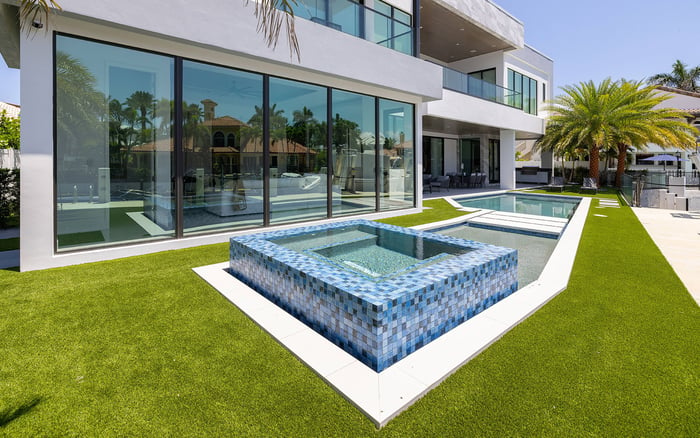
A Boca Raton waterfront address is only one part of the boating equation. Buyers should test the complete route, vessel fit, dock rights, operating constraints, and marina alternatives before assigning a premium to marine access.
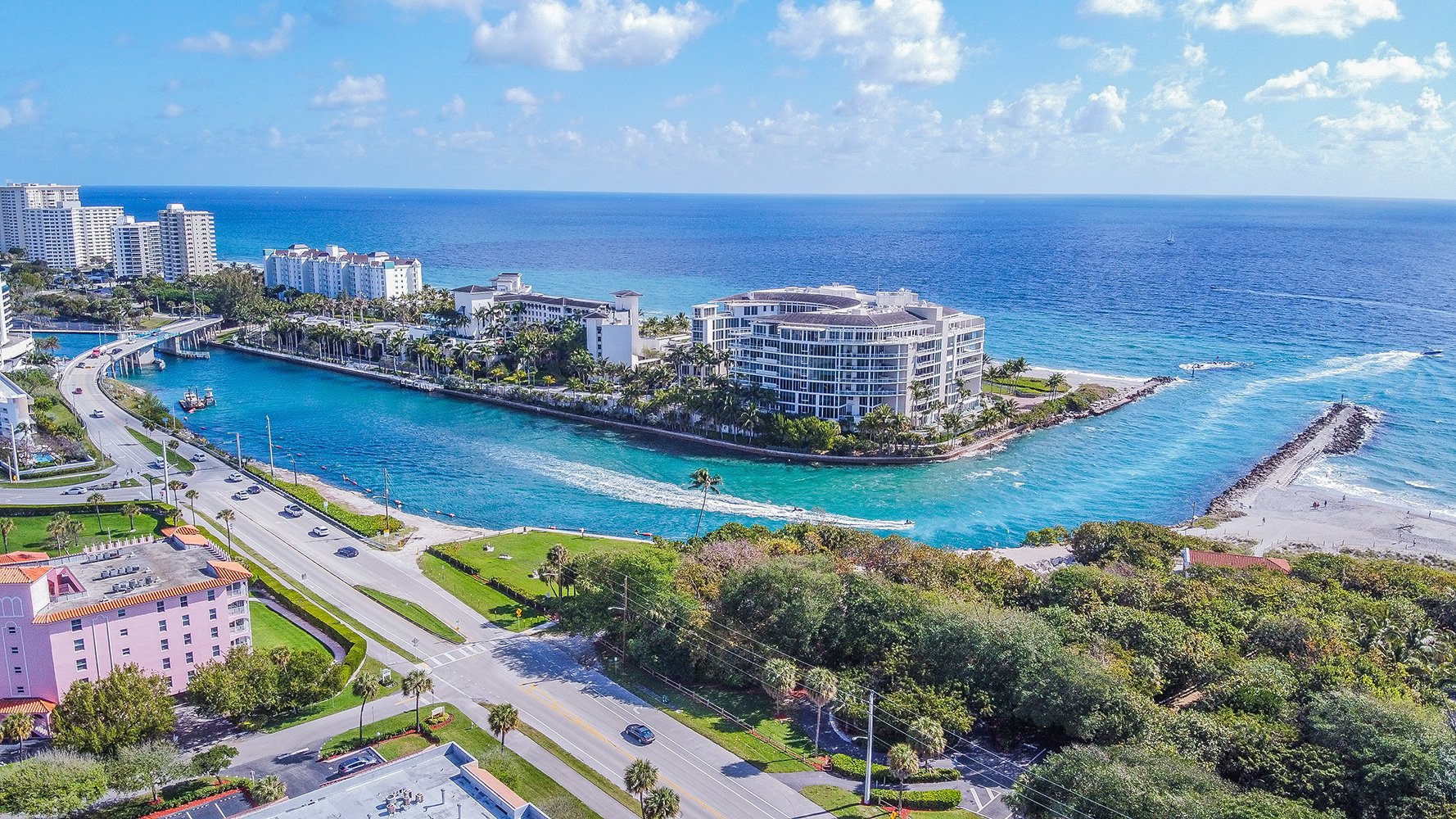
In Boca Raton, a water view and practical boating access are not interchangeable. A residence may present beautifully from the terrace, while the route from dock to open cruising water introduces constraints that matter every weekend. For a buyer arriving with a yacht, planning a future purchase, or simply valuing spontaneous days on the water, the marine component warrants its own due-diligence track.
The central question is not merely whether a property is waterfront. It is whether the entire ownership experience suits the intended vessel, preferred cruising habits, crew arrangements, and tolerance for operational friction. This distinction is fundamental: marine utility can shape enjoyment, carrying costs, future flexibility, and the logic of the purchase price.
Begin at the exact berth and follow the anticipated route outward. Identify every potential constraint, including bridge passages, turning areas, narrow segments, and any location where depth may require closer evaluation. The analysis should also cover the return trip, particularly if arrival timing or vessel handling could become inconvenient.
A useful review separates four concepts that are often conflated: physical access, navigational practicality, legal permission, and day-to-day convenience. A route may appear possible on paper yet prove mismatched with the owner’s preferred schedule or comfort level. Conversely, a property without private dockage may still support an elegant boating lifestyle when paired with a well-suited marina arrangement.
The buyer, captain, marine surveyor, and real-estate adviser should each assess the route from a distinct perspective. The objective is not to label access as good or bad, but to determine whether it fits this owner and this vessel.
Bridge clearance should never rest on a casual visual estimate. The relevant comparison is between the vessel’s actual vertical profile and the usable clearance along the intended route, with an appropriate safety margin determined by qualified marine professionals.
Buyers should document the yacht’s full height configuration, including any equipment or components that may affect passage. They should also establish whether a bridge-opening process, operating schedule, or advance coordination could shape departure plans. Without verified measurements and current operating information, broad assurances such as “boats pass here” offer little decision value.
This is especially important for a buyer who expects to change vessels. A residence that suits today’s boat may narrow tomorrow’s options. Future boating ambitions therefore belong in the investment analysis, even when the immediate purchase is primarily lifestyle driven.
Dockage language can conceal materially different arrangements. A boat slip might be part of the conveyed real estate, assigned under community rules, licensed for use, leased separately, or subject to another form of control. Buyers should have counsel establish precisely what transfers, for how long, and under which documents.
Physical fit demands equal attention. Length alone is insufficient. A professional should review berth dimensions, approach geometry, depth, pilings, lift configuration if relevant, utility connections, and the vessel’s maneuvering needs. The assessment should also determine whether alterations, repairs, or replacement work would require approvals.
Operating details matter after closing. Establish who maintains the dock structure and surrounding areas, who is responsible for damage, which insurance provisions apply, and whether contractors or crew face access rules. These questions turn an attractive amenity into a clearly defined ownership obligation.
Private dockage offers immediacy, but it is not the only refined solution. Marina-based ownership can separate the residential decision from the vessel’s technical requirements. It may also allow a buyer to prioritize architecture, service, privacy, or a preferred neighborhood rather than forcing every criterion into a single parcel.
The comparison should focus on the total experience, not berth cost alone. Consider travel time between home and vessel, parking, guest arrival, provisioning, crew access, security, service coordination, and the practical certainty of the arrangement. Availability and terms should be confirmed directly before a marina solution factors into the purchase decision.
A disciplined search examines boating logistics alongside, rather than ahead of, residential quality. Buyers comparing Glass House Boca Raton and Alina Residences Boca Raton should define separately how each prospective home and the intended vessel would function together.
The same framework applies when considering The Residences at Mandarin Oriental Boca Raton or Mr. C Residences Boca Raton. Evaluate the residence for design, privacy, service, and daily life, while testing the boating plan for berth security, route compatibility, and ease of use. Keeping the two analyses distinct often produces a clearer decision.
Before committing, assemble a vessel profile and a written list of nonnegotiables. Include the intended boat dimensions, preferred departure patterns, crew needs, service expectations, and likelihood of changing yachts. Then request the documents and professional inspections necessary to evaluate dock rights, physical conditions, route constraints, insurance implications, and any approval process.
Marine assumptions should be resolved during the appropriate diligence period and reflected in contract advice from qualified counsel. If an element cannot be verified, treat it as unresolved rather than converting it into an implied promise. The most successful purchase is not necessarily the property closest to the water. It is the one where residence, vessel, access, and ownership structure align with minimal compromise.
Does a water view guarantee practical boating access? No. The berth, route, vessel profile, permissions, and operating conditions require separate review.
What vessel information should a buyer prepare first? Record the boat’s relevant dimensions, configuration, maneuvering needs, utilities, and service requirements.
Why is bridge clearance vessel specific? Different vessels have different vertical profiles, so generalized assurances cannot establish safe passage.
Should future yacht plans affect the property search? Yes. A route or berth suited to today’s vessel may not suit a later one.
Is a boat slip always conveyed with the residence? Not necessarily. Counsel should verify its ownership, assignment, lease terms, transferability, and governing documents.
What should be inspected at a private dock? Qualified professionals should assess dimensions, condition, access geometry, depth, utilities, and relevant structures.
Can marina dockage substitute for a private dock? It can, provided availability, terms, vessel compatibility, and daily logistics are independently confirmed.
Who should participate in marine due diligence? The buyer may need counsel, a captain, marine specialists, insurance advisers, and real-estate representation.
When should marine questions be resolved? Resolve them within the applicable diligence timeline and before relying on access in the valuation.
What is the clearest way to compare two properties? Score residential quality and boating utility separately, then evaluate the combined ownership experience.
To compare the best-fit options with clarity, connect with MILLION.
If branded residences are on your mind — as a home or as an allocation — we would be glad to share what we are seeing, privately.
Begin a quiet conversation