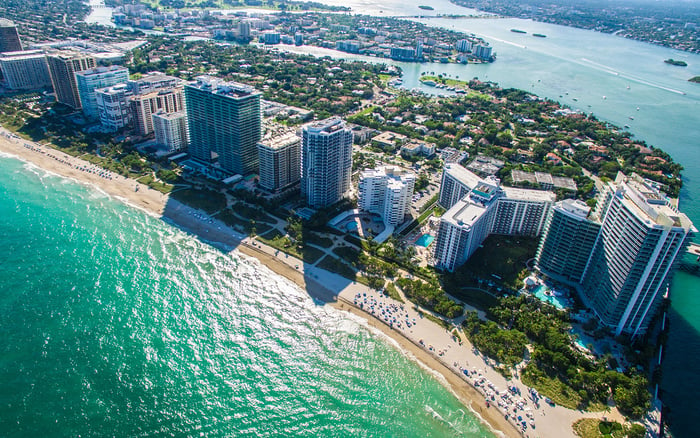
For a Bal Harbour buyer, service continuity and storm preparation can matter as much as finishes. This guide frames the documents, staffing questions, lock-up responsibilities, cost exposures, and decision points to examine before contract.

A residence can be beautifully finished and impeccably located yet still prove demanding when its owner is away. In Bal Harbour, the practical ownership equation extends beyond acquisition price, monthly charges, and interiors. It also encompasses who is present when occupancy thins, who can enter the residence before severe weather, and what happens when a building shifts from routine service to storm preparation.
This matters most to the second-home buyer. A polished arrival experience may reveal little about a building's ability to manage an extended absence. Before signing, buyers should treat staffing continuity and storm lock-up as distinct due-diligence subjects, each requiring written answers rather than assumptions.
A staffing schedule observed during a busy week is only a snapshot. Ask management whether front-desk coverage, valet operations, engineering availability, housekeeping coordination, receiving, and supervisory presence change at any point during the year. The relevant question is not simply whether a service is offered, but whether its hours, response times, or personnel vary.
Request a current staffing chart and written service schedule, then ask how vacancies, holidays, and severe-weather preparation are handled. Determine whether overnight incidents reach an employee on site, an on-call manager, a security contractor, or an outside vendor. Each model can function well, but the escalation path should be explicit.
This operational review belongs alongside the architectural comparison. Buyers considering Oceana Bal Harbour and Rivage Bal Harbour should ask the same disciplined questions of each property rather than presume that similarly positioned residences follow identical protocols.
“Storm preparation” is too broad to evaluate. Translate it into a room-by-room, task-by-task matrix. For the terrace, ask who moves furniture, planters, sculptures, grills, and loose accessories. For glazing and doors, confirm who checks closure, whether any protective system requires manual deployment, and whether management will enter the unit to complete that work.
Inside, clarify responsibility for water shutoff, appliance settings, refrigeration, electronics, art protection, window treatments, leak sensors, and climate controls. If an owner closet, staff suite, storage room, or private elevator vestibule is involved, include it explicitly. Do not assume a building-wide plan covers privately owned spaces or personal property.
The matrix should identify the responsible party, required authorization, trigger for action, completion deadline, documentation method, and cost. It should also address what happens if the designated vendor cannot arrive or the owner has not responded.
Even a capable team cannot prepare a residence without authority and access. Review the association's rules for unit entry, emergency entry, key custody, alarm codes, elevator controls, vendor registration, and owner notification. Ask whether standing authorization is permitted or approval must be renewed for each event.
A buyer should also understand whether personal staff or a home-management firm can work during building preparation. Access may become more controlled as conditions change. Written instructions should identify primary and backup contacts, including someone authorized to approve work and expenses if the owner is unreachable.
For buyers comparing Bal Harbour with nearby waterfront choices such as Fendi Château Residences Surfside or Bay Harbor Towers, the same access audit creates a more meaningful comparison than a simple amenities checklist.
Ownership costs extend beyond regular assessments. If building personnel do not handle private-unit preparation, the owner may need a home manager, insured storm vendor, art handler, specialty installer, or post-event inspector. Ask which services are included, which are billed separately, and whether emergency rates or minimum charges apply.
Review the governing documents, current budget, service agreements available for inspection, and any owner-facing fee schedule. Then model a conservative annual allowance for private oversight, preventive visits, storm preparation, reopening, and travel disruption. An oceanfront residence that requires independent coverage may still be the right choice, but its service profile should be reflected in the investment analysis.
Insurance review belongs in the same conversation. Building obligations, association coverage, unit-owner coverage, and vendor liability are distinct questions. A qualified insurance adviser and Florida condominium counsel can help identify gaps between the operational plan and the policies expected to respond.
Preparation is only half of resilience. Ask how management communicates after an event, who performs common-area inspections, when private vendors may return, and how owners receive updates about access, utilities, elevators, water intrusion, or remediation. Request the preferred communication channels and the process for updating contact details.
For the residence itself, establish a documented reopening protocol. It can include a visual inspection, moisture checks, photographs, temperature review, plumbing verification, terrace reset, and confirmation that protective systems have been removed correctly. The goal is not merely to reopen the door, but to create an auditable handoff from secured residence to normal use.
A full-time resident, frequent traveler, and seasonal owner may value the same building differently. The right service model depends on absence patterns, terrace contents, art and wine collections, household staffing, tolerance for vendor coordination, and the speed with which the owner expects the home to be ready.
Before closing, make operational representations part of the diligence record. Obtain written policies, identify provisions management can change, and distinguish contractual obligations from customary courtesies. For a resale purchase, ask the seller how the residence has actually been managed during absences, then verify the applicable rules independently.
The most discreet luxury is continuity. A building that aligns authority, staffing, communication, and private-unit care can make ownership feel composed even when the owner is elsewhere.
Do Bal Harbour buildings keep identical staffing throughout the year? Staffing practices differ by property and may change, so buyers should request current schedules and escalation procedures in writing.
What is a storm lock-up plan? It is a written allocation of preparation, access, communication, and reopening tasks for the residence and its private exterior areas.
Will management move terrace furniture for an owner? Do not assume so. Confirm whether the service is included, separately billed, vendor-provided, or entirely the owner's responsibility.
Should a buyer provide standing entry authorization? Ask counsel and management whether it is permitted and appropriate, then define its scope, duration, notification rules, and spending authority.
What documents deserve review before contract? Focus on governing documents, budgets, service schedules, entry rules, emergency procedures, fee schedules, and relevant insurance materials.
Is an on-call manager equivalent to on-site coverage? Not necessarily. Ask where the person is located, how contact is initiated, and what response obligations apply.
Who should inspect the unit after severe weather? The plan should name a qualified primary contact and backup, with clear access rights and a documented inspection checklist.
How should seasonal service costs be compared? Add private management, preparation, inspections, reopening, specialist vendors, and potential emergency charges to the annual ownership model.
Can building storm policies change after purchase? Policies and service practices may change subject to governing authority, so distinguish durable obligations from current operating customs.
What is the best final diligence question? Ask who will perform each task, under what authority, by what deadline, at whose cost, and how completion will be documented.
To compare the best-fit options with clarity, connect with MILLION.
If branded residences are on your mind — as a home or as an allocation — we would be glad to share what we are seeing, privately.
Begin a quiet conversation