For art collectors considering Waldorf Astoria Residences Pompano Beach, private-elevator access is only the beginning. Delivery routes, structural capacity and installation permissions deserve residence-specific review before a purchase decision.
A remarkable residence should accommodate the way its owner lives, including the art that makes it personal. At Waldorf Astoria Residences Pompano Beach, collectors should distinguish an elegant arrival from the practical requirements of moving, supporting and installing important works.
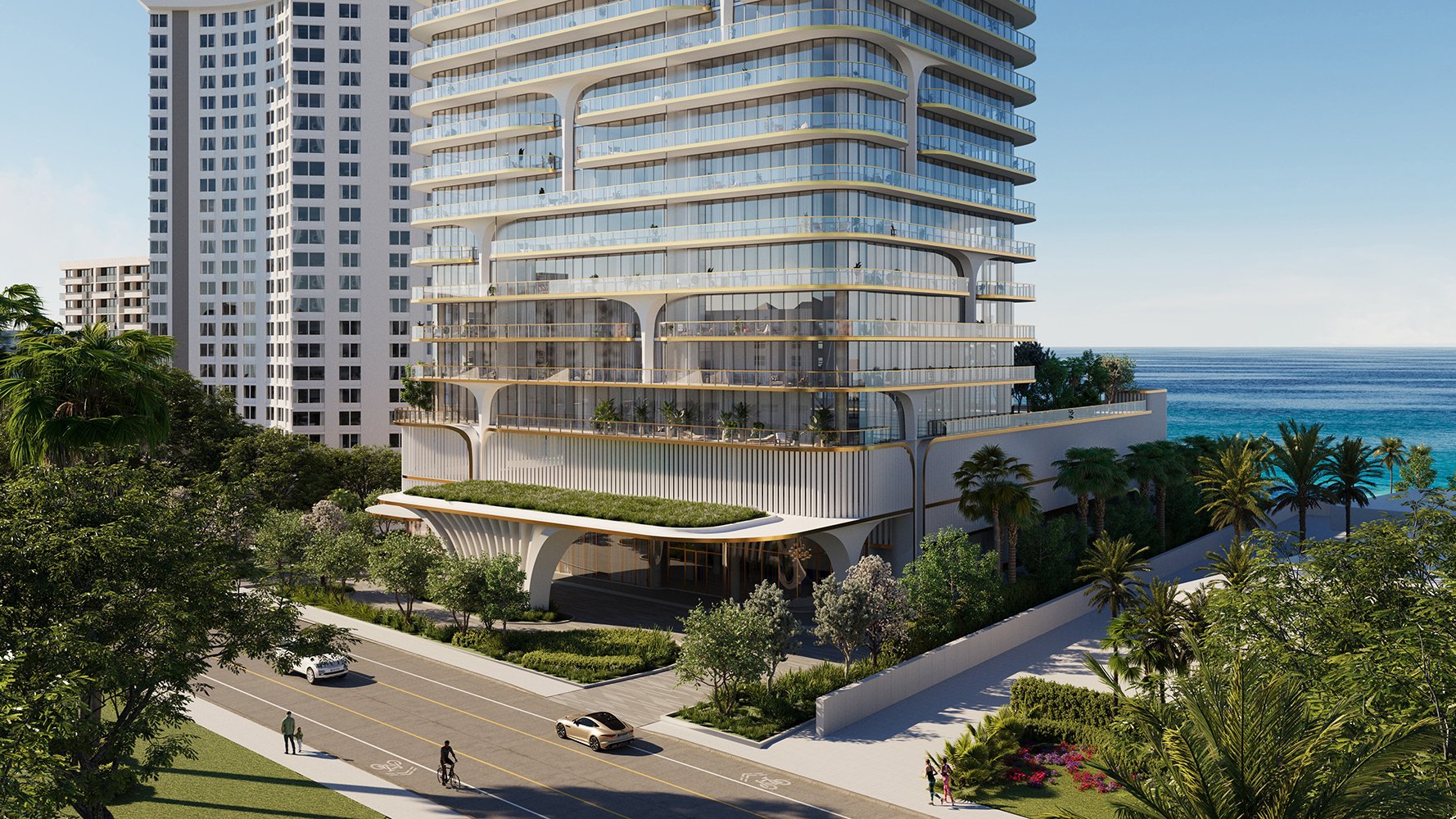
Planned as a 28-story oceanfront condominium on approximately two beachfront acres at 1350 South Ocean Boulevard, the project pairs a residential-only setting with Waldorf Astoria management and hotel-style resident services. Related Group and Merrimac Ventures are the development partners. Those attributes define the residential offering, but they do not establish whether a particular crated painting or heavy sculpture can reach its intended position.
A private elevator and entry foyer for each residence is an important starting point. It does not establish a separate freight elevator, an exclusive elevator car for every apartment or a workable route for oversized art. Treat access, structural suitability and installation approval as three distinct buyer questions.
Freight-elevator cab dimensions, clear door openings and rated weight capacity remain unconfirmed. That does not mean a suitable service route is unavailable. It means the buyer should seek technical confirmation rather than interpret a private-arrival feature as a delivery specification.
Ask the development team to identify the intended art-delivery route from vehicle arrival to the final display location. Request receiving arrangements, entrance clearances, corridor widths, turning spaces, elevator dimensions and residence-door openings. Establish whether deliveries use a service elevator, a protected passenger elevator or another approved arrangement.
Have the art handler assess the work in its transport configuration, including its crate, protective materials and handling equipment. Request a review of the total moving load, not merely the artwork's uncrated weight. The route assessment should also address transitions into and out of the elevator and the turn through the entry foyer.
Do not assume that unpacking in a common area, removing doors or using exterior rigging will be permitted. Ask who can authorize each measure and what documentation is required. A proposed workaround is not a confirmed delivery plan.
Floor-loading limits and slab-reinforcement specifications require confirmation. Suitability for heavy artwork therefore remains unconfirmed, whether the proposed installation is a freestanding sculpture, a substantial pedestal or an assemblage of several pieces.
Rather than seek general reassurance that the building can accommodate art, submit an object-specific brief to a qualified structural engineer through the appropriate building approval process. Include the work's weight, support points, base dimensions, proposed location and any anchoring concept. Ask the engineer to assess both the installed position and any temporary staging along the delivery route.
The primary bathrooms' marble-clad walls and terrazzo flooring describe finishes, not structural load ratings. Material richness should never substitute for engineering confirmation.
If The Ritz-Carlton Residences® Pompano Beach is also on the shortlist, apply the same documentation standard there. Compare written, residence-specific answers rather than assume that branding establishes equivalent structural capability.
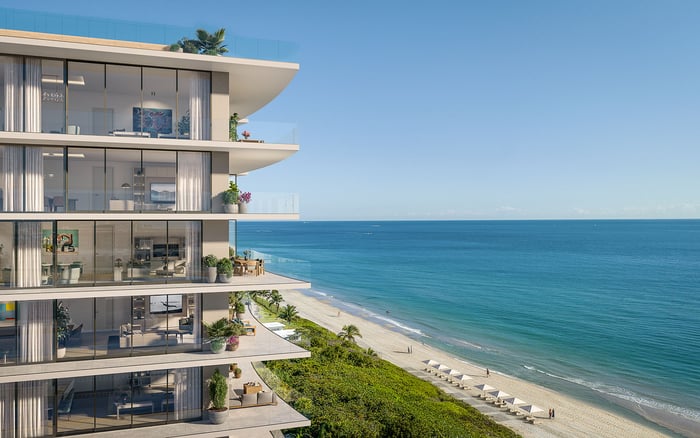
Plans call for private balconies up to 10 feet deep in all residences. That describes potential spatial generosity, not a weight allowance or permission to display sculpture outside.
For a contemplated balcony installation, request a separate assessment of the precise location, support arrangement and proposed attachment method. Ask the building team which exterior-display approvals would apply, and have the appropriate specialists evaluate the work's suitability for that setting.
Keep three decisions distinct: whether the piece fits, whether the structure can support the proposed installation and whether the building permits it. None is established by balcony depth alone. Avoid commissioning a pedestal or finalizing a placement until those questions are resolved in writing.
Project-specific installation rules, contractor requirements, delivery schedules, insurance limits, deposits and rigging permissions remain unconfirmed. Buyers should assume neither unrestricted access nor a particular set of restrictions.
Request the applicable delivery and alteration procedures, and ask whether they are final or still under development. Identify who reviews art installations and whether the developer, management or association will be the relevant decision-maker at the intended installation date.
The written inquiry should address:
Booking procedures, permitted delivery windows and any elevator reservation requirements.
Contractor credentials, insurance documentation and any applicable deposits or fees.
Protection of common areas, staging locations, crate removal and cleanup responsibilities.
Review requirements for wall anchors, ceiling suspension, floor attachments or electrical work.
Whether unusual handling methods require separate engineering or other approvals.
These are questions to resolve, not confirmed building policies. Give the proposed installer the resulting requirements before requesting a final scope and price. Ask that any approval identify the particular artwork, location and installation method; a broad statement that art is welcome is not a substitute.
Ocean and Intracoastal views contribute to the residences' appeal, but art-conservation performance specifications remain unconfirmed. Waldorf Astoria services and luxury finishes should not be read as evidence of museum-grade environmental control.
Have a conservator define the collection's needs before evaluating the residence's proposed display conditions. Request relevant information on temperature and humidity control, glazing, shading and monitoring, then ask the specialist to assess it against the individual works.
Consider the delivery period as well as everyday display. Ask how installation would be coordinated with interior work and when the residence would be ready to receive sensitive pieces. Neither visual completion nor a scheduled move-in date should replace that assessment.
Bring the interior designer, art handler, installer and structural engineer into the same planning conversation. Give them a shared inventory with dimensions, weights, proposed positions and any special handling needs. Request a coordinated plan that separates aesthetic preferences from unresolved technical approvals.
For buyers also considering Armani Casa Residences Pompano Beach, use the same collection brief to evaluate each residence. The comparison need not presume any building's capabilities; its purpose is to obtain equally specific answers for the works that matter.
Before committing, ask your attorney how collection-critical requirements should be addressed in the purchase documentation. Distinguish preliminary design information from final specifications, and informal assurances from approvals issued by the responsible party.
The decisive file should connect a particular work to a verified delivery route, an assessed installation location and an authorized installation method. Where an answer remains pending, understand its effect on timing, cost and the purchase decision. The objective is not simply to buy a beautiful setting for art, but to establish that the collection can arrive and be installed as intended.
For a discreet conversation about art-led residence selection in South Florida, connect with MILLION.
If branded residences are on your mind — as a home or as an allocation — we would be glad to share what we are seeing, privately.
Begin a quiet conversationThe property is at 1350 South Ocean Boulevard, Pompano Beach. It is planned as a 28-story oceanfront condominium on approximately two beachfront acres.
The project is residential-only, not a hotel, with Waldorf Astoria management and hotel-style resident services.
No. A private elevator and entry foyer for each residence do not establish a separate freight elevator or the elevator-bank configuration.
Freight-elevator cab dimensions, clear door openings and rated weight capacity remain unconfirmed here. Buyers should request technical confirmation for the proposed delivery.
Ask the handler to assess the complete route using the artwork's transport dimensions and the total moving load. The review should include entrances, corridors, turns, elevator access and the residence entry.
Floor-loading limits and slab-reinforcement specifications remain unconfirmed here. Request a qualified structural engineer's assessment of the particular work and location.
No. Balcony depth does not establish structural capacity or exterior-display permission; both require separate confirmation for the proposed installation.
Request the applicable delivery and alteration procedures, including scheduling, contractor documentation, insurance, deposits and attachment approvals. These project-specific requirements remain unconfirmed here.
Art-conservation performance specifications remain unconfirmed here. Ask a conservator to assess relevant environmental information against the needs of the collection.
Seek written confirmation connecting the artwork to its delivery route, structural assessment and installation approval. Ask your attorney how unresolved collection-critical requirements should be addressed in the purchase documentation.