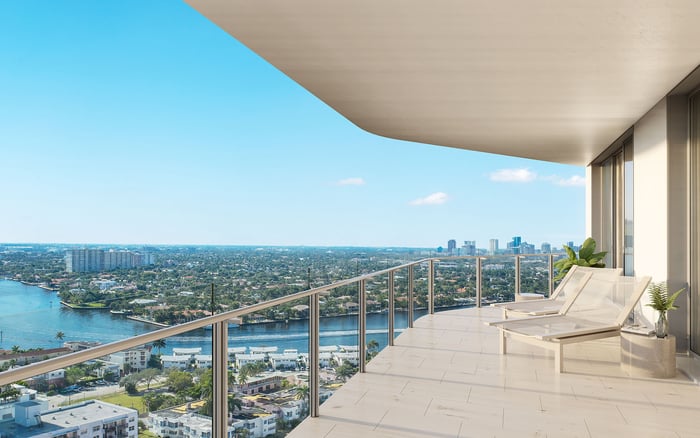
At The Ritz-Carlton Residences® Fort Lauderdale, the reserve schedule is only a starting point. Buyers should connect it to the executed price, unit allocation, inflation exposure, component assumptions, and statutory inspection timeline before treating projected ownership costs as settled.

Published pricing for The Ritz-Carlton Residences® Fort Lauderdale establishes a public point of entry-not the buyer’s final capital basis. The executed purchase agreement may account for a different residence, floor, view premium, upgrades, deposits, negotiated terms, and closing costs.
For Fort Lauderdale Beach buyers, that distinction is critical when reviewing a proposed association budget and reserve schedule. A reserve contribution that appears modest beside an advertised starting price may look quite different when measured against the actual contract price, interior area, ownership percentage, and intended holding period. Investment analysis should therefore begin with the residence being acquired, not the least expensive home in the marketing program.
A reserve schedule becomes meaningful only when translated into the economics of the specific residence.
The most useful Buyer's Guides separate two questions: What is the buyer paying to acquire and complete the residence? And what portion of future common-property renewal could that residence be expected to support? Considering those figures together provides a clearer view of long-term ownership than either can offer alone.
A Structural Integrity Reserve Study, commonly called a SIRS, estimates the remaining useful life and replacement cost of major building components. Covered categories can include roofs, primary structural members, fire-protection systems, plumbing, electrical systems, waterproofing, exterior painting, and exterior windows and doors. The resulting reserve schedule is an engineering and financial forecast built on the assumptions available when it is prepared.
It does not guarantee that future contributions will remain unchanged. Affected associations must repeat the study at least every 10 years, and updated findings can revise useful-life estimates, replacement costs, or required funding. Nor are mandatory structural reserve contributions ordinary discretionary items that owners can routinely waive simply to keep assessments down.
This distinction is especially relevant in the Branded Residences and New-construction market. High-end systems and finishes can shape replacement-cost assumptions because the study should reflect the components actually installed, not generic condominium costs. Luxury service standards and structural capital needs may coexist, but they belong in separate analytical columns.
Buyers comparing coastal branded properties can apply the same discipline when reviewing documents at Four Seasons Hotel & Private Residences Fort Lauderdale and St. Regis® Residences Bahia Mar Fort Lauderdale. The objective is not to assume identical budgets, but to ask consistent questions of each project’s contracts, schedules, component assumptions, and allocation formula.
Before committing, request the executed purchase agreement, proposed association budget, reserve schedule, component assumptions, allocation formula, and details of any developer subsidy. Then convert the residence’s projected reserve share into annual dollars and dollars per square foot. Compare those figures with the actual contract price per square foot and the expected ownership period.
The ownership percentage warrants particular attention. Residences of different sizes or with different allocated interests may not bear common expenses in the same dollar amount. The governing documents and proposed budget should explain the applicable formula. Buyers should also confirm whether quoted dues already include projected structural reserve contributions or whether those amounts appear elsewhere in the budget.
Developer support can make an early budget appear smoother than the association’s eventual steady-state economics. Ask whether any subsidy has an expiration point and which costs it supports. Also determine whether projected dues exclude future SIRS-driven funding, insurance increases, capital projects, or other categories that could ultimately reach owners through regular assessments, higher dues, or special assessments.
Reserve studies estimate future replacement costs using present assumptions. Construction-material and labor inflation can therefore leave scheduled contributions insufficient before the next study is completed. For a sophisticated buyer, the prudent model treats reserves as an escalating cash flow, not a fixed annual expense.
Run several inflation scenarios across the intended holding period without presuming that any single forecast will prove correct. Consider how rising replacement costs could alter annual reserve funding, and assess the buyer’s liquidity if a gap were addressed through increased dues or a special assessment. The purpose is not to predict an exact assessment, but to understand the potential range of ownership costs if component pricing rises faster than the original schedule anticipated.
The exercise should also distinguish recurring hospitality-oriented services from capital reserves. Ritz-Carlton branding does not exempt a condominium association from Florida’s structural inspection and reserve framework. Brand services may shape the ownership experience; statutory reserve obligations protect a different dimension of the asset.
Florida’s milestone-inspection statute applies to residential condominium and cooperative buildings of three habitable stories or more. A covered building generally faces its first milestone inspection by 30 years of age, followed by another every 10 years. Local officials may require the first inspection at 25 years when environmental conditions, including proximity to salt water, justify an earlier review.
Building age is generally measured from the certificate-of-occupancy date. Buyers should identify the anticipated date for this project, map both the possible 25-year and 30-year thresholds, and compare them with the planned holding period. Even when the first milestone falls well beyond an initial ownership horizon, the timeline can influence future purchasers and the market’s view of long-term capital planning.
A phase-one inspection that identifies signs of substantial structural deterioration can trigger a more intrusive phase-two review. Destructive or nondestructive testing may then uncover repair requirements that an earlier reserve schedule did not capture. A schedule should therefore never be read as a permanent ceiling on future capital needs.
Associations must retain SIRS reports for at least 15 years. As the building matures, those studies become a valuable record of changing assumptions, identified components, and funding responses-one that a future resale buyer may examine closely.
The phrase “fully funded” requires context. Ask whether it means funded to the latest professional study’s recommendation or merely funded under the current association budget. Those descriptions can diverge if costs have changed, a new study is pending, or the budget depends on assumptions that no longer reflect replacement pricing.
Florida condominium counsel, a reserve-study specialist, and the buyer’s lender should review the relevant documents because statutory requirements and project budgets can change. Their work should connect legal obligations, physical components, financing conditions, and the buyer’s intended ownership horizon.
At this level, due diligence should be as tailored as the residence itself. Atlantic views, service, amenities, and finishes define part of the proposition, but reserve adequacy shapes the durability of ownership costs. The decisive comparison is among the actual contract, the residence’s allocated share, the schedule’s component assumptions, and an inflation-aware cash-flow model.
For discreet guidance on evaluating the complete purchase proposition, connect with MILLION.
If branded residences are on your mind — as a home or as an allocation — we would be glad to share what we are seeing, privately.
Begin a quiet conversationThey should not ignore it, but should treat it only as a reference point. The executed price, unit size, allocated ownership share, and negotiated terms define the relevant economics.
A SIRS estimates the remaining useful life and replacement cost of major building components, helping determine the association’s reserve schedule.
Affected associations must repeat the Structural Integrity Reserve Study at least every 10 years.
They can include roofs, structural members, fire-protection systems, plumbing, electrical systems, waterproofing, exterior painting, windows, and doors.
No. Mandatory structural reserve contributions cannot be treated as optional budget items routinely waived to suppress assessments.
Construction and labor inflation can push replacement costs above earlier estimates, potentially requiring increased contributions before the next study.
The first inspection is generally due by 30 years, although local officials may require it at 25 years when environmental conditions justify earlier review.
Building age is generally measured from the date the building received its certificate of occupancy.
A more intrusive phase-two inspection may be required to determine the extent of deterioration and recommend repairs.
No. Branded services and statutory structural reserve obligations are separate components of condominium ownership cost.