A financed purchase at The Bristol requires more than an agreed price. Appraisal exposure, condominium eligibility, contract protections, and rate-lock timing should be coordinated before a buyer commits.
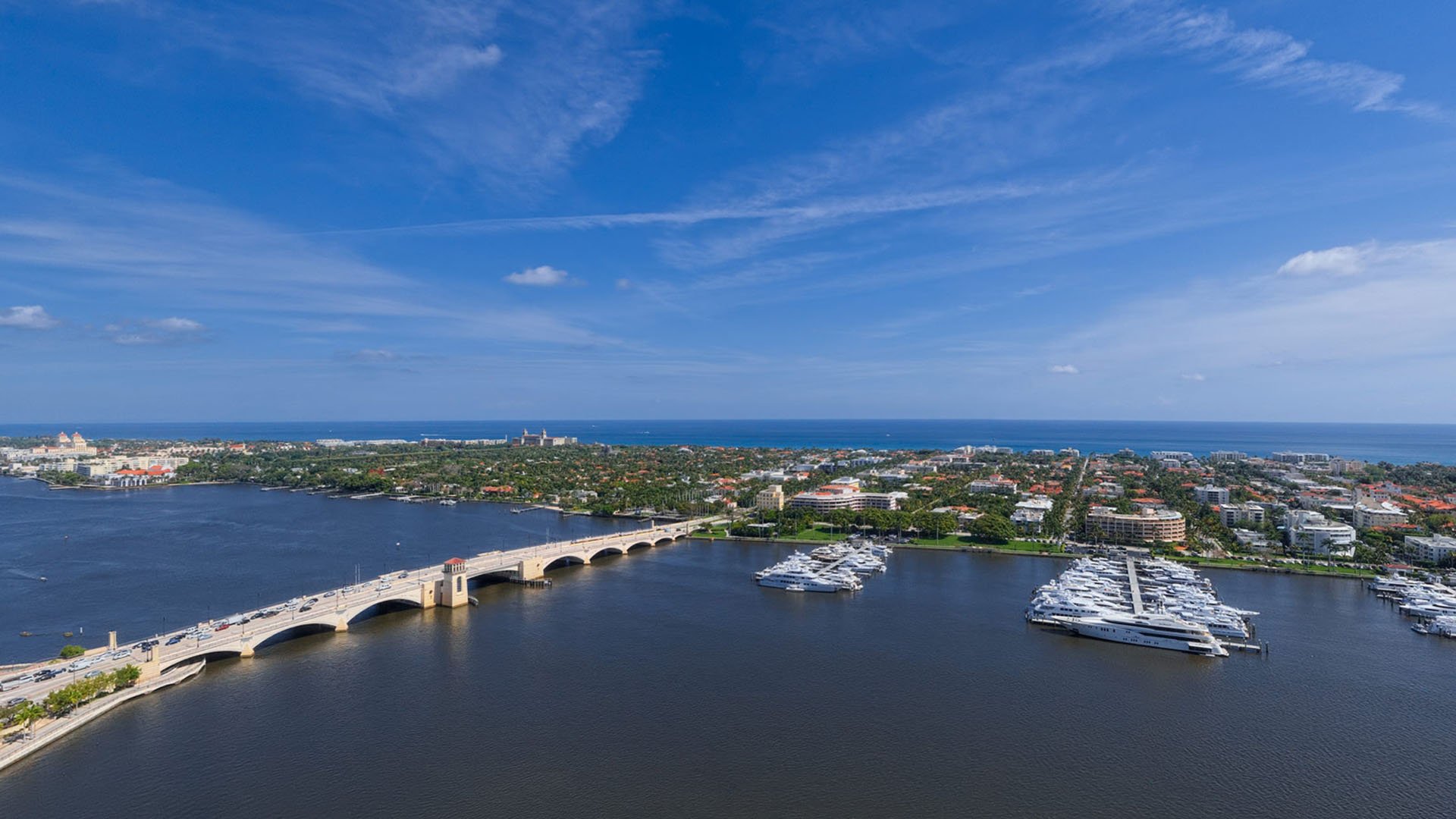
At The Bristol Palm Beach, the purchase decision begins with an exceptional setting: 1100 South Flagler Drive in West Palm Beach, overlooking the Intracoastal Waterway, Atlantic Ocean, and Palm Beach Island. The distinction matters: this is a West Palm Beach address, not a residence on the island.
For a financed buyer, however, the address and the capital plan require separate consideration. The agreed purchase price, the value a lender accepts, and the period for which financing terms remain locked are distinct variables. A well-structured purchase coordinates all three before an approaching closing date narrows the available choices.
The objective is not simply to secure a rate. It is to retain control over the cash commitment and closing timetable while the residence and building move through underwriting.
Completed in 2019, The Bristol Palm Beach markets three- to five-bedroom residences spanning 3,700-14,000 square feet. Its advertised starting price of $5 million should not be treated as verified current resale availability. Advertised prices may change without notice and may not reflect current pricing.
The building’s resale history illustrates the scale of the market. A $21 million sale documented in February 2023 involved a residence purchased for $11,852,591 in July 2019. Another transaction was recorded at $19.42 million on April 15, 2026. Neither transaction establishes an appraisal result, an appraisal gap, or whether the buyer used financing.
That distinction is essential when evaluating a particular residence. A substantial sale elsewhere in the building provides context, not assurance that a lender will support the next contract price. Before making an offer, ask the lender how valuation will be handled and what happens if the accepted value falls short.
An appraisal gap occurs when the appraised value falls below the agreed purchase price. In a financed luxury purchase, that shortfall can require additional buyer cash or a renegotiated price. The practical question is whether the buyer remains comfortable with the resulting capital commitment.
Ask the lender to explain the financing outcome under a lower valuation, including the revised loan amount and required cash. The price-to-value difference alone is not a complete cash-to-close calculation. What matters is how much the lender will actually fund under the proposed terms.
Then establish a personal limit: how much additional liquidity are you prepared to commit without changing the purpose of the purchase? Set that boundary before negotiations, rather than under a contract deadline.
For a buyer also considering Forté on Flagler West Palm Beach, the same discipline belongs in each property evaluation. Assess financing requirements separately rather than assuming an acceptable structure for one residence transfers to another.
An appraisal contingency can permit cancellation or renegotiation after a low appraisal, but only as the contract allows. It is not an automatic right attached to every financed purchase. Review the wording, deadlines, and required actions before execution.
A negotiated appraisal-gap clause can define a buyer’s commitment to cover a shortfall up to a specified amount. That is materially different from accepting unlimited exposure. Have counsel explain how the clause interacts with any appraisal and financing contingencies, including what happens if the shortfall exceeds the agreed cap.
Review the buyer’s contractual rights and obligations alongside the lender’s requirements. A willingness to contribute more cash does not, by itself, resolve every underwriting issue. Conversely, a lender’s willingness to proceed does not establish whether the buyer has preserved a contractual exit.
Give the advisory team clear parameters: a defined cash ceiling, a shared understanding of contractual rights, and deadlines everyone is tracking.
Condominium financing evaluates the project as well as the individual borrower. Building review can require reserve documentation, inspection information, and litigation disclosures. A strong financial profile does not eliminate that separate review.
Warrantability concerns whether a condominium meets applicable agency project standards. Some standard jumbo programs require warrantable projects; a non-warrantable project may instead need portfolio jumbo financing with different pricing and underwriting. Potential obstacles include inadequate reserves, deferred maintenance, litigation, excessive commercial space, and hotel-style rental operations. These are general lending considerations, not findings about The Bristol.
The Bristol’s current eligibility must be confirmed for the specific lender and program. Ask which documents remain outstanding, who is obtaining them, and whether any unresolved issue could change the financing route.
If Alba West Palm Beach is also under consideration, request a separate project review for that potential purchase. Keep the residential comparison distinct from the lender’s eligibility assessment.
A rate lock specifies how long the loan’s interest rate and points are guaranteed. Common periods include 15, 30, 45, and 60 days, but availability and eligibility depend on the lender. The appropriate period should reflect the work remaining, not merely the date written into the contract.
Some lenders require a complete application, supporting documents, and file review before locking. Another approach is to consider a lock once the buyer is under contract, the application is complete, and the appraisal has been ordered, allowing enough time for closing plus a margin. Neither approach establishes a universal rule to wait or lock immediately.
Ask whether the proposed loan requires two appraisals. Some jumbo lenders impose that requirement above lender-specific thresholds, adding another valuation step. Account for the expected timing of both appraisals and project review when discussing the lock.
Before authorizing a lock, obtain a clear explanation of its expiration date, available extension terms, and what happens if the transaction cannot close within the window. A locked rate does not pause the remaining underwriting work.
The two risks can converge. A low appraisal may prompt reconsideration or price negotiations while the existing lock continues to run. Outstanding condominium documents or association issues can also delay closing.
Maintain one shared calendar covering appraisal delivery, any second appraisal, contract deadlines, project-review milestones, lock expiration, and closing. If a valuation issue emerges, review the cash requirement and timing consequences together rather than resolving one while overlooking the other.
The strongest financed purchase is not necessarily the one with the earliest lock or broadest gap commitment. It is the one whose liquidity limits, contractual protections, and lender timetable remain aligned through closing.
For a discreet perspective on South Florida’s luxury residential market, explore MILLION.
If branded residences are on your mind — as a home or as an allocation — we would be glad to share what we are seeing, privately.
Begin a quiet conversationNo. The Bristol is at 1100 South Flagler Drive in West Palm Beach, overlooking the Intracoastal Waterway, Atlantic Ocean, and Palm Beach Island.
An appraisal gap occurs when a property’s appraised value falls below the agreed purchase price. A financed buyer may need to contribute additional cash or negotiate a lower price.
No. The cited resale transactions establish sale prices, not appraisal results or whether the purchases used financing.
An appraisal contingency may allow cancellation or renegotiation, subject to its wording and deadlines. A low appraisal does not create an automatic cancellation right.
Yes. A negotiated appraisal-gap clause can limit the buyer’s commitment to a specified amount, with the contract governing what happens beyond that limit.
Some jumbo lenders require two appraisals above lender-specific loan thresholds. Confirm the requirement and expected timing for the proposed loan.
Current warrantability is not established here. Obtain a project eligibility determination from the lender for the specific financing program.
Project review can require reserve documentation, inspection information, and litigation disclosures. Building eligibility is assessed separately from the borrower’s financial profile.
Timing depends on lender requirements and the expected closing path. Consider application readiness, appraisal requirements, project review, and a margin for delays rather than following a universal lock date.
Yes. Appraisal reconsideration and outstanding condo documents or association issues can delay closing while the lock period continues to run.