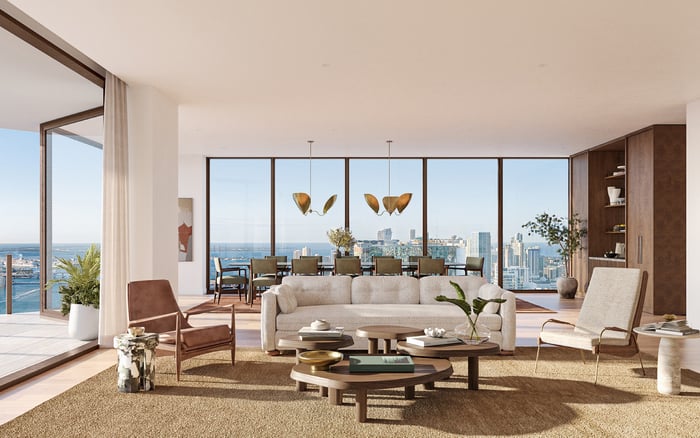
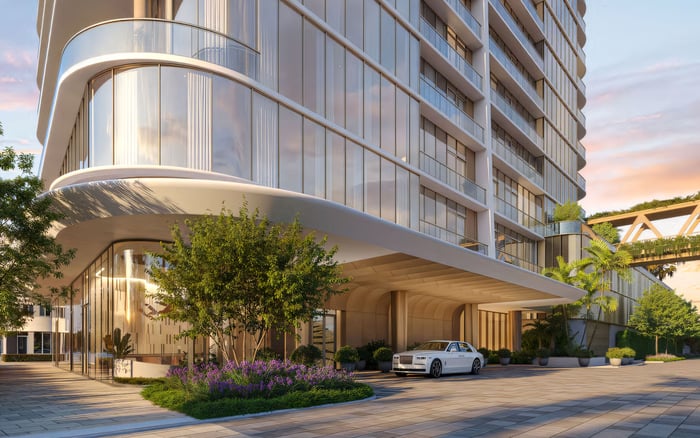
Frequent hosts evaluating Miami Tropic Residences should examine governing documents, reservation procedures, guest access, vendor requirements and enforcement provisions before deciding whether the property fits their lifestyle.

For a buyer who entertains often, a gracious great room and broad terrace are only the beginning. The practical questions concern how guests enter, where they may gather, when an occasion must conclude and whether a shared amenity can be reserved for private use. At Miami Tropic Residences, buyers should verify those details through the documents and written procedures that will govern ownership.
Amenity access and private reservation rights are not necessarily the same. A resident may be able to use a lounge during normal hours without having the right to close it for an exclusive dinner. Likewise, access to one room may not extend to an adjoining terrace, pool area or other shared space. The controlling documents should identify which spaces are reservable and what conditions apply.
For a frequent host, the most important measure of space is how it may actually be used.
Before committing, request the declaration, bylaws, current rules, amenity-reservation agreement, applicable fee schedule, guest procedures, parking policy, vendor requirements and enforcement provisions. The objective is not simply to collect documents, but to understand how they work together for the kinds of gatherings the buyer expects to host.
A room’s physical dimensions do not provide a complete answer about entertaining capacity. A successful gathering also depends on permitted attendance, access to adjacent areas, arrival procedures, service circulation, parking, staffing and the time needed for setup and cleanup. These operational points should be evaluated as a connected system rather than as isolated rules.
Ask management to identify the maximum permitted attendance for each relevant space and whether residents, guests, children, vendors or staff are counted differently. Confirm whether the residence itself and a reserved amenity are subject to separate requirements. If more than one document addresses the same issue, seek written clarification about which provision controls.
Space boundaries deserve equal attention. A host may imagine cocktails outside, dinner indoors and a later gathering in a lounge, but each transition could involve a different area and approval process. Confirm whether spaces can be used together, whether furnishings may be moved and whether food or beverages are restricted to designated locations.
Timing can be just as consequential. Ask about setup access, event duration, cleanup periods, quiet hours and the deadline for vacating a reserved room. A permitted gathering may still be impractical if deliveries cannot arrive early enough or if all cleanup must be completed within the reservation period.
A polished event begins before anyone reaches the front door. Buyers should ask how guest names are submitted, whether advance registration is required and how late additions are handled. It is also useful to understand check-in procedures, elevator access, rideshare arrivals, valet operations and any available guest parking.
Consider the experience from the perspective of both residents and visitors. A process that works well for a small dinner may become cumbersome for a larger reception. Ask whether guests may arrive in groups, whether a host must meet them and whether building staff require a final list before the event.
Security should be discussed without assumption. Management may distinguish between ordinary visitors and a planned gathering, or it may require additional coordination for certain event formats. A buyer should ask what information is needed, who provides oversight and whether any related cost is charged to the host.
The same document-first approach is useful when comparing other Miami residences, including 2200 Brickell and Villa Miami. Design, location and amenity imagery establish atmosphere, while current governing materials explain how entertaining works in practice.
Outside vendors can determine whether an event concept is feasible. Ask how caterers, bartenders, florists, musicians, photographers, rental companies and private security personnel receive approval. Confirm any required documents, delivery windows, service entrances, elevator reservations and loading procedures.
Insurance requirements should be obtained directly from management rather than inferred from another condominium. A preferred vendor may need to provide documentation in a specific form or by a stated deadline. Buyers who entertain frequently may want to ask whether management maintains a vendor protocol and whether owners remain free to select qualified providers.
Food and beverage service requires separate attention. Confirm whether cooking, warming equipment or open-flame elements are permitted in the intended space. Ask how alcohol service is handled and whether the answer changes when a bartender or caterer is involved. Music should also be addressed directly, including permitted locations, equipment and sound expectations.
Cleanup can affect both timing and cost. Determine whether the host must use designated personnel, whether waste removal follows a special process and what condition is required for the return of any deposit. Written answers help a buyer compare the operational burden of hosting across properties.
A private dinner among friends may be treated differently from a ticketed event, brand presentation, client reception, sponsored gathering or production. Buyers who may combine hospitality with professional activity should describe that use clearly and ask management how it would be classified.
Photography and content creation can also raise distinct questions. Confirm whether professional crews, equipment, signage or promotional use require advance consent. A gathering that feels private to an owner may be viewed differently if it includes commercial branding, paid attendance or organized media production.
Frequent hosts should also ask whether reservation privileges are limited by user, frequency or unit status. Clarify whether only an owner may book, whether a tenant has the same rights and whether a family member can act as host. These details can matter to buyers who divide their time among multiple homes or expect others to use the residence.
Leasing should not be treated as a substitute for event permission or as automatic overflow space. Rental use, guest occupancy and private gatherings can be governed by different documents and approvals. A buyer considering any leasing strategy should review the applicable building rules and obtain qualified guidance for the intended use.
The practical distinction is important. Permission to occupy a residence under a lease does not necessarily authorize an event, commercial use or access to every amenity. Likewise, an owner’s reservation rights may not transfer to a tenant or guest. Each scenario should be confirmed on its own terms.
Before contract, prepare a sample occasion that reflects how the residence would actually be used. Describe the intended spaces, approximate attendance, arrival pattern, food service, vendors, music, vehicles, setup and cleanup. Ask management to explain the approvals, documents, procedures and charges that would apply.
Then repeat the exercise for a smaller dinner and a more ambitious gathering. This comparison can reveal whether the building supports a range of hospitality or is best suited to intimate occasions. It also helps distinguish a manageable process from one that may feel burdensome when repeated regularly.
Review enforcement provisions with the same care. Ask who is responsible for guest conduct, how alleged violations are communicated and what consequences may affect access to amenities. If a rule or answer is unclear, request written clarification before relying on it.
For the frequent host, event rules are not a minor appendix to the purchase decision. They shape privacy, convenience and the ability to welcome guests with confidence. For discreet guidance on evaluating Miami residences through both design and governance, connect with MILLION.
If branded residences are on your mind — as a home or as an allocation — we would be glad to share what we are seeing, privately.
Begin a quiet conversationNo. Buyers should confirm which spaces are reservable and whether a reservation grants exclusive use.
Request the declaration, bylaws, current rules, reservation agreement, fee schedule, guest procedures, parking policy and enforcement provisions.
Practical capacity can also depend on permitted attendance, space boundaries, access procedures, staffing, parking and timing.
Yes. Confirm whether setup and cleanup are included within the reservation period and what condition is required afterward.
Ask about advance registration, check-in, elevators, rideshare arrivals, valet operations and guest parking.
Verify approval procedures, required documents, insurance, delivery windows, service access and loading arrangements.
Yes. Ask where and how each is permitted and whether outside providers or equipment require additional approval.
Yes. Buyers should ask how ticketing, sponsorship, branding, professional photography or client activity affects classification.
Not automatically. Leasing, occupancy, amenity access and event permission should each be confirmed separately.
Present management with a realistic event scenario and request the applicable approvals, procedures, documents and charges in writing.