A discreet buyer’s guide to how privacy, service, visibility, and daily rhythm shape the choice between Bal Harbour and Palm Beach for South Florida luxury real estate.
Bal Harbour and Palm Beach are often framed as opposite poles of South Florida luxury. One reads through polished coastal modernity, attentive service, and a compact, highly curated lifestyle. The other carries a more traditional sense of residential permanence, social choreography, and quiet legacy. For the serious buyer, though, the more useful question is not which address carries greater prestige. It is which address creates the right kind of privacy.
At this level, privacy is rarely a single feature. It is not just a gate, a doorman, a setback, a hedge, or a private elevator. It is the way an owner arrives, how guests are received, how staff circulate, how service providers are screened, how deliveries are handled, and how visible daily life feels from the street, the lobby, the beach, the club, or the dining room. The most successful purchase is not always the most secluded one. It is the one that allows the owner to move naturally, entertain selectively, and remain unburdened by the performance of ownership.
In shorthand, buyers may compare an exclusive area, a gated community, an oceanfront residence, or a second-home setting, but the decision is more nuanced than any label. The address matters. The operating culture matters more.
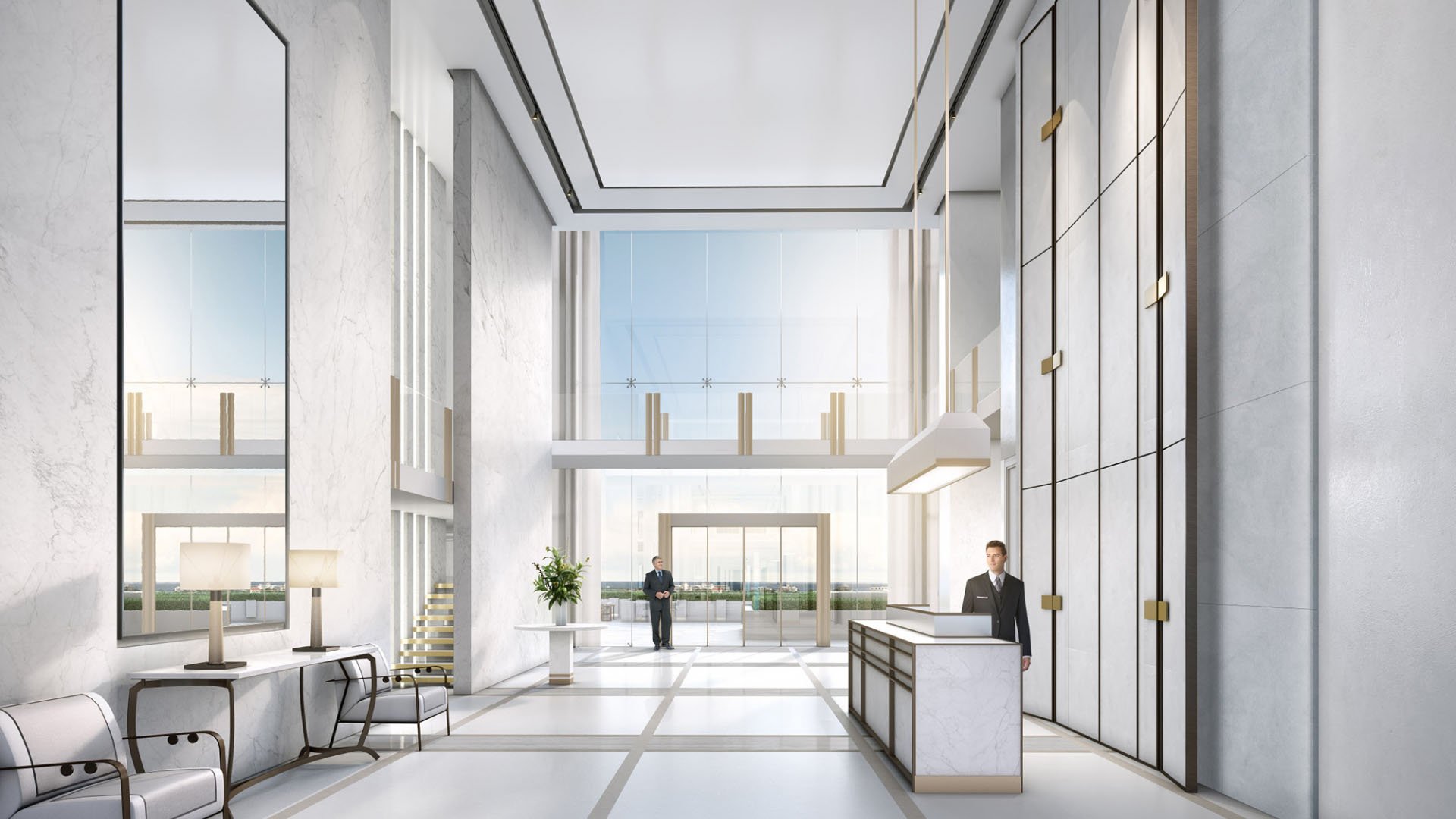
Bal Harbour tends to appeal to buyers who value immediacy and refinement. Privacy here is often expressed through management, design, and control. A residence may feel private not because it is isolated, but because every point of contact is carefully managed. Arrival can be formal without feeling theatrical. Service can be visible enough to reassure and invisible enough to preserve calm.
This model suits owners who want a South Florida base that performs smoothly. They may arrive for a long weekend, a season, or a series of short stays throughout the year. They may prefer a lock-and-leave structure: a residence that feels complete without demanding the constant oversight of a larger property. In that context, privacy comes from predictability. The building knows how to receive guests. Staff understand boundaries. Common areas are composed. The day does not require negotiation.
Still, polished privacy is social by nature. In a highly serviced setting, the owner trades some spatial distance for operational ease. Elevators, lobbies, amenities, and beach approaches create shared moments, however discreetly handled. For many buyers, that is a strength. It creates a sense of security and polish. For others, it may feel too legible. The key is to understand whether one wants privacy through management or privacy through separation.
Palm Beach often attracts buyers who want privacy to feel embedded in daily life rather than delivered as a service. The appeal is less about constant convenience and more about atmosphere, ritual, and self-possession. Privacy may come from the way a property is approached, the way interiors turn inward, the way entertaining is planned, and the way the owner’s routine becomes familiar without becoming exposed.
This version of privacy can feel more residential, even when the home is used seasonally. It rewards buyers who appreciate formality, patience, and continuity. The experience is not necessarily about being unseen at every moment. It is about choosing when to be seen, where, and by whom. That distinction matters to families, principals, collectors, philanthropists, and public figures who understand that total invisibility is rarely realistic, but controlled visibility is essential.
Palm Beach privacy may also require more intention. A residence with greater autonomy can bring greater responsibility. Staffing, maintenance, guest management, transportation, and security need to be planned with care. The buyer who wants effortless discretion must look beyond the romance of the address and examine how the property actually functions when occupied, when vacant, and when entertaining.
For ultra-prime buyers, the first test of privacy is arrival. How does an owner move from car to residence? How are guests announced? Is there a moment of exposure that would become tiresome over time? Can family members, staff, and visitors move without crossing paths in ways that compromise comfort?
Bal Harbour may offer a more orchestrated arrival experience, particularly in residences where building staff and controlled access are central to the lifestyle. Palm Beach may offer more variation, with privacy depending heavily on the individual property, its approach, and the household’s operating plan. Neither structure is inherently superior. Each simply places privacy in a different part of the ownership experience.
A buyer should walk the arrival sequence as if already living there. Arrive during the day and in the evening. Consider how it feels with luggage, with guests, with children, with a driver, or after a public event. Privacy is often lost in small transitions, not grand spaces.
At the highest level, privacy depends on people as much as architecture. A beautiful residence can feel exposed if staff circulation is awkward, if service entries are compromised, or if vendor access is poorly considered. Conversely, a more compact residence can feel remarkably private when the service choreography is excellent.
In Bal Harbour, many buyers will focus on building protocol: front desk culture, access control, elevator logic, amenity management, and how discreetly staff can support the owner’s schedule. In Palm Beach, the emphasis may shift toward household systems: private staffing, property management, security routines, and the separation of guest, owner, and service zones.
The essential question is simple: who knows when you are home? The fewer unnecessary people who know, and the fewer times that information must be communicated, the stronger the privacy architecture becomes.
Luxury buyers sometimes confuse privacy with social absence. That is rarely the true objective. Many owners want to dine well, host beautifully, attend events, welcome family, and maintain an active life. The issue is not participation. The issue is control.
Bal Harbour can suit the owner who enjoys a refined, compact social field, where convenience and recognition are part of the pleasure but still managed with taste. Palm Beach can suit the owner who prefers a more established rhythm, where presence is understood through longstanding patterns and selective engagement. In both places, discretion is cultural as much as physical.
The best address is the one that matches the owner’s tolerance for being recognized. Some buyers are comfortable with soft visibility in exchange for ease. Others prefer a more buffered life, even if that means accepting more responsibility behind the scenes.
The most useful exercise is to define privacy before touring. Does privacy mean no shared amenity spaces? Does it mean secure arrivals? Does it mean a residence that can host without public spillover? Does it mean a staff structure that keeps the principal’s movements confidential? Does it mean a second home that can be closed with minimal friction?
For a buyer seeking a highly serviced coastal residence with a polished daily routine, Bal Harbour may feel more intuitive. For a buyer seeking a more residential atmosphere with greater emphasis on personal domain and social restraint, Palm Beach may feel more natural. But the final answer is property-specific. A well-run vertical residence can outperform a poorly planned estate. A carefully managed home can outperform a prestigious address that exposes too much of the owner’s life.
The privacy question behind the address is ultimately a question of temperament. Do you want discretion delivered by a system, or discretion protected by space, planning, and household discipline? The right answer is the one you can live with gracefully.
Is Bal Harbour more private than Palm Beach? Not automatically. Bal Harbour may offer managed, serviced privacy, while Palm Beach may offer privacy through residential rhythm and property control.
Is Palm Beach better for buyers who want a quieter lifestyle? It can be, especially for buyers who prefer a more residential cadence. The specific property and household plan matter more than the address alone.
What should buyers examine first when comparing privacy? Start with arrival, access, staff circulation, and guest handling. These reveal more about daily privacy than finishes or views.
Does a condominium offer less privacy than a house? Not necessarily. A well-operated building can provide strong discretion, while a poorly planned house can expose too much movement.
Why does service culture matter so much? Privacy depends on who knows your schedule, who sees your guests, and how information moves through the residence or building.
Which market is better for a second home? The better choice depends on how often you visit and how much management you want. Convenience and control should guide the decision.
Is oceanfront living always more exposed? It can be more visible, but exposure depends on design, access, setbacks, and how outdoor spaces are used.
Does a gated community guarantee privacy? No. Gates help manage access, but true privacy also requires thoughtful circulation, staffing, and daily operating protocols.
What does an exclusive area really mean for buyers? It usually signals scarcity and prestige, but the lived experience depends on how well the residence protects routine and discretion.
How should a buyer make the final choice? Choose the address that best supports your natural habits. Privacy should feel effortless, not like a performance.
For a tailored shortlist and next-step guidance, connect with MILLION.
If branded residences are on your mind — as a home or as an allocation — we would be glad to share what we are seeing, privately.
Begin a quiet conversation