A buyer-focused comparison of two South Florida branded residences, examining wellness capacity, indoor-air disclosures, water filtration, amenity access, and leasing rules.
For luxury buyers, wellness is no longer measured by the presence of a gym and treatment room. More revealing questions concern capacity, specialization, environmental systems, and the rules governing access. Through that lens, Aston Martin Residences Downtown Miami and The Ritz-Carlton Residences® Pompano Beach present distinct interpretations of high-end residential wellbeing.
The first is a 66-story, 391-residence waterfront condominium at 300 Biscayne Boulevard Way, with its wellness and leisure program concentrated high above Downtown Miami. The second occupies 1380-1381 South Ocean Boulevard and comprises two towers, pairing distributed facilities with direct beach access and a more resort-oriented service model.
This buyer’s guide examines what each property defines, what remains unspecified, and what should be confirmed before contract. It is also a lifestyle question: the strongest choice depends less on the length of the amenity inventory than on how an owner expects to use it.
Wellness value depends on capacity, environmental performance, and the rules governing access.
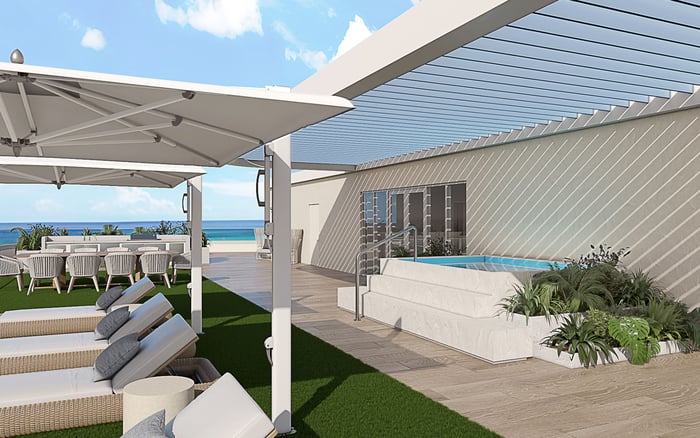
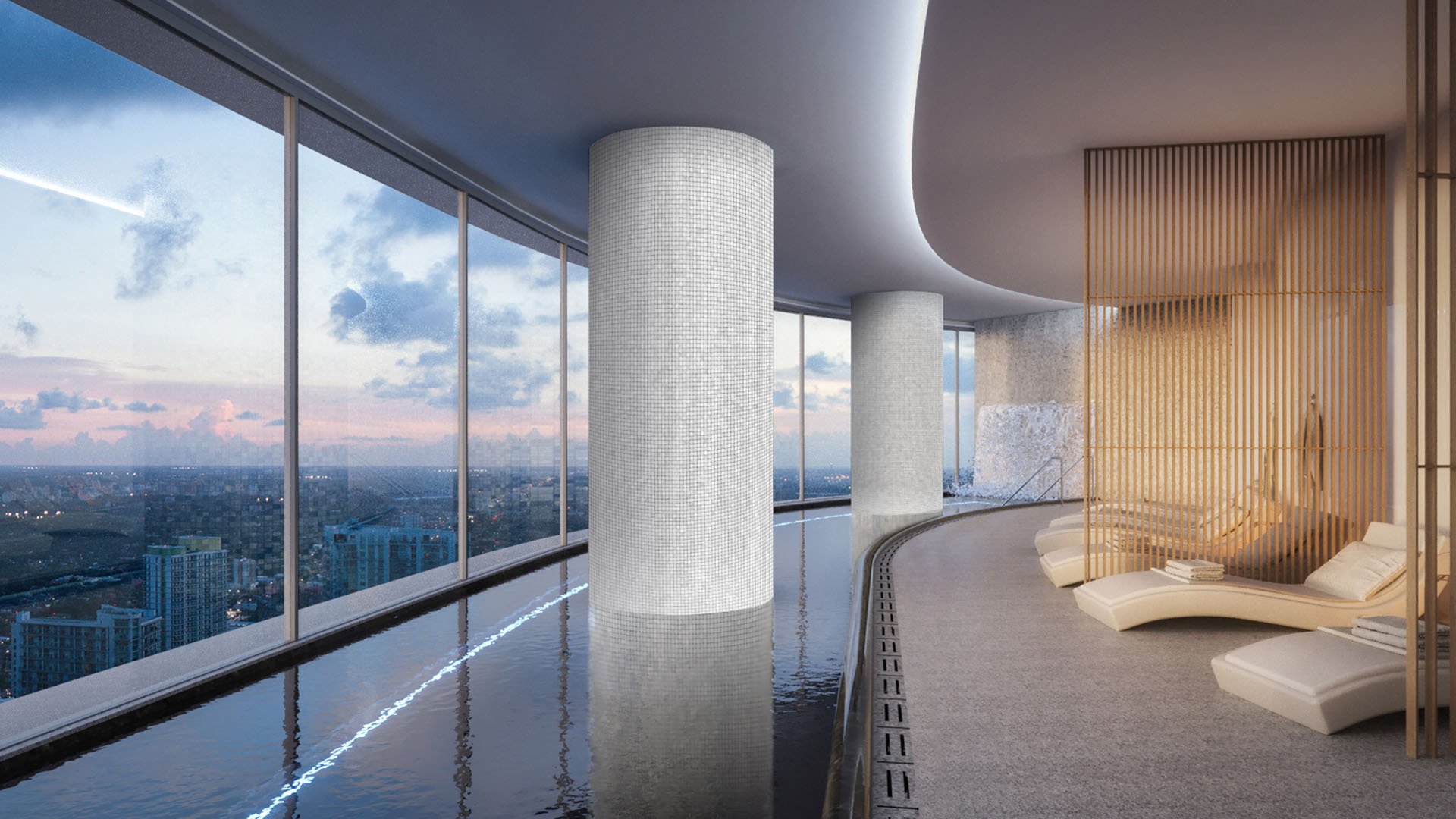
Aston Martin’s Sky Amenities are concentrated across levels 52 through 55. The heated rooftop pool and spa occupy level 55, with fitness, wellness, and entertainment spaces below. This vertical arrangement creates a distinct private-club destination within the tower rather than dispersing facilities across a broader site.
The 3,208-square-foot gym is unusually specialized. Alongside cardio and weight equipment, it offers a private yoga studio, private training room, spinning room, boxing room, and meditation room. For owners with varied weekly routines, these dedicated spaces may reduce the compromises inherent in a single multipurpose studio.
The spa includes separate men’s and women’s saunas, treatment rooms, changing facilities, spa lobbies, a wellness lounge, and a spa shop. Aquatic options extend to an Olympic-size lap pool, lounging pool, outdoor whirlpool spa, bayside pool, and heated rooftop pool. Six motorized louvered pergolas provide adjustable shade and weather protection on the level 55 pool deck, 816 feet above Biscayne Bay.
Capacity should still be assessed operationally. Two theaters, virtual golf, children’s and teen spaces, a beauty salon, barber shop, art gallery, and business center broaden the amenity population beyond fitness users. Buyers should ask which spaces allow walk-in access, which require reservations, how far in advance residents may book, whether guests are permitted, and whether trainers or treatment providers carry additional charges.
The Ritz-Carlton proposition is spatially distinct. Each tower is planned with its own fitness-and-wellness center and spa, distributing demand across the property. The east tower offers two infinity pools; the west tower offers a sunset pool. This dual-tower configuration may appeal to residents who prefer several activity zones to a single consolidated amenity stack.
The Beach Tower program includes wellness programming, a wellness concierge, treatment rooms, and a juice and nutrition bar. An ocean-view fitness center is complemented by pickleball and paddle courts. Spa facilities include treatment rooms, a sauna, and a steam room, while the oceanfront pool deck connects directly to a private beach with cabanas, loungers, umbrellas, and food-and-drink service.
Family use also factors into the capacity calculation. Children’s facilities include indoor and outdoor play areas, a kids club, and a playground. Owners considering Pompano Beach as a multigenerational retreat should request age policies, supervision terms, guest allowances, seasonal hours, and reservation protocols for beach seating, cabanas, courts, treatments, and programming.
For a broader local comparison itinerary, buyers can place Armani Casa Residences Pompano Beach alongside the Ritz-Carlton option. The purpose is not to compare amenity counts alone, but to determine how each operating model aligns with actual household routines.
Aston Martin’s laminated insulating-glass system uses SentryGlas interlayers for windborne-debris resistance and compliance with South Florida hurricane-impact requirements. The property also incorporates green roofs, sustainable water management, and energy-efficient mechanical, electrical, plumbing, and fire-protection systems. These are meaningful building attributes, but they do not answer the full indoor-air-quality brief.
Aston Martin’s specifications do not identify MERV or HEPA ratings, outside-air delivery, corridor pressurization, humidity targets, or a named air-purification technology. The Ritz-Carlton property’s specifications likewise do not state filter ratings, outside-air rates, pressurization strategies, humidity targets, or named purification systems.
Buyers should therefore request written HVAC schedules rather than infer performance from branding or amenity language. Relevant questions include filter ratings at the residence and central-system levels, replacement responsibility, fresh-air delivery, bathroom and kitchen exhaust, corridor pressure, humidity set points, condensate management, and any monitoring available within the residence. In South Florida, the ability to manage humidity consistently can be as consequential as nominal filtration.
Neither property identifies building-wide filtration specifications for in-residence drinking water and showers. Sustainable water management at Aston Martin should not be treated as confirmation of a particular potable-water or shower-water filtration system. Similarly, the Ritz-Carlton wellness program does not, by itself, establish an in-unit treatment standard.
A precise inquiry should distinguish among municipal supply, central building treatment, point-of-entry treatment, and point-of-use filtration. Buyers should ask what is installed, which contaminants or characteristics the system is intended to address, where filters are located, how often they are serviced, who pays for replacement, and whether owners may install supplemental equipment. These answers matter for drinking, cooking, bathing, appliance maintenance, and long absences.
Wellness-led comparison shopping may also include The Well Bay Harbor Islands, but every project should face the same written-specification test. A wellness identity is no substitute for mechanical schedules, filtration details, and maintenance obligations.
Amenity booking and residence leasing are distinct rule sets. At Aston Martin, leasing is allowed twice per year with a six-month minimum and may begin after purchase. Buyers should verify that framework against the current declaration, association rules, application procedures, approval requirements, and any later amendments.
The Ritz-Carlton property does not specify a rental-frequency limit or minimum lease term. Buyers should obtain the declaration and current association rules before assuming seasonal or short-term leasing is permitted. They should also distinguish owner-use privileges from renter, household, and guest privileges, particularly for spa appointments, wellness programming, beach services, courts, children’s facilities, and reservable social spaces.
Booking friction can materially alter an amenity’s value. Request written rules covering reservation windows, cancellation charges, daily or weekly limits, peak-period controls, guest caps, private-event closures, and priority among owners, tenants, and accompanied guests.
Aston Martin offers the broader specialized indoor wellness mix within a single tower, led by dedicated studios, lap swimming, spa facilities, and a vertically consolidated club environment. The Ritz-Carlton alternative is more resort-oriented, distributing facilities between two towers and combining wellness programming, nutrition service, recreation, and private-beach access.
The decisive diligence is less glamorous but more durable: HVAC schedules, humidity controls, water-treatment specifications, service responsibilities, amenity capacity, guest access, booking policies, and current leasing documents. Once those items are in writing, buyers can compare not merely what exists, but how reliably it will support daily life.
For discreet guidance on comparing South Florida’s most considered residences, connect with MILLION.
If branded residences are on your mind — as a home or as an allocation — we would be glad to share what we are seeing, privately.
Begin a quiet conversationAston Martin has the more specialized disclosed mix, including dedicated yoga, training, spinning, boxing, and meditation rooms within a 3,208-square-foot gym.
Its Sky Amenities are concentrated across levels 52 through 55, with the heated rooftop pool and spa on level 55.
Each of the two towers is planned with its own fitness-and-wellness center and spa, distributing facilities across the property.
Its specifications do not identify MERV or HEPA ratings or name an air-purification technology.
Its specifications do not state filter ratings, outside-air rates, pressurization strategies, humidity targets, or named purification systems.
Neither property identifies building-wide or in-unit filtration specifications for drinking water or showers.
Leasing is allowed twice per year with a six-month minimum and may begin after purchase. Buyers should verify the current condominium documents.
The property does not specify a rental-frequency limit or minimum lease term. Buyers should verify the current declaration and association rules.
Buyers should request reservation windows, cancellation charges, usage limits, guest caps, peak-period controls, and owner-versus-tenant access rules.
The Ritz-Carlton property is more resort-oriented, combining dual-tower facilities with wellness programming, recreation, nutrition service, and private-beach access.