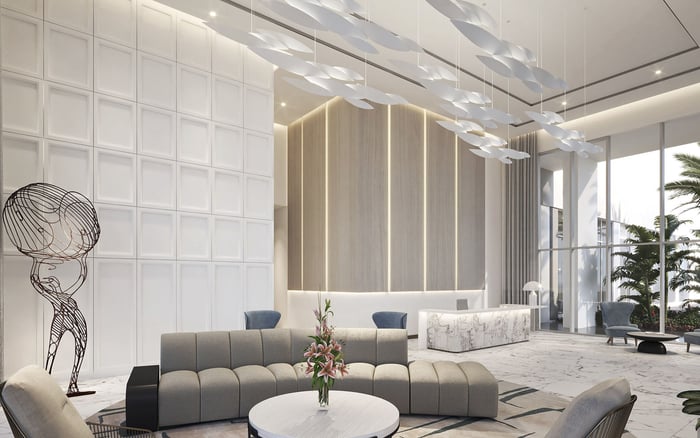
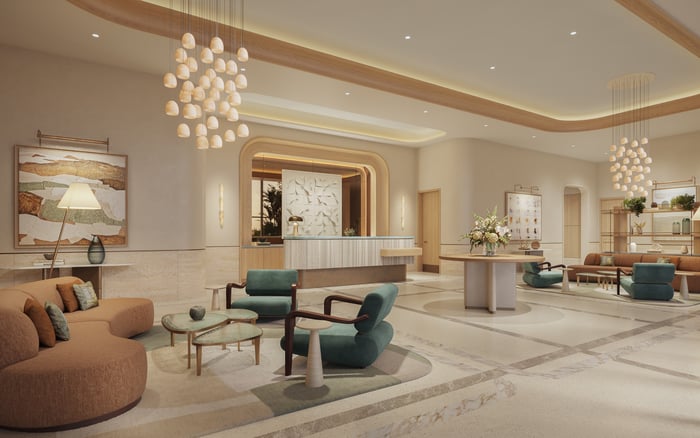
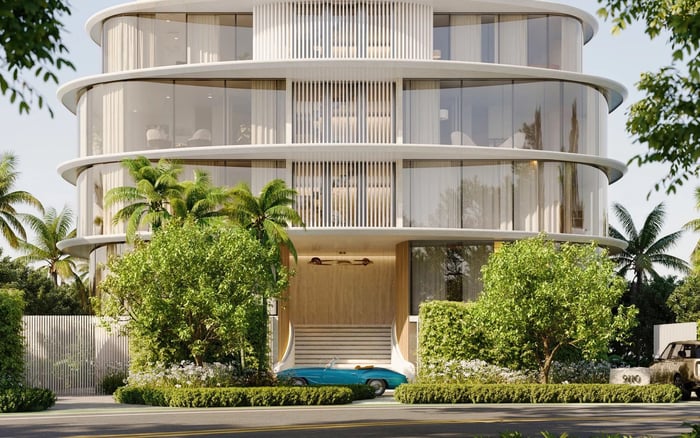
Aston Martin offers documented shared dining infrastructure, while Four Seasons advertises concierge-arranged residential dining and catering. For buyers who entertain, the meaningful comparison is service scope, access and written event permissions, not simply the presence of a beautiful room.
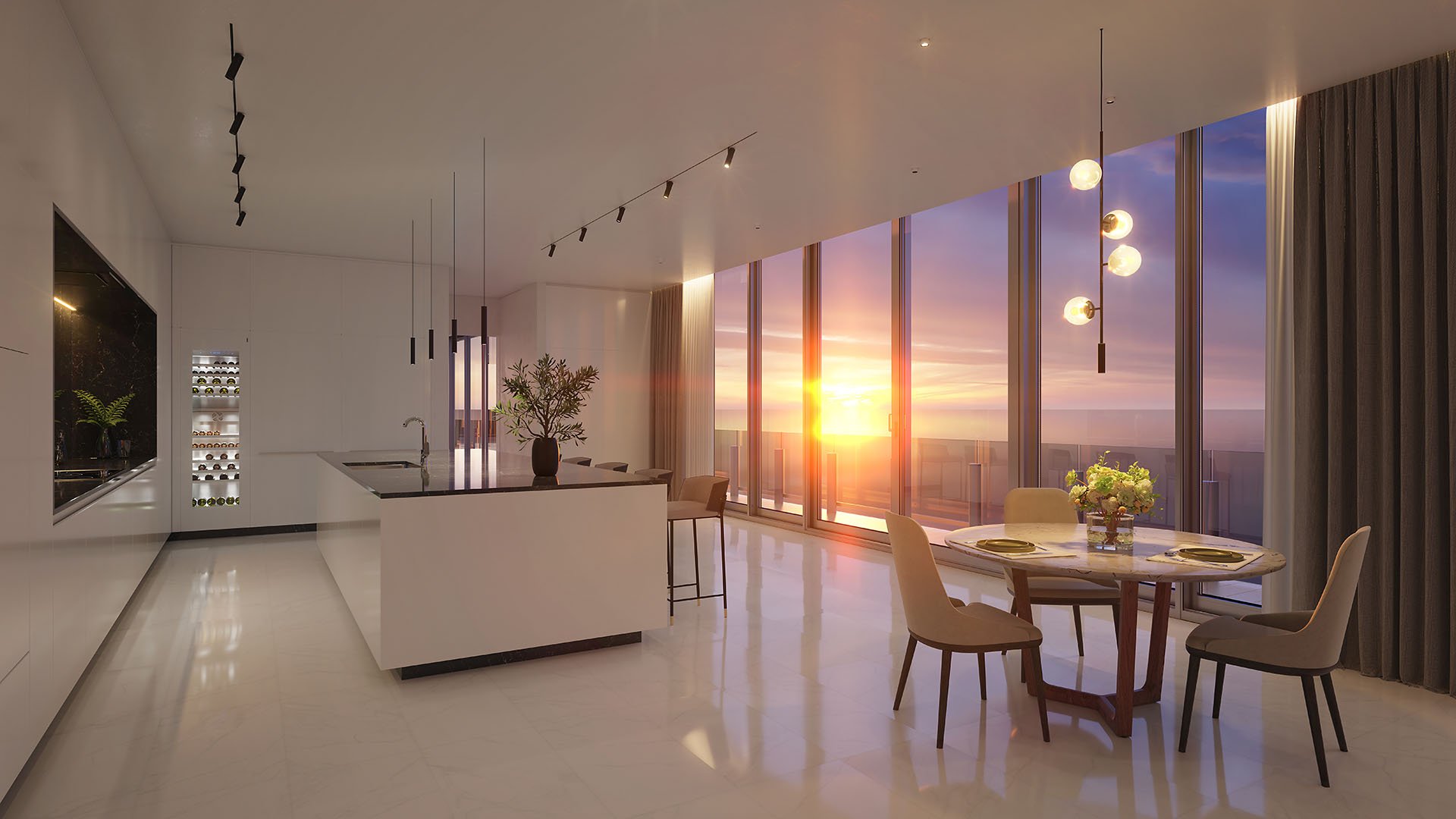
For a buyer who entertains, luxury is measured partly by what happens before the first guest arrives. Who approves the caterer? Who sets the table? Can dinner take place at home, or does it require a separate room reservation? Those questions reveal more than an amenity photograph.
The comparison between Aston Martin Residences Downtown Miami and Four Seasons Hotel & Private Residences Fort Lauderdale turns on a distinction: documented dining infrastructure versus advertised residential dining and catering services. Aston Martin provides shared culinary spaces. Four Seasons offers concierge-arranged entertaining at home and a separate hotel events channel. Neither, by itself, establishes unrestricted hosting rights.
A dining room is an amenity; a successful evening also requires permission, staffing and a clear operating plan. For buyers weighing these addresses, the task is to establish which responsibilities the property can assume and which remain with the owner.
At 300 Biscayne Boulevard Way, Aston Martin Residences Downtown Miami includes a chef’s kitchen and private dining room within its Sky Amenities. The amenities also include a catering kitchen. These are tangible facilities, but they do not establish an included catering team or a staffed in-residence dining program.
The setting extends beyond dinner. Level 55 includes the Grand Salon, Sky Bar and Lounge, infinity pool, pool deck and cabanas. The Sky Amenities encompass 42,275 square feet across levels 52-55, connected by a glass staircase. That scale gives buyers several spaces to evaluate, without implying that they can be reserved together or used exclusively.
For buyers who prefer entertaining outside the apartment, the private dining room merits close attention. The next questions are operational: whether its kitchen supports the proposed menu, who may use it and how staff and deliveries reach the space. Outside-caterer permissions, approved-vendor requirements and kitchen access must be confirmed, not inferred from the equipment.
At 525 North Fort Lauderdale Beach Boulevard, Four Seasons Hotel & Private Residences Fort Lauderdale presents a different proposition: advertised in-residence dining and event catering arranged through the Residential Concierge, alongside priority restaurant reservations.
That advertised service is more specific than the presence of a catering kitchen. It identifies a coordination channel for entertaining at home. Buyers should nevertheless obtain current written confirmation of availability, pricing, booking requirements and service scope. An advertised offering is not a substitute for the terms governing an owner’s particular request.
Evelyn’s and MAASS provide on-site restaurant options, distinct from residential catering. Likewise, the hotel’s in-room dining offering does not, on its own, establish residential delivery hours, owner pricing or menu access. Restaurant reservations, dinner delivered to an apartment and a staffed private event should be treated as separate arrangements until their connections are confirmed.
This distinction matters most to owners seeking to delegate. Ask whether coordination includes menu planning, servers, tableware, setup and cleanup, rather than assuming every component accompanies a catering order.
Four Seasons also has a dedicated meetings-and-events operation and on-site catering, with a formal event request-for-proposal channel. This provides a separate route for exploring a hotel-hosted occasion. It does not establish complimentary venue access, preferred event pricing or an owner’s automatic right to reserve space.
Residential catering and hotel events should therefore receive separate proposals when both are under consideration. Compare location, staffing, menu, guest circulation, exclusivity and total charges. A dinner inside a residence and an event in hotel space may serve the same social purpose while requiring different approvals and agreements.
For Aston Martin, the corresponding task is to establish the reservation terms for the private dining room or Grand Salon. Capacities, booking fees, notice periods, time limits and insurance requirements need separate confirmation. These remain due-diligence questions, not grounds for assuming that restrictions or charges do not exist.
At Four Seasons, the advertised range from a sunrise breakfast for two to a fête for forty is not a published 40-person occupancy limit, a guaranteed capacity or an entitlement to host that number in every residence.
At either address, distinguish a room’s physical capacity from the permitted guest count for a particular event. Separate a private social dinner from a business reception or commercial function, too. A lounge, kitchen or event department does not establish permission for every use.
Before purchase, request current answers covering:
Guest limits for the residence and each proposed shared venue, including whether staff count toward capacity.
Reservation windows, event duration, quiet hours, frequency limits and exclusive-use permissions.
Outside-vendor approval, kitchen access, delivery procedures, insurance and alcohol-service requirements.
Staffing obligations, minimum spend, rental fees, deposits, cleanup and cancellation terms.
For Four Seasons, quiet hours, maximum in-unit guest counts, commercial-event permissions and frequency limits remain to be confirmed. At Aston Martin, the presence of a catering kitchen does not settle outside-vendor access. In both cases, request the applicable rules before treating a proposed event as part of the purchase proposition.
A familiar name can help define a shortlist, but it should not supply the operating assumptions. If that shortlist also includes The Surf Club Four Seasons Surfside, evaluate its arrangements independently rather than transferring dining capacities or service terms to Fort Lauderdale.
The same discipline applies when comparing Downtown Miami with a beach address. Start with one realistic event brief: the same guest count, meal format, preferred date, vendor preference and desired level of assistance. Ask each property to explain the approval process and provide an itemized proposal where available.
This produces a more useful comparison than counting amenities. It reveals whether the desired evening is feasible, what it costs and how much coordination remains with the owner.
For buyers drawn to a dedicated setting beyond their front door, Aston Martin’s documented shared dining infrastructure deserves attention. The unresolved issue is the operating arrangement: access, vendors, staffing and reservation conditions.
For buyers prioritizing delegated entertaining inside the residence, Four Seasons offers an explicitly advertised concierge-arranged service to investigate. Its separate hotel events operation adds another avenue, not a blanket extension of residential privileges.
The strongest purchase decision rests on a specific evening whose arrangements are confirmed in writing. Establish where it can happen, who will deliver it, what it will cost and which restrictions apply. That is the difference between an appealing amenity and a hosting experience that genuinely suits the owner.
For a discreet comparison of residences that suit your approach to entertaining, connect with MILLION.
If branded residences are on your mind — as a home or as an allocation — we would be glad to share what we are seeing, privately.
Begin a quiet conversationYes. Its Sky Amenities include a chef’s kitchen and private dining room, and a catering kitchen is also listed among the amenities.
The available amenity descriptions do not establish a staffed in-residence catering or hotel-style dining program. Confirm current service options directly before relying on them.
The catering-kitchen listing does not establish whether outside caterers are permitted or approved vendors are required. Obtain the current vendor and kitchen-access rules.
Residential marketing advertises in-residence dining and event catering arranged through the Residential Concierge, plus priority restaurant reservations. Current availability, charges and terms require confirmation.
No. They are on-site restaurant options, distinct from the advertised residential catering arrangements.
No. It is marketing language, not a published occupancy limit or a guarantee that every residence may host 40 guests.
The hotel has a dedicated meetings-and-events operation and a formal proposal channel. That does not establish automatic owner access, complimentary use or preferential pricing.
The available Sky Amenities descriptions do not specify private-dining or Grand Salon capacities, reservation fees, notice periods, time limits or insurance requirements.
No. The hotel offering alone does not establish owners’ dining hours, prices, menus or residential delivery terms.
Request written guest limits, vendor permissions, reservation conditions, staffing requirements and complete charges. Also confirm insurance, alcohol service, noise, cleanup and cancellation rules.