A discreet guide for Aspen-minded buyers seeking South Florida oceanfront calm, with practical ways to evaluate privacy, service, arrivals, and neighborhood rhythm.
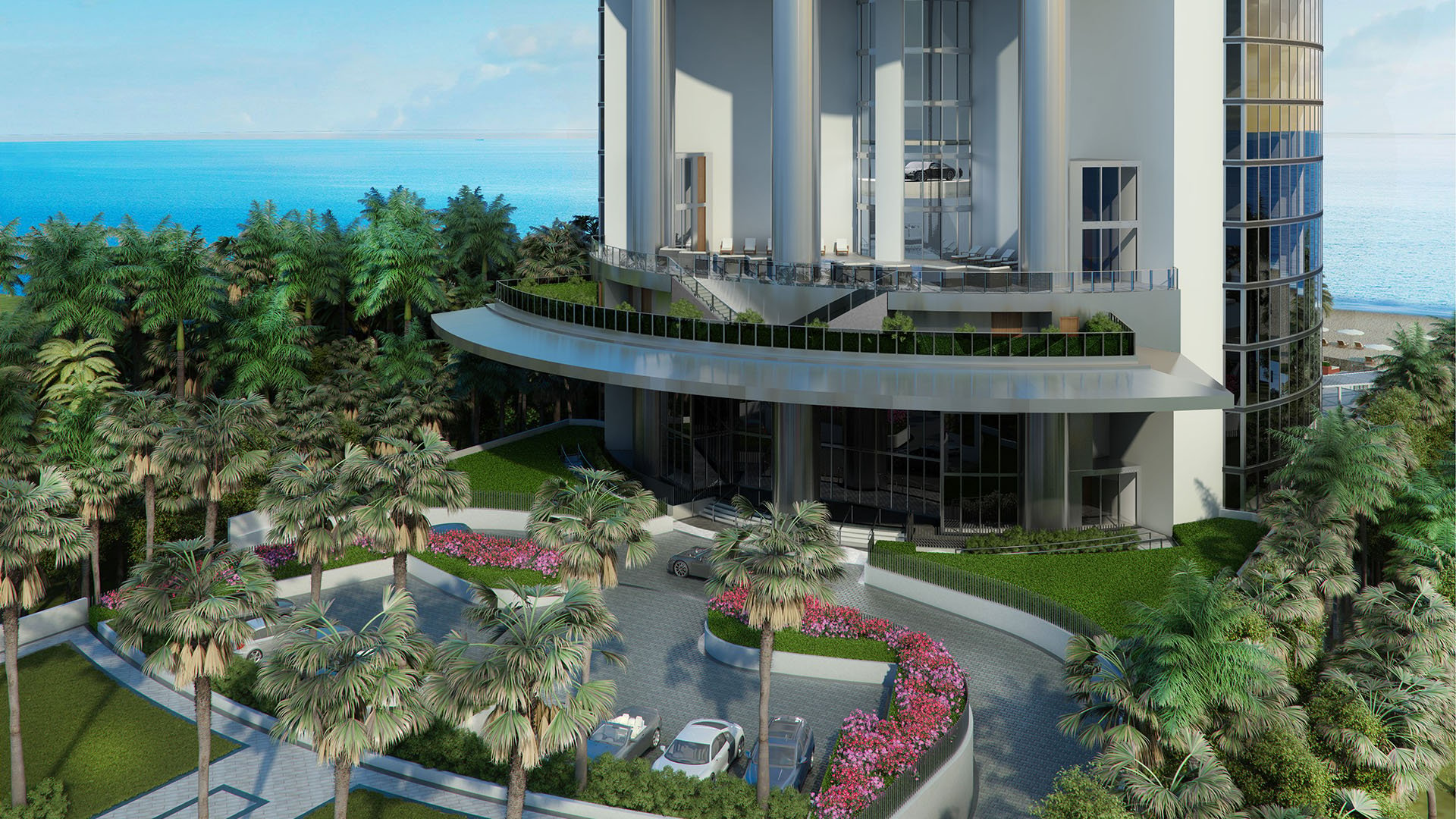
For a buyer moving between Aspen and South Florida, the best oceanfront home is rarely chosen by view alone. The more useful test is how the residence behaves at the edges of the day: arrival, valet, lobby, elevator, beach access, pool deck, service corridor, and the quiet return after dinner. Oceanfront beauty is immediate. Oceanfront calm requires a sharper read.
Aspen trains owners to value privacy without explanation. A home can be social when desired, but it should never require performance. That instinct translates directly to Surfside, Bal Harbour, Sunny Isles Beach, and the quieter residential pockets along the South Florida coast. The goal is not isolation. It is control: control over who moves through the property, how guests are handled, how amenities are shared, and whether the building feels like a private address rather than an active hospitality venue.
This guide is for clients who want beach, service, and discretion in the same sentence. It is especially relevant when the buyer wants South Florida light and warmth without the sensation of living inside hotel traffic.
The ocean view is the easiest part of the decision to love. It is also the easiest part to overvalue. A beautiful exposure cannot compensate for a lobby that feels too public, an amenity sequence that invites lingering by nonresidents, or an arrival court that is constantly in motion. The most refined residences are not always the loudest architectural statements. They are the ones that make daily life feel composed.
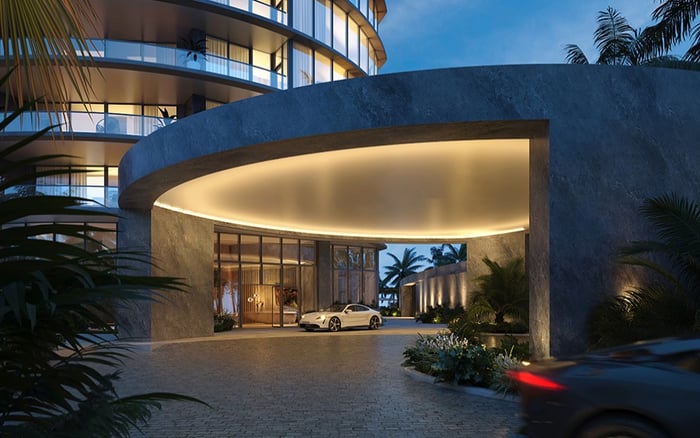
Begin with the threshold. Does the building separate residents, visitors, staff, deliveries, and beach movement in a way that feels intuitive? Does the elevator experience feel private enough for the way you actually live? Can you return from the beach without crossing through a social stage? Can guests arrive gracefully without turning the home into a revolving door?
For an Aspen owner, this will feel familiar. The best mountain residences are not simply close to the slope or the trail. They work because the transition from the outside world to the private interior is calm. South Florida requires the same discipline, only with sand, salt air, and year-round resort psychology in the background.
Surfside often enters the conversation because it can feel residential at a scale many high-net-worth buyers understand. Still, the name alone is not enough. Within Surfside, the right choice depends on how the building manages quiet, how the beach approach is experienced, and whether the residence feels protected from the energy that naturally gathers around desirable oceanfront addresses.
A buyer comparing Surfside homes may review The Delmore Surfside for one kind of contemporary private-residence conversation, while also considering Ocean House Surfside when studying another Surfside residential option. The point is not to collect names. It is to understand how each address would feel at 8 a.m., at sunset, and during a family weekend when every movement through the building matters.
The same lens applies to Fendi Château Residences Surfside. A brand or design pedigree may be appealing, but the deeper question is operational: does the home support privacy without friction? Does the building’s culture match the way you host, rest, and move? In the ultra-premium market, the answer is often found less in brochure language and more in repeated walkthroughs at different times of day.
A smart buyer does not evaluate Surfside in a vacuum. Bal Harbour and Sunny Isles Beach can provide useful contrast because they sharpen the question of scale, arrival, and energy. One buyer may prefer the feeling of a highly established oceanfront corridor. Another may want a taller, more vertical expression of beachfront living. Neither preference is inherently better. The right answer depends on how much activity you want near your front door.
In Bal Harbour, a residence such as Rivage Bal Harbour can be considered as part of a broader comparison for buyers weighing prestige, privacy, and access. In Sunny Isles Beach, The Ritz-Carlton Residences® Sunny Isles offers another reference point for those studying service-led oceanfront living in a different coastal rhythm.
The exercise is not about declaring one area superior. It is about identifying the level of movement you find elegant. Some owners enjoy visible energy as long as it is well managed. Others want a building where every shared space feels residential first. The Aspen-minded buyer should be honest about this before falling in love with a terrace.
Quiet luxury on the beach is built from operational details. Ask how residents and guests are received. Ask how vendors, deliveries, staff, and maintenance circulate. Ask whether amenities are primarily resident-focused or shaped by a broader hospitality atmosphere. Ask how beach chairs, cabanas, towel service, and pool seating are handled in practice. The answers reveal whether the property will feel composed on ordinary days, not just during a polished showing.
Study the lobby. A beautiful lobby can still feel exposed if every arrival is visible. Study the garage and valet sequence. Study the path from car to residence and residence to sand. For some buyers, the most important luxury is not an oversized amenity deck but the ability to move through the property without feeling watched, delayed, or redirected.
Also consider vertical privacy. Higher floors may offer distance from activity, but they do not automatically solve building culture. Low floors can feel connected to the landscape, but they require careful attention to sightlines and sound. Flow-through units may create a different sense of openness, but the plan should still protect bedrooms, family areas, and service zones.
Boutique residences can appeal to buyers who want fewer points of contact and a more residential mood. Branded residences can appeal to buyers who value service standards, recognition, and a defined hospitality language. The distinction is not absolute. A boutique building can feel too social if poorly managed, while branded residences can feel remarkably discreet if the residential component is protected with care.
The better question is whether the building’s identity supports your private life. If you entertain frequently, you may want staff support, guest handling, and amenities that make hosting effortless. If the property is a second home for recovery and family time, you may prioritize fewer shared spaces, calmer corridors, and a beach experience that does not feel performative.
Short-term rentals, hotel-style programming, and transient guest patterns deserve particular attention where relevant. The issue is not ideology. It is predictability. Owners who value calm should understand the rules, culture, and practical reality of occupancy before committing.
Before making an offer, walk the building like an owner rather than a visitor. Arrive in the morning, return in the evening, and observe the tone of the staff, residents, and shared spaces. Notice whether the building feels composed when no one is trying to sell it to you.
Ask yourself one final question: if you were coming home from a long flight, would this address lower your pulse? That is the Aspen-to-Surfside test. The right South Florida home should give you the ocean without asking you to live inside the traffic created by it.
Why do Aspen buyers focus so much on calm in South Florida? Many Aspen buyers are accustomed to privacy, controlled arrivals, and homes that feel restorative rather than public.
Is Surfside the only area to consider for quiet oceanfront living? No. Surfside is a strong starting point, but Bal Harbour and Sunny Isles Beach can help clarify preferences around scale and energy.
Should I avoid every building with hospitality influence? Not necessarily. The key is whether the residential experience is protected from transient guest movement and hotel-style congestion.
What matters more, the view or the arrival experience? Both matter, but arrival often determines how private the home feels in daily life.
Are boutique residences always quieter? Not always. A boutique building still needs thoughtful operations, resident-focused amenities, and a culture that matches your expectations.
Can a branded residence feel discreet? Yes. Branded residences can feel private when the residential component has clear boundaries and carefully managed service.
How should I evaluate beach access? Walk the full path from residence to sand and back, noting privacy, convenience, staff interaction, and exposure to public movement.
Do higher floors guarantee more calm? Higher floors may create distance from activity, but the building’s culture and circulation still matter.
What should second-home buyers prioritize? Second-home buyers should prioritize ease of arrival, lock-and-leave confidence, service consistency, and predictable quiet.
What is the best way to shortlist comparable options for touring? Start with location fit, delivery status, and daily lifestyle priorities, then compare stacks and elevations to validate views and privacy.
For a tailored shortlist and next-step guidance, connect with MILLION.
If branded residences are on your mind — as a home or as an allocation — we would be glad to share what we are seeing, privately.
Begin a quiet conversation