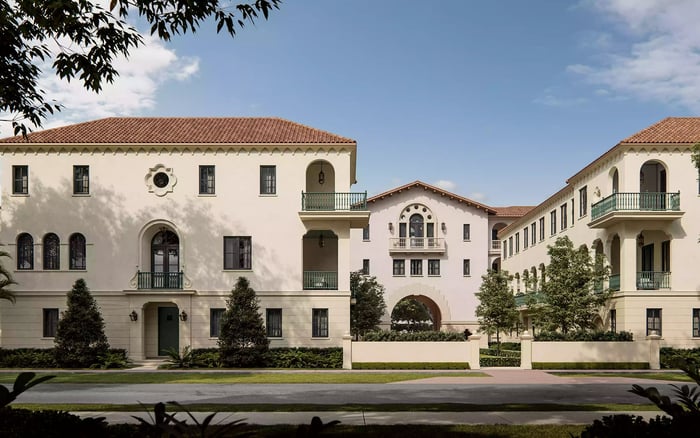
A disciplined framework for evaluating Ponce Park through developer strength, financing, engineering, insurance, governance, contract terms, and neighborhood fit.

The most consequential luxury purchases are rarely decided by finishes alone. At Ponce Park Coral Gables, a serious 2026 review should consider not only the proposed residence, but also the structure responsible for delivering, operating, and protecting it.
That distinction matters in Coral Gables, where a luxury residential project must be assessed in relation to an established urban character. The buyer’s task is to understand how the building may function in daily life, how its obligations are documented, and where risk remains with the purchaser.
The relevant lenses are pre-construction discipline, boutique governance, and new-construction risk. Together, they help separate visual appeal from durable value.
Request a detailed record of the developer’s completed projects, delivery performance, litigation history, and experience with comparable boutique condominiums. A polished presentation is no substitute for evidence of execution. Buyers and their advisers should determine whether prior work demonstrates the ability to manage permitting, construction, closeout, and owner transition.
The capital structure warrants equal scrutiny. Ask how construction is financed, what lender commitments exist, and which protections apply if costs rise or sales slow. The answers should reveal whether the project has sufficient resilience to navigate changing conditions without shifting unexpected pressure to purchasers.
Then test the delivery schedule against practical constraints, including permitting, labor availability, material costs, and potential delays. Contract language governing completion extensions and delayed-delivery remedies carries more weight than an aspirational date.
South Florida ownership demands technical questions. Request engineering materials addressing wind resistance, water-intrusion prevention, backup power, drainage, flood exposure, and building-envelope performance. A qualified independent engineer or inspector can help distinguish what is specified from what remains conceptual-and identify what should be confirmed before closing.
The insurance review should cover projected association premiums, the coverage expected of individual owners, deductibles, exclusions, and the allocation of a major storm loss. Buyers should understand both the association’s responsibilities and the circumstances under which owners could face additional costs.
The same discipline should shape comparisons with other low-density or design-conscious options. Cora Merrick Park and The Village at Coral Gables may provide useful reference points, provided the analysis accounts for differences in contracts, budgets, privacy, amenities, and delivery risk.
Scrutinize the proposed condominium budget, reserve assumptions, and maintenance projections. The central question is not simply whether the initial fee appears competitive, but whether the operating plan is realistic for the building being promised. Ask what could trigger a future special assessment and how reserve decisions may change after turnover.
Governance can be as influential as architecture. Review the duration of developer control, the board-turnover process, voting rights, leasing restrictions, owner-occupancy expectations, and enforcement powers. Determine whether the anticipated community is oriented toward long-term residents, seasonal owners, or investors. That balance can shape building culture, decision-making, and the treatment of shared spaces.
The purchase agreement should define deposit schedules, cancellation rights, substitution clauses, specification-change rights, completion extensions, and remedies for delayed delivery. Independent Florida condominium counsel should interpret how those provisions work together and where discretion remains with the developer.
Confirm in writing which finishes, appliances, parking spaces, storage areas, furnishings, and amenity features are included. Renderings and verbal representations are never substitutes for contractual language.
Renovation rights also warrant advance review. Ask about approvals for interior work, structural changes, balcony enclosures, and modifications affecting common elements. Changes to rooftops, landscaping, façades, signage, or common areas may require condominium, developer, or municipal approval. A buyer planning a highly customized home should establish those boundaries early.
Neighborhood diligence should be experiential as well as documentary. Test daily walkability, traffic, noise, construction activity, nearby development rights, and long-term access to services. Visit at different times and consider how the setting supports the rhythms of full-time or seasonal ownership.
Comparisons should focus on total acquisition cost rather than headline pricing alone. Review price per square foot, recurring fees, reserves, privacy, amenities, and delivery exposure. A project such as Ziggurat Coconut Grove can broaden the frame to another established South Florida neighborhood, but the meaningful comparison is structural, not superficial.
Before committing capital, coordinate independent condominium counsel, an insurance adviser, a tax professional, and a qualified inspector or engineer. Current offering documents, the purchase agreement, declaration, proposed budget, engineering materials, and municipal records should inform the final decision.
The objective is not to eliminate every uncertainty. It is to identify which obligations are fixed, which may change, and which risks the buyer is being asked to accept.
What should buyers ask about the developer? Request a history of completed projects, delivery performance, litigation, and experience with comparable boutique condominiums.
Why does construction financing matter? It helps buyers assess the project’s resilience if costs rise, sales slow, or construction conditions change.
Which engineering issues deserve priority? Focus on wind resistance, water intrusion, backup power, drainage, flood exposure, and the building envelope.
What should an insurance review include? Examine projected association premiums, unit-owner requirements, deductibles, exclusions, and storm-loss allocation.
How should buyers assess the condominium budget? Test reserve assumptions, maintenance projections, operating realism, and the potential for special assessments.
Which governance provisions are most important? Review developer control, board turnover, voting rights, leasing rules, occupancy expectations, and enforcement powers.
Why does the expected ownership mix matter? The balance among residents, seasonal owners, and investors can influence governance and building culture.
What must be confirmed in the purchase agreement? Verify deposits, cancellation rights, substitutions, specification changes, extensions, inclusions, and delay remedies.
Can an owner freely customize a residence? Not necessarily. Renovations or changes involving structure, balconies, façades, or common elements may require approval.
How should Ponce Park be compared with alternatives? Compare total cost, price per square foot, fees, reserves, amenities, privacy, neighborhood fit, and delivery risk.
For a tailored shortlist and next-step guidance, connect with MILLION.
If branded residences are on your mind — as a home or as an allocation — we would be glad to share what we are seeing, privately.
Begin a quiet conversation