Armani/Casa offers completed-building evidence and an observable resale market, while Shell Bay presents a more specialized private-club proposition whose resale practices have yet to form.
For a buyer looking beyond arrival day, the distinction between Armani Casa Sunny Isles Beach and Shell Bay by Auberge Hallandale is not simply ocean versus golf. It is the difference between evaluating a completed condominium with visible market activity and assessing an under-development branded residence whose completed-building practices and resale history have yet to form.
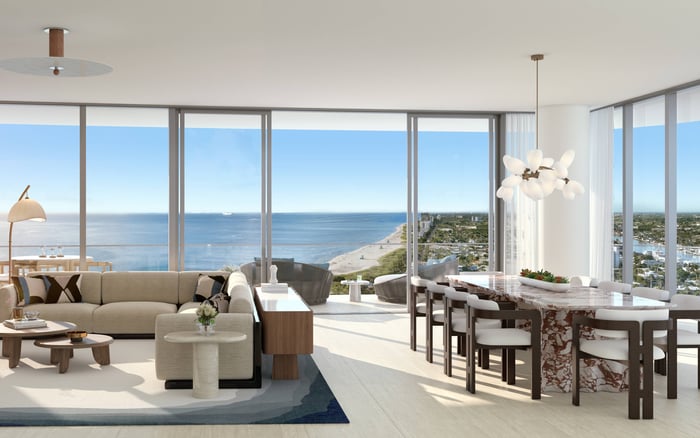
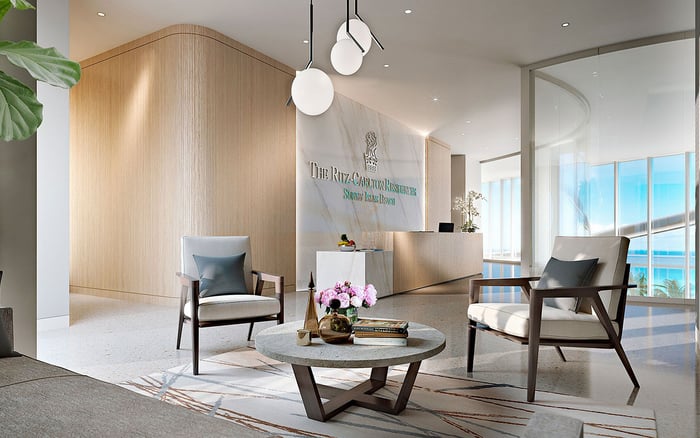
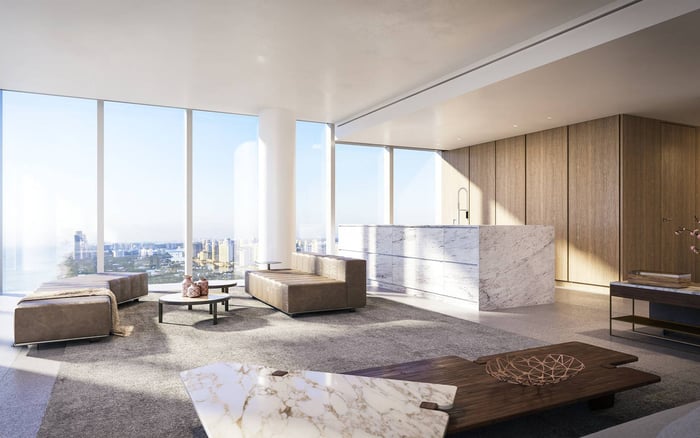
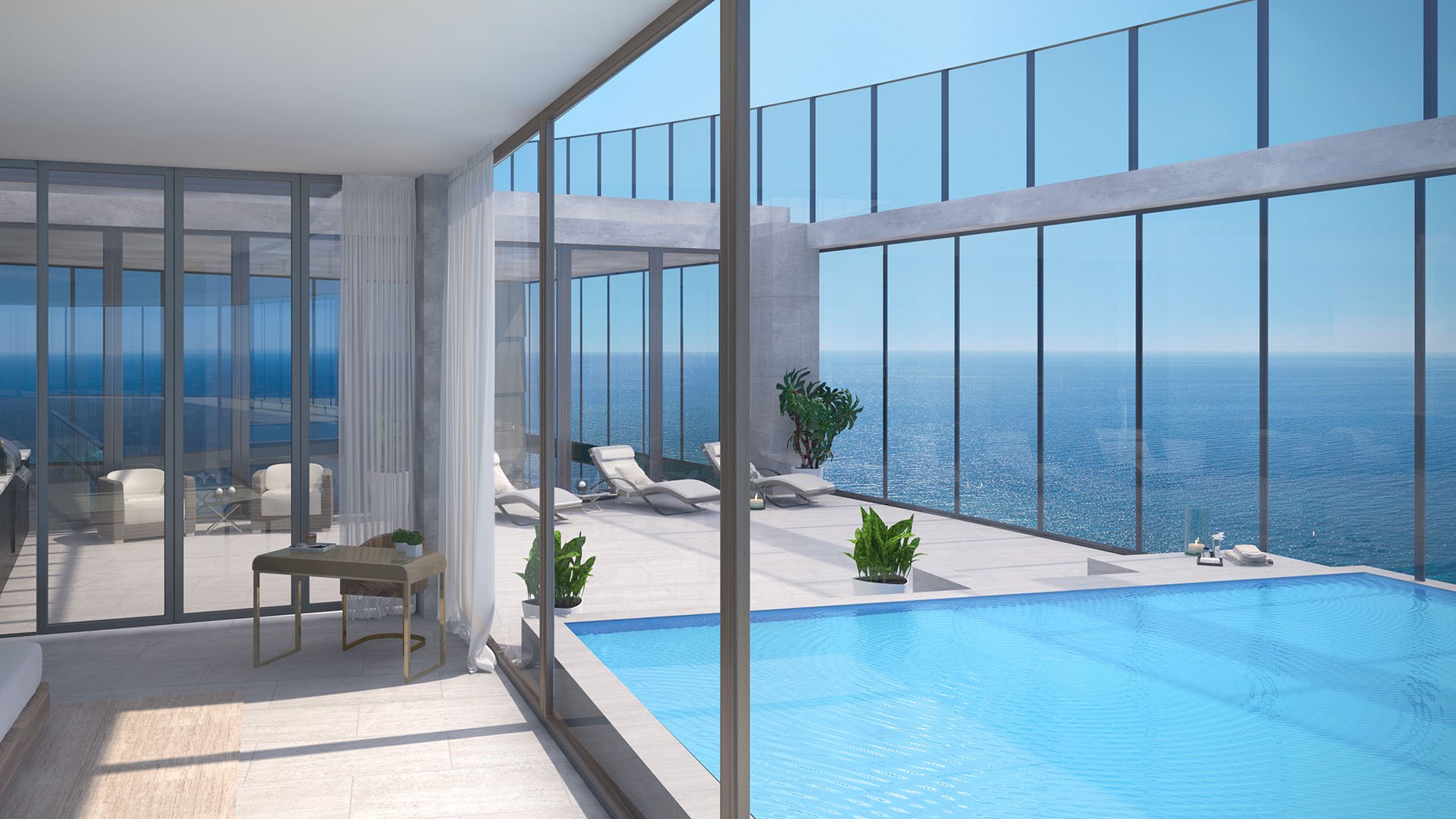
Armani/Casa stands oceanfront at 18975 Collins Avenue in Sunny Isles Beach. Completed in 2020, the 56-story tower contains 308 residences and more than 35,000 square feet of amenities. Planned for 501 Diplomat Parkway in Hallandale Beach, Shell Bay is a 20-story proposition comprising 108 branded residences alongside a 60-key Auberge-managed resort. Its identity centers on a private Greg Norman golf course, racquet facilities, marina access, wellness programming and Auberge hospitality.
Resale confidence depends as much on document clarity as it does on design and amenities.
Both may appeal to internationally minded South Florida buyers, but their future exit profiles begin with different evidence. Armani/Casa has observable sales and rental activity. Shell Bay asks purchasers to underwrite a lifestyle concept, project documents and future operating practices before realized resale data exists.
Neither project states a building-wide purchaser-approval timetable or guarantees a fixed approval period for a completed resale. That absence does not mean approval rules do not exist. It means a buyer should avoid building a closing schedule around assumptions.
At Armani/Casa, the current association application, condominium declaration, bylaws and any resale procedures should be reviewed for the specific transaction. Counsel should also confirm required submissions, review periods, any interview requirements and the consequences of an incomplete application. A completed building offers the practical advantage of an operating association, but project material alone does not establish how quickly a particular purchaser will clear the process.
Shell Bay requires another layer of separation. Condominium approval and private-club admission or transfer provisions may involve distinct procedures, eligibility standards, costs and timing. A purchaser should identify which rights attach to the residence, which depend on club documentation and which may require separate approval. These points matter both to the initial acquisition and to the home’s marketability when a future buyer appears.
This is a recurring issue in buyers’ guides for branded residences: prestige does not replace procedural diligence. Approval milestones should enter the contract calendar only after the operative documents have been reviewed.
No uniform resale transfer, capital-contribution or administrative fee schedule is available for Armani/Casa. Shell Bay likewise does not provide a completed-resale approval timetable or association transfer-fee schedule. Buyers should therefore resist treating a marketing overview as a complete statement of closing costs.
For Armani/Casa, request the current estoppel information, association application and governing documents for the selected residence. Monthly HOA figures across the building have ranged from approximately $150 to $7,500, a spread that underscores why broad building-wide figures are no substitute for unit-specific verification. Residence size, allocation and current association terms can materially shape the ownership budget.
For Shell Bay, the review should encompass draft or final condominium materials as available, together with club agreements and any provisions governing admission, transfer, dues or future resale. Condominium charges and club-related obligations should be modeled separately, even when the lifestyle is presented as one integrated experience. The key is not merely the amount due at purchase, but whether future costs or procedures could narrow the next buyer’s willingness to proceed.
Armani/Casa’s scale and established status support a comparatively broad luxury-condominium audience. Its 308 residences, oceanfront location and wide range of unit types create multiple entry points into the building. Asking prices have spanned $650,000 to $15.9 million, while remaining developer inventory has been offered from $2.9 million. These figures are snapshots rather than permanent terms, but they illustrate meaningful variation within a single address.
That variation can deepen the overall buyer pool without guaranteeing liquidity for every seller. A residence’s line, configuration, view, condition, carrying cost and asking price still define its direct competitive set. Nearby completed luxury options such as Regalia Sunny Isles Beach also give buyers alternatives, so an Armani/Casa resale must be positioned against the active market rather than relying on the building’s brand alone.
Shell Bay’s 108 residences are marketed as one- to three-bedroom homes spanning approximately 1,242 to 2,605 square feet, with prices from about $1.904 million to $5.928 million. Its future audience may be smaller and more specialized than the conventional oceanfront-condominium pool, but potentially more committed to its particular combination of private golf, racquet, marina, wellness and hospitality access.
In Hallandale Beach, a buyer comparing Shell Bay with waterfront condominium alternatives such as 2000 Ocean Hallandale Beach is not making a like-for-like amenity comparison. The more useful question is whether the next purchaser will value the integrated club proposition enough to accept its associated rules, costs and procedures.
Armani/Casa allows a buyer to examine current listings, asking-price dispersion, rental availability and carrying-cost information. That does not eliminate uncertainty, but it enables decisions to be tested against a functioning market. A buyer can assess how comparable residences are presented and where a selected home sits within the tower’s internal hierarchy.
Shell Bay remains an expectation-based underwriting exercise. There is no established record of completed resales, realized days on market or completed-building association practices to examine. The strongest analysis therefore rests on the offering documents, draft association materials, club terms and the buyer’s own holding-period assumptions.
For investors and second-home purchasers, the distinction is consequential. An established market provides evidence, although past visibility cannot promise a future sale. A new project can offer scarcity and a sharply defined identity, yet its eventual buyer pool must still be proven after delivery. Resale planning should consider not only likely demand, but also how many future purchasers will satisfy both the financial profile and the lifestyle preferences embedded in the property.
Before contracting at either property, buyers should obtain and review the current condominium documents, association application, applicable estoppel information and all disclosed transfer or administrative charges. At Shell Bay, club agreements warrant separate review so that residence ownership and club participation are not inadvertently treated as interchangeable.
Carrying costs should be confirmed for the exact home rather than inferred from a building-wide range. Pricing should likewise be understood as a current snapshot. At Armani/Casa, the observable resale market can help frame a unit-specific exit scenario. At Shell Bay, sensitivity analysis should account for the lack of completed resale evidence and the possibility that club-related requirements may influence future demand.
The choice is ultimately between two expressions of luxury. Sunny Isles Beach offers a completed oceanfront tower with visible market behavior. Hallandale Beach offers a lower-inventory, club-oriented vision whose future appeal may be especially strong among buyers seeking its specific ecosystem. Neither profile is inherently superior. The better acquisition is the one whose documents, costs, approval path and probable future audience align with the buyer’s intended hold.
For confidential guidance on South Florida’s most considered residences, connect with MILLION.
If branded residences are on your mind — as a home or as an allocation — we would be glad to share what we are seeing, privately.
Begin a quiet conversationArmani/Casa has observable sales and rental activity as a completed building. Shell Bay remains under development, so its completed resale record has not yet formed.
No building-wide guaranteed approval period is stated in the available public project materials. Buyers should verify the current association process for the specific transaction.
Its public project page does not state a completed-resale approval timetable. Operative condominium and club documents should be reviewed before contracting.
A uniform public schedule of resale transfer, capital-contribution or administrative charges is not provided. Current unit-specific documents and estoppel information should control the review.
Yes. Condominium procedures and private-club admission or transfer terms may involve distinct requirements, costs and timing.
Its 308 residences, oceanfront setting, established market activity and broad asking-price range point to a comparatively diverse luxury-condo audience.
Its proposition is centered on private golf, racquet facilities, marina access, wellness and Auberge hospitality. That combination may resonate most strongly with club-oriented purchasers.
No. Published Armani/Casa figures vary materially, so buyers should confirm current charges for the exact residence.
Buyers cannot yet assess an established record of completed resales, realized days on market or completed-building association practices.
They should review current condominium documents, association applications, estoppel information and disclosed charges. Shell Bay purchasers should also examine applicable club agreements separately.