A buyer-oriented audit of private-chef ventilation, catered-event permissions, delivery routes, elevator scheduling, and service costs at The Ritz-Carlton Residences® West Palm Beach.

For a buyer who entertains regularly, luxury is measured partly by what guests never see: a chef arriving without friction, equipment reaching the kitchen discreetly, and a dining room restored after the final course. At The Ritz-Carlton Residences® West Palm Beach, ownership readiness comes down to how the advertised services translate into permissions, mechanical capacity, and a workable event plan.
The development is marketed as an all-residential collection of 138 residences with Ritz-Carlton residential services. Advertised offerings include a personal concierge, 24-hour valet, a dedicated residential team, personal-chef services, and in-residence dining and catering. These are meaningful offerings, but they do not establish unrestricted outside-vendor access, included pricing, or permission for a particular gathering.
The distinction is simple: a service menu describes possibilities; governing documents and operating procedures establish what an owner can arrange. An audit should connect the two before closing.
Residence kitchens are described as European-inspired, with Sub-Zero and Wolf appliances. That specification identifies equipment brands-not the exhaust system's capacity for the cooking an owner intends to commission.
The available kitchen details do not identify the hood model, airflow rating, make-up-air provisions, or whether exhaust is ducted or recirculating. Appliance specifications alone establish neither permission nor mechanical capacity for commercial-intensity frying, grilling, wok cooking, or prolonged high-heat operation.
Begin with a proposed menu rather than an abstract question about whether a private chef is allowed. Ask the chef to identify cooking methods, simultaneous appliance use, preparation duration, and any equipment brought into the residence. Then request mechanical drawings, hood specifications, the appliance schedule, exhaust-discharge details, filtration requirements, and applicable fire-safety restrictions.
Have an appropriately qualified mechanical professional assess the intended use against the documented design. Ask management separately about operating permissions. Technical suitability and building approval are distinct questions; an affirmative answer to one is not an answer to both.
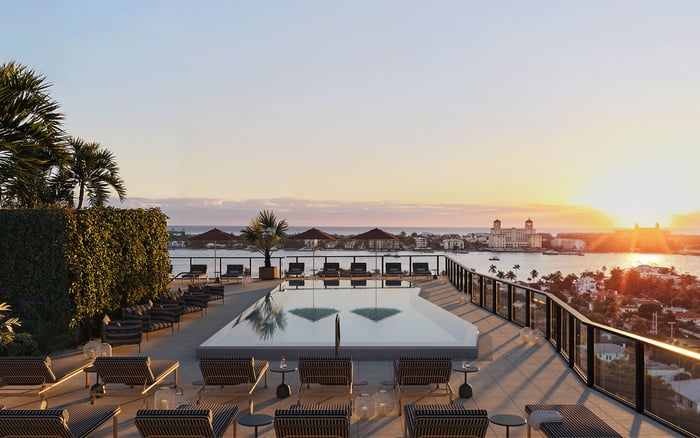
The amenity program includes a fully appointed chef's kitchen, distinct from the kitchens within individual residences. A pool-and-spa deck with full-service dining is also advertised, along with summer kitchens. None of these offerings, on its own, establishes a resident's right to reserve a space for an outside caterer.
For each proposed venue, request written confirmation of booking eligibility, permitted vendors, guest limits, cooking permissions, and staffing requirements. A private club room is also described, but its capacity, reservation rules, and catering permissions require separate confirmation.
Buyers also considering Mr. C Residences West Palm Beach can apply the same distinction: evaluate the residence kitchen, shared culinary spaces, and dining services separately. This is a diligence framework, not an assertion that the properties share facilities or operating rules.
Grocery shopping and delivery coordination are advertised, but those services do not define procedures for a catered event involving carts, rental furniture, tableware, flowers, and multiple vendors.
Ask for the complete vehicle-to-residence route. Where does a delivery vehicle stop? Which entrance may vendors use? Where can equipment wait? Who authorizes movement through common areas? Request confirmation of loading reservations, vehicle restrictions, receiving hours, protective measures, and responsibility for supervision.
The event planner should submit an equipment inventory with dimensions and weights rather than simply label the delivery as catering. Review the largest cart, the widest furniture piece, and the full route, including turns and thresholds. Establish compatibility before committing to rentals.
For a shortlist that includes Alba West Palm Beach, use the same delivery-route questionnaire. A consistent brief makes the comparison more useful without presuming equivalent infrastructure or permissions.
Each residence is advertised with dedicated elevator access and an entry foyer. That does not confirm a separate freight or service elevator. Cab dimensions, door widths, load ratings, and clearance for catering carts and rental furniture are not specified.
The first request should therefore address elevator assignment: which elevator may an approved vendor use, and under what conditions? Only then should the owner ask about scheduling.
Obtain cab and door measurements, load limits, padding requirements, reservation lead times, permitted delivery hours, and any charges. Ask whether a reservation provides exclusive use or an allocated window, how competing bookings are handled, and who coordinates access on the day. These are questions to resolve, not established operating terms.
Plan outbound movement with equal care. Rental collection, waste removal, and equipment retrieval may require separate arrangements. A smooth arrival is only half the event; document the departure plan before setup begins.
The advertised catering offering does not establish maximum private-event attendance, noise limits, alcohol-service rules, event fees, or setup and teardown hours. Outside-chef approval requirements, vendor insurance thresholds, and designated vendor entrances are also unspecified.
Request event-specific approval covering the proposed guest count, location, vendors, service style, and timeline. Confirm whether alcohol service requires additional approval, who is responsible for vendor compliance, and how waste and cleaning will be handled. Do not assume an owner-selected chef is automatically covered by the advertised personal-chef service.
Budgeting warrants a separate written schedule. Oven/cooktop cleaning and refrigerator cleaning are advertised, but their inclusion in recurring ownership charges is not established. Distinguish HOA-funded services from per-use chef, catering, cleaning, venue, staffing, and logistics charges. Ask for current rates, cancellation terms, minimum charges, and any deposits before approving an event budget.
Request the condominium declaration, house rules, current service menu and rates, appliance schedules, mechanical plans, and move/delivery manual. Pair those documents with written answers from the appropriate management or project representatives, identifying any procedures that remain subject to confirmation.
Then test one realistic occasion from beginning to end: menu, guest count, chef approval, delivery inventory, elevator assignment, setup window, service staffing, cleanup, and collection. Any unresolved dependency belongs on the buyer's diligence list-not in an assumption about brand-level hospitality.
The goal is not to make entertaining bureaucratic. It is to establish whether the residence supports the owner's preferred way of living, with clear permissions and costs. Once those details are settled, discretion can become an operating plan rather than simply an expectation.
For a considered approach to South Florida ownership, explore MILLION.
If branded residences are on your mind — as a home or as an allocation — we would be glad to share what we are seeing, privately.
Begin a quiet conversationYes, personal-chef services are advertised alongside in-residence dining and catering. Confirm availability, pricing, and approval requirements for the intended occasion.
No. Appliance brands alone do not establish ventilation capacity or permission for commercial-intensity frying, grilling, wok cooking, or prolonged high-heat operation.
Request mechanical drawings, hood specifications, airflow ratings, exhaust-discharge details, make-up-air provisions, and filtration requirements. Have the intended cooking use reviewed against the documented design.
No, the advertised amenity chef's kitchen is distinct from individual residence kitchens. Its reservation rules and outside-caterer permissions require confirmation.
The residences are advertised with dedicated elevator access, but that does not establish a separate freight or service elevator. Confirm the elevator assigned to vendor deliveries.
Obtain cab dimensions, door widths, load limits, padding requirements, delivery hours, and reservation lead times. Check the planned equipment against the entire delivery route.
Unrestricted outside-vendor access is not established by the advertised services. Request written approval requirements, insurance thresholds, and permitted vendor entrances.
The event details provided do not establish attendance limits or alcohol-service rules. Obtain written confirmation for the proposed venue, guest count, and service plan.
Their inclusion is not established by the service listings. Separate recurring ownership charges from per-use chef, catering, cleaning, staffing, and logistics costs.
Request governing documents, house rules, current service rates, appliance schedules, mechanical plans, and the move/delivery manual. Use them to test a realistic event from vendor arrival through final collection.