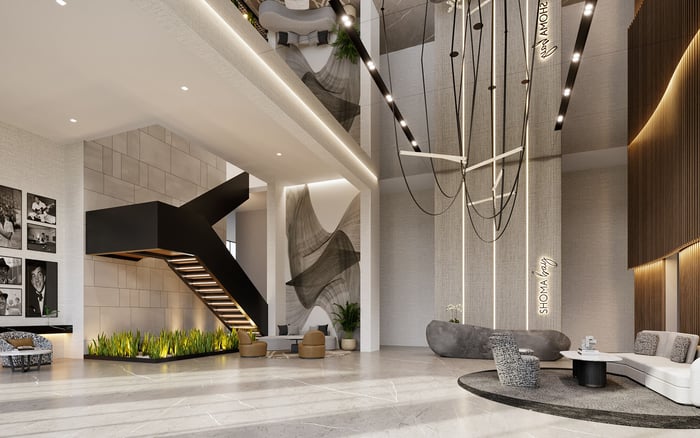
A buyer-focused audit of Continuum’s advertised e-bike storage, with the written confirmations to request on battery charging, private storage, elevator access, and future rule changes.

For an owner who intends to ride regularly, an e-bike amenity is more than a place to leave a bicycle. It is a sequence: entering the property, reaching storage, securing the frame, managing the battery, and retrieving everything without an appointment. At Continuum Club & Residences North Bay Village, that sequence deserves attention before purchase.
The planned 198-residence waterfront condominium at 1755 John F. Kennedy Causeway advertises secured bicycle and e-bike storage. Construction had started by April 14, 2025; that historical milestone does not establish current completion or occupancy. For purchase diligence, the essential distinction is this: advertised storage does not establish permission to charge batteries, keep spare packs, or use a particular elevator.
Treat those permissions as separate questions. The objective is not to presume a problem, but to establish whether the building’s operating arrangements fit the way you intend to live.
The advertised amenity is a useful starting point. Its practical value depends on details that remain unconfirmed: capacity, assignment procedures, access controls, and usage charges. These are disclosure gaps, not evidence that arrangements do not exist.
Request a written description of the storage location and the route from the arrival point. Determine whether access comes with ownership, requires registration, depends on availability, or involves a separate agreement. Ask whether a household with two bicycles can secure two spaces and whether an allocation remains available during an extended absence.
Bicycle configuration matters, too. Give the sales or management team your bicycle’s dimensions and ask about cargo bikes, scooters, trailers, and any size restrictions. A general promise of bicycle storage does not establish whether a longer frame can enter, turn, and occupy an approved space.
For buyers also considering Shoma Bay North Bay Village, use the same questions rather than assuming comparable policies. Compare written permissions and usable access, not amenity names.
Permission to charge in residences, bicycle storage, private storage rooms, or garages remains unconfirmed. So does the provision of a dedicated charging room, charging lockers, fire-rated battery cabinets, or supervised charging stations. Neither uncertainty establishes that such policies or infrastructure are absent.
EV charging stations are listed among the amenities. That does not establish permission or suitable infrastructure for charging portable e-bike batteries. Likewise, an electrical outlet encountered during a visit is not authorization to charge.
Ask for a written charging policy addressing:
The specific locations where charging is permitted, if any.
Required battery, charger, or complete-system certifications.
Restrictions on replacement packs, aftermarket batteries, and modified bicycles.
Whether charging must be attended and whether overnight charging is prohibited.
The procedure for reporting and responding to a defective or recalled battery.
Certification requirements and procedures for swollen, leaking, overheated, water-damaged, or otherwise defective batteries remain unconfirmed. Request the applicable fire-safety instructions rather than improvising a storage or handling solution. If a battery becomes suspect, do not assume the ordinary bicycle room is an approved holding area.
Private temperature-controlled storage is advertised as available for purchase, separately from secured bicycle and e-bike storage. That distinction matters when evaluating both cost and function.
Temperature control alone does not authorize spare-battery storage or charging. Before purchasing a private space for cycling equipment, obtain its permitted-use rules and ask specifically about batteries, chargers, electrical access, and prohibited contents. Clarify whether the space is intended to accommodate your equipment at all.
The ownership question is straightforward: would the room still be worth purchasing if batteries and charging were excluded? Separating that decision from the shared bicycle amenity avoids assigning value to an unconfirmed use.
It remains unconfirmed whether e-bikes may use passenger elevators, must use a service elevator, or require staff handling. Service-elevator dimensions, weight capacity, door clearance, operating hours, reservation rules, and a direct connection to bicycle storage also remain unconfirmed.
Ask for the approved route in writing, ideally with a plan or a walkthrough when available. Test it against your actual bicycle, including handlebars, accessories, and turning space. Elevator cabin measurements alone may not resolve a tight doorway or an awkward approach.
Confirm whether residents may move bicycles themselves, whether protective coverings are required, and whether daily access depends on reservations. Ask what happens when the designated elevator is unavailable or reserved for a move. A route that works only by prior arrangement may not suit spontaneous departures.
For a broader Miami Beach comparison, a buyer considering Five Park Miami Beach should request the same operational detail. This is a diligence framework, not a statement that the properties share elevator rules or bicycle facilities.
Advertised services include 24/7 concierge service and a porte cochere with valet. Neither establishes that staff will transport e-bikes or removable batteries.
Ask who is responsible at each handoff, whether assistance is available on request, and whether handling carries a charge. Establish whether any promised service covers the bicycle, its battery, or neither. If staff involvement is required, confirm the applicable hours rather than extending the concierge’s advertised availability to a different task.
For an owner assessing Lifestyle and Investment priorities together, these details determine personal usability. Keep that assessment separate from assumptions about future resale value; no resale premium for e-bike access is established here.
An occasional resident should ask whether storage assignments continue during absences, whether registration must be renewed, and what rules apply to batteries left on site. These questions matter even when the bicycle itself rarely moves.
Request condominium documents, current owner rules, bicycle-storage rules, the move-in manual, applicable fire-safety procedures, and the elevator-use policy. Ask counsel whether the purchase documents preserve advertised storage access, allow later restrictions or additional fees, and establish relevant document-review deadlines. Record unresolved answers before making the amenity part of your purchase rationale.
A useful final test is to describe one ordinary ride from departure through return and recharge. Every step should have a permitted location, an access route, and a responsible person. That is ownership readiness: not more amenities on paper, but clarity about the ones you will actually use.
For a discreet conversation about matching residential amenities to your ownership priorities, connect with MILLION.
If branded residences are on your mind — as a home or as an allocation — we would be glad to share what we are seeing, privately.
Begin a quiet conversationYes. Project marketing advertises secured bicycle and e-bike storage, but does not specify capacity, assignment procedures, access controls, or charges.
Not necessarily. The reviewed marketing does not establish where charging is permitted, so buyers should request written authorization and applicable rules.
The reviewed marketing does not identify a dedicated charging room, charging lockers, fire-rated battery cabinets, or supervised charging stations. That does not establish that such facilities are absent.
Published project information lists EV charging stations, but does not establish permission or suitable infrastructure for charging portable e-bike batteries.
That use is not established by the reviewed description. Private temperature-controlled storage is advertised separately, and buyers should confirm its permitted contents and charging restrictions.
The reviewed marketing does not establish whether e-bikes must use a service elevator, may use passenger elevators, or require staff handling.
Request cabin dimensions, door clearance, weight capacity, permitted hours, reservation requirements, and the approved route to bicycle storage. Confirm any protection requirements and handling fees.
The advertised concierge and valet services do not establish an e-bike or battery-handling service. Confirm responsibility, availability, and any charges separately.
The reviewed marketing does not specify required certifications or procedures for defective batteries. Request the current charging rules and applicable fire-safety procedures.
Request condominium documents, current owner rules, bicycle-storage rules, the move-in manual, fire-safety procedures, and the elevator-use policy. Ask counsel about storage rights, potential rule changes, additional fees, and review deadlines.