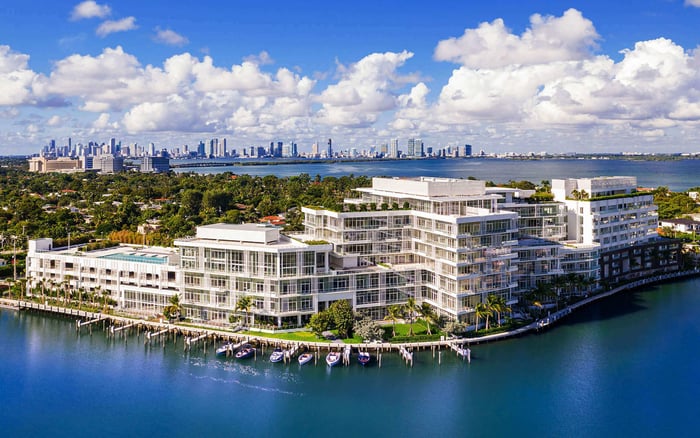
For buyers who entertain, an amenity’s practical value depends on the rules governing reservations, guests, vendors, fees and service coordination. A careful review of current condominium documents can clarify how shared spaces may support an owner’s plans.

At The Ritz-Carlton Residences® Miami Beach, buyers who entertain should look beyond amenity names and examine how shared spaces are governed. The practical questions concern availability, reservation procedures, guest access and the steps required to coordinate a gathering.
Branding may shape a buyer’s expectations, but current condominium documents and property-specific procedures should guide the analysis. Buyers should verify the applicable rules rather than assume that a hospitality name establishes a particular level of access or flexibility.
An intimate dinner, a family visit and a larger reception can create different operational needs. Before relying on a shared space, a buyer should determine whether advance booking is required, how reservation priority works and whether simultaneous reservations are permitted.
Guest limits, time restrictions and cancellation terms can also affect planning. If a gathering involves catering, deliveries, music, decorations or hired personnel, the buyer should ask whether vendor approval, insurance, deposits, security or cleanup arrangements are required.
Different shared spaces may follow different procedures. A social room may not operate under the same rules as an outdoor area, private dining setting, screening room, cabana, marina-related facility or transportation-based amenity.
A useful review considers each space independently. Buyers can ask who may reserve it, when bookings open, whether fees apply, how guests enter and what happens if weather or another issue disrupts the event.
Buyers comparing Miami Beach residences can also review Shore Club Private Collections Miami Beach and The Ritz-Carlton Residences® South Beach. These links provide project navigation, but buyers should obtain and assess the current documents applicable to each property.
A meaningful comparison asks how a proposed gathering would work from beginning to end. That includes booking, guest arrival, deliveries, staffing, use of the space and post-event responsibilities.
Concierge, valet or lobby assistance should not automatically be treated as event management. Buyers should ask which tasks property personnel may coordinate and which remain the owner’s responsibility.
The same caution applies to hotel access or privileges. Similar branding does not by itself establish reciprocal access between separate properties, so any claimed benefit should be confirmed in the relevant documents.
A buyer focused on entertaining should request the current condominium declaration, association rules, amenity handbook, fee schedule and any event or vendor policies. Relevant forms may address reservations, guests, catering, insurance, deposits, cancellations and cleanup.
It can be helpful to present management with a realistic scenario and ask how it would be handled. Written answers and current documents provide a stronger basis for evaluation than assumptions based on marketing language.
Why do amenity reservation rules matter to buyers who entertain? They help determine whether and how a shared space can support a planned gathering.
Which documents should a buyer request? Request the current declaration, association rules, amenity handbook, fee schedule and applicable event or vendor policies.
Should every amenity be reviewed separately? Yes. Reservation procedures, guest rules and fees may differ by space.
What timing questions should buyers ask? Ask when bookings open, whether priority rules apply and how cancellations are handled.
Why are guest policies important? Guest limits and arrival procedures can affect the size and structure of an event.
What should buyers confirm about vendors? They should ask about approvals, insurance, delivery procedures and any restrictions on outside providers.
Can concierge assistance be assumed to include event management? No. The scope of available assistance should be confirmed directly in current property documents or written guidance.
Should buyers assume access to amenities at another similarly branded property? No. Any reciprocal access or privilege should be verified for the specific properties involved.
How can a buyer test whether the rules fit a particular lifestyle? Present a realistic gathering scenario and ask management to explain each required step.
Can operating rules change after a purchase? Buyers should review the governing documents for amendment procedures and ask how owners receive policy updates.
For a confidential assessment and a building-by-building shortlist, connect with MILLION.
If branded residences are on your mind — as a home or as an allocation — we would be glad to share what we are seeing, privately.
Begin a quiet conversation