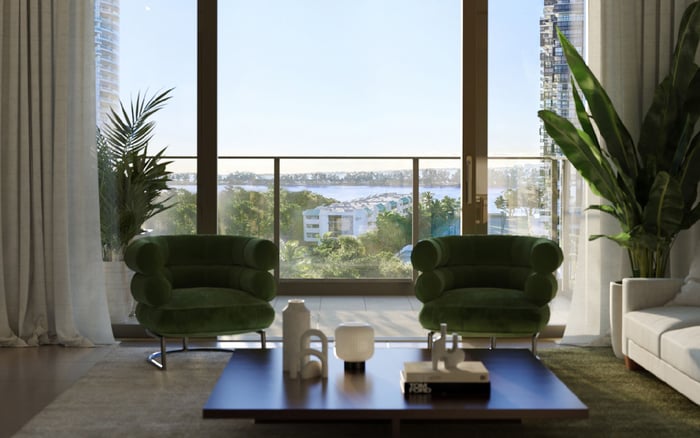
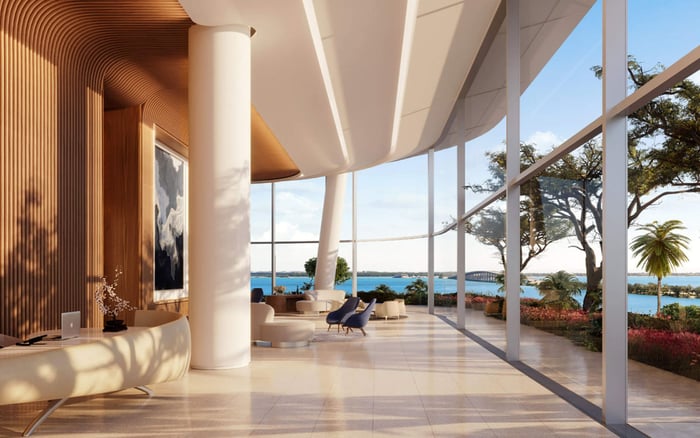
At 2200 Brickell, the practical value of shared spaces depends on more than design. Buyers who entertain should examine reservation access, guest and vendor rules, service logistics, fees, exclusivity, and the governing documents that control actual use.

At 2200 Brickell, a residential development in Miami's Brickell neighborhood, the amenity conversation should extend beyond presentation. A beautifully conceived shared space may suggest effortless dinners, celebrations, or informal gatherings, yet its value to an owner ultimately depends on how-and when-it can be reserved and used.
This distinction is especially important for buyers who entertain regularly. Marketing defines the setting; operating rules determine access, timing, guest counts, vendor permissions, service circulation, costs, and post-event responsibility. Those details shape whether a space functions as an extension of the residence or is better suited to casual, nonexclusive use.
The available project information does not establish reservation windows, advance-booking periods, priority procedures, frequency caps, guest limits, or applicable fees. These points should therefore be treated as due-diligence questions, not assumed building policies.
A buyer should begin by asking when reservations open, how requests are submitted, and whether access is first come, first served. It is equally important to know whether weekends and holidays follow different procedures, whether residents receive equal priority, and how competing requests are resolved.
Frequency matters as much as lead time. No verified cap on private amenity reservations is presently specified in the available material. An owner who expects to host monthly should determine whether the rules limit bookings by week, month, season, or household. Buyers should also ask whether resident programming, weekend congestion, maintenance closures, or holiday demand can displace private plans.
For those comparing Brickell options such as Cipriani Residences Brickell or The Residences at 1428 Brickell, the disciplined approach remains the same: compare current operating documents, not amenity imagery alone. Policies at another property should never be presumed to apply at 2200 Brickell.
The word “reservation” can describe very different privileges. It may grant control of an entire room, or secure only a table, cabana, or defined section while the broader amenity remains open to other residents. For a private dinner, family celebration, or business gathering, that distinction can affect privacy, sound, service, and the occasion's overall tone.
Ask management to identify the precise reservable area and what remains communal during the booking. A pool reservation, for example, should not be interpreted as exclusive control unless the policy states so clearly. Buyers should also confirm whether adjacent circulation routes, restrooms, preparation areas, and furnishings are included.
This is where lifestyle expectations meet governance. One host may value discretion more than capacity, while another may prioritize flexibility. Neither objective can be evaluated confidently without a clear description of what the reservation actually secures.
For catered events, vendor permission is only the beginning. Buyers should verify whether third-party chefs, caterers, bartenders, and event staff are allowed, then establish how those professionals enter and operate within the property. Loading procedures, delivery windows, elevator use, setup times, breakdown schedules, and staging areas can determine whether a polished event is practical.
The operating rules should also address event duration, quiet hours, amplified music, decorations, and post-event cleanup. A buyer may wish to ask whether open flames, temporary equipment, floral installations, or rearranged furniture require separate approval, but should not assume permission or prohibition without written confirmation.
Prospective owners considering other hosting-oriented residences, including ORA by Casa Tua Brickell, should apply the same scrutiny to each property's documents. Procedures may evolve as management structures and resident needs mature, making the latest dated materials particularly important.
Reservation fees, security deposits, cancellation charges, and damage assessments are not disclosed in the supplied project material. Buyers should request a current fee schedule and clarify when charges become nonrefundable, how deposits are returned, and who determines responsibility for damage or additional cleaning.
There may also be practical costs beyond the reservation itself. If security personnel, housekeeping, engineering support, or supervised vendor access are required, buyers should ask whether those services carry separate charges. The objective is not merely to estimate the cost of one evening, but to understand the recurring economics of entertaining at the frequency the owner envisions.
The strongest review begins with the condominium declaration, bylaws, current rules and regulations, amenity policies, fee schedules, and management-issued reservation procedures. Request the latest dated versions and ask whether any amendments, board resolutions, or temporary policies affect amenity use.
This review belongs alongside the broader purchase analysis found in discerning buyer's guides. It is particularly relevant because operating policies may change after turnover to a condominium association. Buyers should identify which provisions are embedded in governing documents, which are management procedures, and which may be revised by the association.
A carefully drafted contract review and guidance from the buyer's legal counsel can help distinguish durable rights from changeable practices. For an owner who entertains, that difference is central to assessing whether the building supports the intended rhythm of life.
Before committing, describe a realistic event to the appropriate sales or management representative. Specify the likely number of guests, preferred day and time, catering format, staffing, music, setup needs, and expected frequency. Then request the written rule governing each element.
The response should allow the buyer to map the entire sequence, from booking and deposits through deliveries, guest arrival, event close, cleanup, and deposit release. If an answer is verbal, request confirmation in the current governing or management materials. Precision at this stage protects both the host's expectations and the property's residential character.
Are amenity reservation windows confirmed for 2200 Brickell? No reservation window or advance-booking period is established in the available project information.
Are private-booking frequency limits disclosed? No verified frequency caps are provided, so buyers should request the current written policy.
Are guest limits specified for resident events? Guest limits are not specified in the available project information and should be confirmed before purchase.
Does a reservation guarantee exclusive use? Not necessarily. Buyers should determine whether a booking covers the entire amenity or only a table, cabana, or defined section.
Can residents use outside caterers or bartenders? Permission is not established in the available material, so access for third-party chefs, caterers, bartenders, and staff should be verified individually.
What service logistics should a host confirm? Confirm loading, deliveries, elevator access, vendor entry, setup times, breakdown procedures, and any staging restrictions.
Which event rules deserve special attention? Request written terms for duration, quiet hours, amplified music, decorations, and post-event cleanup.
Are reservation fees and deposits disclosed? No. The available material does not specify booking fees, security deposits, cancellation charges, or damage assessments.
What can affect amenity availability? Holiday demand, weekend congestion, maintenance closures, and resident events may affect access and should be discussed with management.
Which documents should a buyer request? Ask for the declaration, bylaws, current rules, amenity policies, fee schedules, and management-issued reservation procedures.
To compare the best-fit options with clarity, connect with MILLION.
If branded residences are on your mind — as a home or as an allocation — we would be glad to share what we are seeing, privately.
Begin a quiet conversation