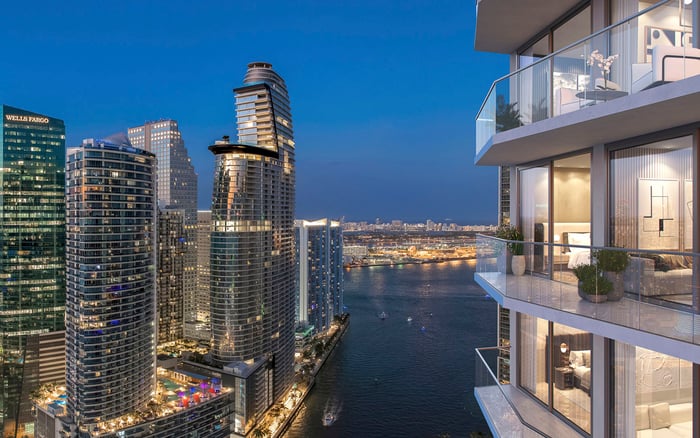
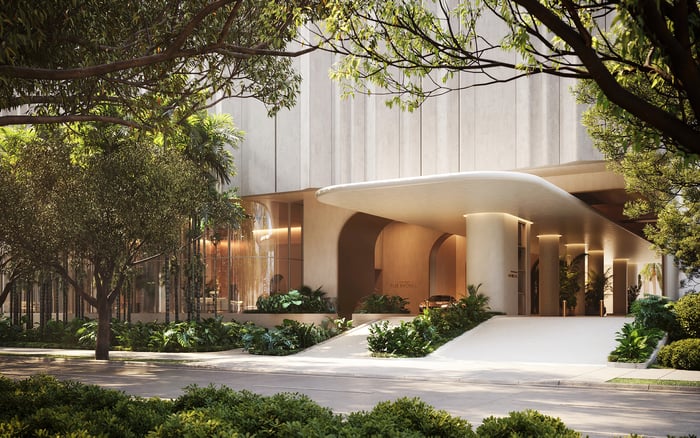
For buyers moving from Melbourne to Brickell, mobility deserves the same scrutiny as views and interiors. Airport transfers, major-event traffic, building access, and chauffeur protocols all influence how effortlessly a residence supports the owner’s schedule.

For buyers choosing Brickell after leaving Melbourne, the most effective approach is not to assume that familiar travel routines will transfer unchanged. A residence should be evaluated not only for its views, interiors, and amenities, but also for how well its access pattern supports airport departures, major events, and chauffeured movements.
Brickell’s position within Miami can be attractive to owners balancing business, dining, waterfront activities, and regional travel. Yet a central location does not make every journey predictable. The useful questions concern how a car reaches the building, where a driver can wait, which route is practical at a particular hour, and how much contingency time is appropriate when a flight or reservation cannot move.
In Brickell, the best mobility plan is measured in protected time, not nominal mileage.
A viewing itinerary should therefore extend beyond residences and shared amenities. Buyers considering 2200 Brickell or 888 Brickell by Dolce & Gabbana can use each tour to examine the sequence from the residence to the porte cochère and onward to the surrounding road network. The objective is to understand how the property may function on the days that matter most to the owner.
Airport planning should begin with the scheduled departure and work backward. The calculation should allow for the drive, building departure procedures, luggage loading, airline requirements, security, and any terminal arrangements relevant to the traveler. Traffic and entrance activity can change, so the plan should include enough flexibility to absorb delays without creating unnecessary stress.
An early driver arrival can help protect against a delayed elevator, additional luggage, a guest who is not ready, or temporary crowding at the entrance. The pickup instructions should identify the traveler, flight details, luggage needs, preferred vehicle, and the person responsible for approving any change.
A second-home owner may benefit from a written procedure because family members, guests, and household staff may have different levels of familiarity with Miami. For buyers reviewing Cipriani Residences Brickell, due diligence can include a discussion of guest arrivals, driver staging, luggage handling, and alternative collection arrangements when the primary entrance is busy.
Formula 1 attendance should be treated as a dedicated movement rather than a routine car journey. Event traffic controls, collection procedures, and practical routes may change, so plans should be based on current information obtained close to the event rather than assumptions carried over from a prior year.
The most reliable approach is disciplined. Reserve transportation in advance, select an outbound window, identify a primary collection point, and agree on a backup location. The driver and passenger should also have a clear communication method if traffic controls prevent the vehicle from reaching the expected curb.
Avoid building an itinerary around a precise curbside pickup that depends on unrestricted vehicle access. If an airport departure, dinner, or other fixed commitment follows the event, treat that next movement as a separate part of the schedule with its own contingency plan.
Boat Show plans can involve waterfront destinations, marina appointments, yacht visits, and cross-city movements. Instead of treating each diary entry in isolation, arrange the day as a connected sequence. This makes it easier to account for waiting time, changing pickup points, and the possibility that one delayed appointment will affect the next.
A chauffeur brief should specify every planned stop, the order of appointments, expected luggage or presentation materials, and who may authorize a route or timing change. Owners should also confirm current access conditions before departure and avoid relying solely on the apparent distance between destinations.
If the day includes both Brickell and another waterfront area, decide whether the driver should wait nearby or return at a fixed time. That choice should reflect the owner’s preference for flexibility, the schedule’s sensitivity, and the availability of an acceptable backup collection point.
Property selection should translate mobility concerns into concrete questions. Ask where a driver waits when the entrance is busy, whether resident and service movements use the same approach, and how the building handles an alternative pickup. Observe the path from the lobby to the vehicle and consider whether it works comfortably for guests, children, luggage, or household staff.
The same audit can be applied across different Brickell residences. When touring St. Regis® Residences Brickell and Una Residences Brickell, buyers can ask their advisers to model an airport departure, a Formula 1 transfer, and a Boat Show itinerary. The aim is not to label one address universally faster, but to identify the circulation pattern that best suits the owner’s calendar and tolerance for uncertainty.
A useful review also considers how visitors receive instructions. A guest who has never entered the building may need a clear meeting point, the correct entrance name, and a contact who can resolve confusion. Written directions can be especially valuable when a driver is different from the provider originally booked.
A household transport protocol should identify the preferred chauffeur provider, a backup provider, the person responsible for confirmations, and the default approach to airport and event-day buffers. It should record both a primary and an alternative pickup point near the residence, while requiring a current access check before any time-sensitive movement.
The protocol should remain simple enough for family members, guests, and staff to use consistently. A concise checklist can cover the vehicle request, passenger count, luggage, pickup instructions, driver contact, destination sequence, and backup plan. Fixed collection windows are generally easier to manage than last-minute requests when access conditions are uncertain.
For owners and household managers, this turns mobility into a manageable part of property operations. The refined choice is the Brickell residence whose access pattern supports how the owner actually moves through South Florida.
For discreet guidance on selecting a Brickell residence around your travel calendar, connect with MILLION.
If branded residences are on your mind — as a home or as an allocation — we would be glad to share what we are seeing, privately.
Begin a quiet conversationA residence’s entrance, driver access, and surrounding circulation can affect airport trips, event attendance, and everyday convenience.
They should work backward from departure time and allow for the drive, luggage loading, building access, and applicable airline procedures.
Include the flight information, passenger count, luggage needs, vehicle preference, pickup point, and responsible contact.
Event access and collection procedures can differ from an ordinary journey. A dedicated plan provides clear timing, communication, and backup arrangements.
No. They should confirm current access information close to the event and adjust the transport plan accordingly.
Arrange marina visits, yacht appointments, and other stops as one connected itinerary rather than isolated trips.
It should name an alternative meeting point, a driver contact method, and the person authorized to approve changes.
Ask where drivers wait, how alternative pickups work, and whether resident and service vehicles share the same approach.
Testing likely travel scenarios helps buyers compare a building’s access pattern with their own calendar and priorities.
It should identify preferred and backup providers, confirmation responsibilities, pickup instructions, passenger details, and contingency steps.