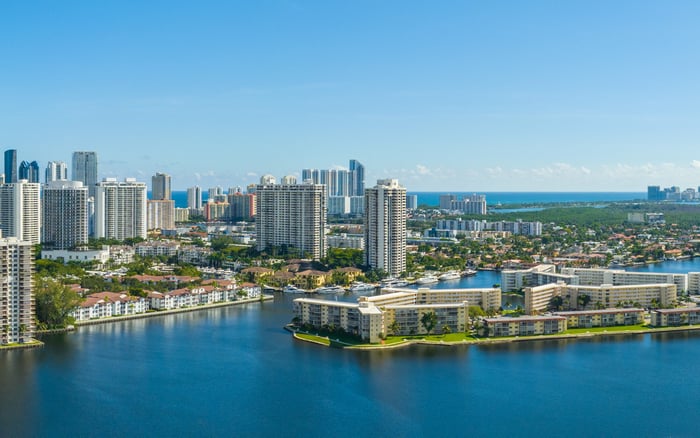
For an Aventura residence managed from Geneva, the decisive luxury is operational clarity. Buyers should align condominium rules, access authority, inspection protocols, storm preparation, and post-storm re-entry before the home is left vacant.

For a buyer relocating from Geneva or dividing the year between Europe and South Florida, acquiring an Aventura condominium is only the visible part of the decision. The less visible-and equally consequential-question is how the residence will be protected, inspected, and reopened while its owner is thousands of miles away.
That responsibility cannot be delegated by assumption. Florida condominium law does not generally require absentee owners to permit management to inspect an unoccupied unit, nor does it mandate periodic inspections of vacant condominiums. Access and responsibility must instead be established through the building's governing documents and procedures, together with the owner's written authorization.
This is especially important for a second home near the water. Waterfront living, a marina setting, and an expansive balcony may define the appeal, but they also heighten the need for disciplined absence care. Within MILLION's Buyer's Guides, the most useful principle is simple: service should be documented as precisely as ownership.
The decisive luxury for an absentee owner is an unbroken chain of responsibility.
Begin with the current declaration, rules and regulations, hurricane procedures, management agreement, and absentee-owner forms. Together, these documents should clarify which obligations belong to the association, which remain with the unit owner, and which may be performed by an authorized representative.
A buyer considering Avenia Aventura should apply the same discipline required for any condominium purchase: obtain the current documents rather than rely on a general description of building services. Practices differ materially among South Florida associations. Some may assist with shutters or terrace objects; others expressly place those duties on the owner.
The distinction matters. An association's common-area hurricane plan does not necessarily include closing private-unit shutters, moving outdoor furniture, or entering a residence to inspect for water. Florida law allows associations to operate hurricane protection installed by the association, but that does not mean every unit has such protection or that every private component will be handled.
Before closing, ask Florida counsel to review the relevant documents and identify deadlines, access provisions, owner duties, and restrictions. Then match those obligations line by line against the proposed manager's contract.
“Property manager,” “concierge,” and “home watch” can describe materially different scopes. The agreement should specify inspection frequency, areas to be examined, photographic standards, reporting deadlines, storm triggers, repair coordination, and emergency spending authority. It should also define what happens when the primary representative is unavailable.
Routine visits warrant a defined checklist. At minimum, the scope should address visible water intrusion, window and door seals, loose terrace items, interior conditions, and coordination with building management. A dated photographic record creates continuity between visits and gives an overseas owner a practical basis for determining whether further investigation or repair is necessary.
The same diligence applies when comparing nearby luxury options such as Bentley Residences Sunny Isles or One Park Tower by Turnberry North Miami. A residence's location, service proposition, and amenities do not replace a unit-specific care agreement. Buyers should ask what is included, what costs extra, which vendors may be engaged, and who will provide evidence that each task was completed.
Financial administration should be equally explicit. If the manager will pay invoices, supervise repairs, or provide owner reporting, define approval limits and documentation standards. A broad promise of “turnkey” service is no substitute for an executable responsibility matrix.
A local representative is useful only if that person can reach the residence. Register the representative with the association, and keep the owner's contact details, emergency contacts, keys, elevator fobs, and written entry permission current. Associations commonly seek updated owner and caretaker information, so review this file at least annually and whenever personnel change.
Written authority should cover both routine inspections and post-storm entry. It should also clarify whether the representative may admit vendors, authorize mitigation, communicate with the association, and document damage. A backup representative should have independently confirmed credentials rather than depend on an informal handoff.
Test access before departure. A key that opens the unit but not a controlled elevator, garage, or service entrance is not a complete solution. The owner, association, and manager should each understand who holds every credential and where the written authorization is retained.
Storm preparation should be a distinct contractual service with objective triggers. Some condominium rules require residents leaving a unit vacant for more than 48 hours during hurricane season to bring patio or veranda objects indoors before departure. Rules may also make owners responsible for maintaining shutters and arranging for someone to close them while they are away.
The pre-departure plan should therefore identify who moves terrace furnishings, checks seals, closes installed shutters, coordinates with building management, and confirms completion with photographs. Failure to deploy unit-level protection can affect neighboring residences and common property, making ambiguous responsibility unacceptable.
Do not improvise with portable generators or fuel. Condominium rules may tightly restrict gasoline storage and generator use for fire-safety reasons. The plan should follow building-specific requirements.
Insurance requires a separate review. A Florida-licensed insurance professional should evaluate vacancy or unoccupancy conditions, wind and flood coverage, water-loss mitigation duties, and notification requirements. The care schedule and reporting process should support those conditions without being treated as a substitute for coverage advice.
A storm plan is incomplete without a re-entry sequence. Name the first authorized local contact who will enter once the building permits access, inspect the residence, photograph conditions, and report damage while the owner remains abroad. Then name the backup and define escalation procedures if access is delayed or unsafe.
The first report should follow a pre-agreed format rather than arrive as a casual message. It should distinguish observed conditions from suspected damage, record the time of entry, preserve photographs, and identify any immediate mitigation requested. Emergency spending authority should be narrow enough to protect the owner yet sufficient to prevent avoidable deterioration while approvals cross time zones.
Buyers considering Turnberry Ocean Club Sunny Isles or any coastal condominium can apply the same closing discipline: reconcile building procedures, private access authority, management scope, and insurance conditions in one controlled file. Review it before each hurricane season, after any change in representatives, and whenever association rules are updated.
For discreet guidance on selecting and operating a South Florida residence, connect with MILLION.
If branded residences are on your mind — as a home or as an allocation — we would be glad to share what we are seeing, privately.
Begin a quiet conversationNo. Owners should establish an inspection schedule and responsibility chain through contracts, building procedures, and written authorization.
Not necessarily. Entry depends on governing documents, building procedures, access conditions, and the owner's authorization.
It should define inspection frequency, photographic reporting, storm preparation, repairs, building coordination, spending authority, and re-entry duties.
A registered local representative and a confirmed backup should have the credentials needed to reach the unit, subject to building rules.
Not always. Condominium rules may make shutter maintenance and deployment the unit owner's responsibility.
Building rules may require outdoor objects to be brought inside during hurricane season, particularly when a unit will remain vacant.
It should name the first authorized entrant, a backup, the inspection format, reporting duties, and limits on emergency spending.
Yes. Dated photographs support consistent inspections, document conditions, and help an overseas owner evaluate repairs or further investigation.
No. Common-area procedures may not cover private shutters, terrace objects, interior inspections, or unit-specific mitigation.
Review it at least annually and whenever the owner, representative, credentials, association rules, or management arrangements change.