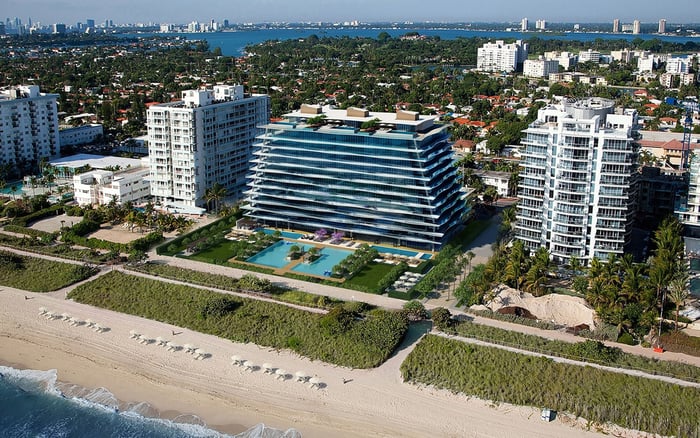
A Surfside purchase should be evaluated not only for arrival, but also for the eventual exit. Approval authority, disclosure timing, reserves, assessments and transaction charges can materially shape future resale liquidity.

Leaving Copenhagen for Surfside may feel like a lifestyle decision, but a durable purchase plan also treats the residence as an asset that will eventually return to market. Florida condominiums generally operate under Chapter 718, yet each association’s declaration, bylaws, rules, finances, and procedures can create a distinct resale path.
That distinction matters across the oceanfront market. A buyer comparing Arte Surfside with Fendi Château Residences Surfside should not transfer assumptions from one property to another. Approval rules, reserve positions, and fees must be examined independently for each prospective building.
For MILLION’s Buyer’s Guides audience, the central principle is simple: second-home enjoyment, investment discipline, and future liquidity belong in the same conversation.
Liquidity is about more than market demand. It also reflects how many buyers can satisfy a building’s financial criteria, complete its application, and remain comfortable with its structural and reserve disclosures. Interviews, background standards, or eligibility restrictions may narrow the qualified pool and lengthen the path to closing.
Financial condition is equally consequential. Large or recurring special assessments can discourage purchasers, complicate financing, and invite price negotiations. Because assessment authority may depend on the declaration and bylaws, those documents warrant close attention alongside the budget, reserve study, engineering materials, assessment history, and recent board minutes.
A buyer considering Ocean House Surfside should therefore evaluate both the residence and the association governing its transfer.
A condominium association may approve or reject a purchaser only when its governing documents expressly grant that authority. When screening is authorized, supportable grounds for denial may include an incomplete application, failure to meet stated financial criteria, material background concerns, or refusal to complete required procedures. Standards should be objective and consistently applied-not arbitrary or discriminatory.
Obtain the current application, written criteria, and procedural checklist before signing. Ask whether an interview is mandatory, what financial evidence is required, who makes the decision, and how frequently the approving body meets. Cash may strengthen an offer, but it does not override document requirements or board approval.
The condominium contract rider can make approval a condition of closing. If its deadline is left blank, failure to obtain required approval by five days before closing may allow termination and return of the deposit.
Where approval is required and the governing documents authorize a charge, Florida’s statutory cap for condominium transfer approval is $150 per applicant. Spouses-and a parent with a dependent child-are treated as one applicant. This screening charge does not itself authorize a separate capital contribution simply because title is changing.
Do not confuse approval charges with an estoppel certificate. An association generally has 10 business days after a written or electronic request to provide the certificate. Statutory charges can include up to $250 for a standard estoppel, up to $400 in aggregate when delinquent amounts are owed, and up to $100 for expedited delivery.
Before purchasing at The Surf Club Four Seasons Surfside or any other condominium, request the current fee schedule. Have counsel confirm the authority for each screening, transfer, document, estoppel, or expedited-processing charge, as well as which party pays it.
Condominium approval commonly takes two to four weeks. Applications, financial documentation, background checks, interviews, meeting schedules, and quorum requirements can all create bottlenecks. A complete application may shorten the process, but an aggressive closing date should still allow sufficient time for association review and the estoppel period.
A non-developer resale purchaser also has seven business days after receiving the required condominium documents to cancel. Saturdays, Sundays, and legal holidays are excluded, and the period cannot be waived or amended. On a future sale, promptly delivering a complete package starts that clock without unnecessary delay.
Preserve the declaration, articles, bylaws, rules, financial statements, budget, milestone inspection report, structural integrity reserve study, and any applicable turnover inspection report. Add permits for ongoing or planned construction, engineering records, assessment notices, board minutes, applications, approvals, and payment receipts as they become available.
This file gives a future buyer a clearer view of reserves, planned work, and potential assessments. It also helps the seller address diligence questions early, reducing uncertainty when confidence is most valuable. In Surfside, an elegant acquisition and an orderly exit begin with the same discipline: rigorous document review.
Does every Surfside condominium approve buyers? No. Approval authority must be expressly granted by the condominium’s governing documents.
Can a cash buyer bypass association approval? No. Cash does not eliminate an authorized application, screening process, or approval condition.
How long should a buyer allow for approval? Model two to four weeks, with additional margin for incomplete materials or meeting schedules.
What is the transfer-approval fee cap? The statutory cap is $150 per applicant when approval is required and the charge is authorized.
Are spouses charged as separate applicants? Spouses are treated as one applicant, as are a parent and dependent child.
Is an estoppel fee the same as a screening fee? No. An estoppel confirms account and association information, while screening relates to purchaser approval.
How quickly must an estoppel certificate be delivered? The association generally has 10 business days after receiving a written or electronic request.
What documents matter most for future liquidity? Prioritize governing documents, budgets, reserve studies, inspection records, assessments, minutes, and the current buyer application.
Why do special assessments affect resale? Significant or recurring assessments can reduce buyer confidence, create financing concerns, and prompt price negotiations.
When does the resale cancellation period begin? It begins when the non-developer resale buyer receives the required condominium documents and lasts seven business days.
When you're ready to tour or underwrite the options, connect with MILLION.
If branded residences are on your mind — as a home or as an allocation — we would be glad to share what we are seeing, privately.
Begin a quiet conversation