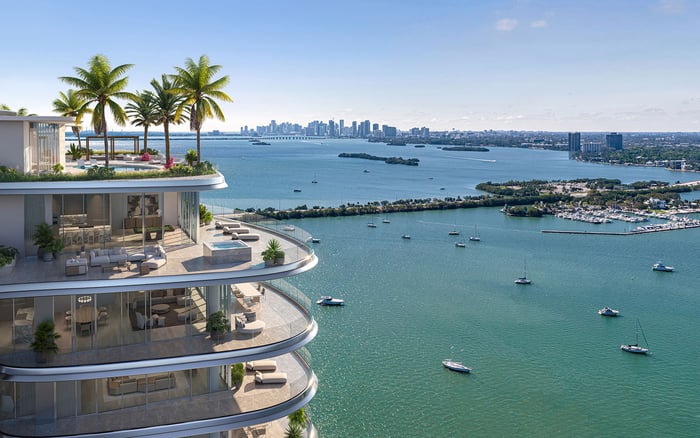
A disciplined framework for Toronto buyers converting newly realized wealth into a Bay Harbor Islands residence, with attention to use, capital structure, project fit, diligence, and long-term optionality.

A liquidity event can create urgency where none is warranted. The more productive first step is to convert newly available capital into a precise residential mandate. Decide whether the Bay Harbor Islands property will serve primarily as a seasonal home, a family base, a long-hold asset, or some combination of the three. That decision will shape the preferred layout, building scale, tolerance for carrying costs, and exit horizon.
Set a total capital ceiling rather than focusing solely on the purchase price. It should account for closing expenses, furnishings, professional fees, reserves, and the possibility that ownership costs may evolve. A residence that feels effortless to acquire should remain comfortable to hold without relying on rental income or a near-term resale.
Within a Buyer’s Guides framework, the relevant lenses are Second-home use, Investment discipline, Boutique scale, and Waterfront exposure. Treat Bay Harbor Islands as a search label, not an underwriting conclusion. The individual residence and its governing documents matter more than the broader location narrative.
Before selecting a unit, coordinate Canadian and United States tax, legal, estate, and currency advice. The goal is not complexity, but a clean ownership structure aligned with how the residence will be used, who may inherit it, and how future sale proceeds would be handled.
If the liquidity event and property purchase involve different currencies, establish a conversion policy before signing a contract. Buyers can separate the residence decision from the timing of currency conversion, maintain reserves in the currency of expected expenses, and prevent a short-term market move from dictating the property choice.
Privacy also warrants advance planning. Determine which advisers require access to transaction documents, how funds will move, and which ownership details may become visible. A discreet process is designed from the outset, not repaired at closing.
Create a one-page brief that separates non-negotiables from preferences. Non-negotiables might include bedroom count, outdoor space, parking, storage, accessibility, pet rules, or a particular closing window. Preferences can address floor height, exposure, amenity style, and the balance between intimacy and service.
Distinguish polished presentation from practical livability. Test furniture placement, the arrival sequence, kitchen storage, acoustic privacy, service access, and the relationship between interior rooms and terraces. For extended stays, these details typically matter more than a dramatic first impression.
New-construction opportunities require an additional focus on timing. Review contract terms, deposit schedules, specification rights, completion expectations, and post-closing work independently rather than accepting assumptions created by marketing materials.
The project set offers several useful starting points, but the comparison should remain residence-specific. Consider Alana Bay Harbor Islands and Bay Harbor Towers through the same core filters: floor-plan efficiency, privacy, governance, anticipated carrying costs, and the buyer’s intended hold period.
Then examine Onda Bay Harbor and Origin Bay Harbor Islands without assuming that a similar location creates a similar ownership experience. The decisive questions concern the exact residence, contractual position, operating model, and any restrictions that could affect daily use or resale.
For buyers considering a wellness-oriented identity, The Well Bay Harbor Islands belongs in the same disciplined review. Branding and design language may frame the experience, but legal documents, specifications, costs, and execution should determine conviction.
Begin with authority and title. Confirm who is selling, what is being conveyed, which rights attach to parking or storage, and whether contractual limitations affect assignment, leasing, renovation, or occupancy. Counsel should review the purchase agreement and condominium materials before deadlines narrow the buyer’s options.
Next, assess the financial and operational picture. Review available budgets, assessments, insurance information, reserves, management arrangements, and rules. Determine how costs are allocated and which future obligations could fall to owners. For a resale, inspect the residence and relevant common elements. For a development purchase, study specifications, permitted substitutions, remedies, and closing mechanics.
Finally, model the ownership experience across multiple scenarios. Include a normal annual budget, a higher-cost case, and a sale case. Consider how long the property could be held comfortably if personal plans change. Optionality is strongest when the buyer is never compelled to rent, refinance, or sell on an inconvenient timetable.
A strong offer balances economics with execution. Deposit timing, diligence rights, inclusions, closing flexibility, representations, and the treatment of furnishings can matter as much as price. The most elegant negotiation reduces ambiguity without creating needless friction.
Establish walk-away points before discussions begin. They may relate to document review, physical condition, ownership restrictions, timing, or total basis. A liquidity event expands choice; discipline preserves it.
The preferred residence should pass three tests: it must work beautifully for its intended use, remain financially comfortable through a longer hold, and withstand professional legal and financial review. When all three align, the purchase becomes a considered allocation of capital rather than a reaction to new liquidity.
Should I begin touring before creating an ownership structure? Touring can clarify preferences, but legal, tax, estate, and currency planning should begin before a contract is signed.
How should I set the purchase budget after a liquidity event? Establish a total capital ceiling that includes acquisition, furnishings, professional fees, reserves, and ongoing ownership costs.
Should currency conversion drive the timing of the purchase? Property selection and currency execution can be planned separately so that a short-term exchange-rate move does not control the residence decision.
Is a new residence automatically preferable to a resale? No. Compare certainty, timing, condition, contract terms, customization, and the precise ownership experience rather than relying on category alone.
What documents deserve early review? Prioritize the purchase agreement, title materials, condominium documents, budgets, insurance information, rules, and any parking or storage instruments.
How important are rental rules if I do not plan to rent? They can still affect flexibility, building character, buyer demand, and resale positioning, so they warrant careful review.
What should I test during a residence visit? Examine circulation, furniture placement, storage, privacy, sound, service access, outdoor usability, and the arrival experience.
How should I compare carrying costs between projects? Review what each charge includes, model potential increases, and consider assessments or obligations that may not appear in a simple monthly comparison.
Can I rely on branding as a quality signal? Branding can shape expectations, but specifications, contracts, governance, financials, and completed execution should support the decision.
What is the clearest walk-away signal? Walk away when unresolved legal, financial, physical, or timing risk exceeds the value of the particular residence.
For a discreet conversation and a curated building-by-building shortlist, connect with MILLION.
If branded residences are on your mind — as a home or as an allocation — we would be glad to share what we are seeing, privately.
Begin a quiet conversation