For an Abu Dhabi-based buyer, a Bal Harbour second home and a Florida yacht base require separate decisions. Confirm the berth, organize local responsibility, and rehearse a hurricane plan before coordinating the vessel’s arrival.
A move from Abu Dhabi to a Bal Harbour second home is more than a change of address. For a yacht owner, it requires two distinct arrangements: a residence that suits the household’s preferred rhythm and a marine base that supports the vessel whether the owner is present or overseas. Evaluate the home and berth separately, then connect them through a practical operating plan.
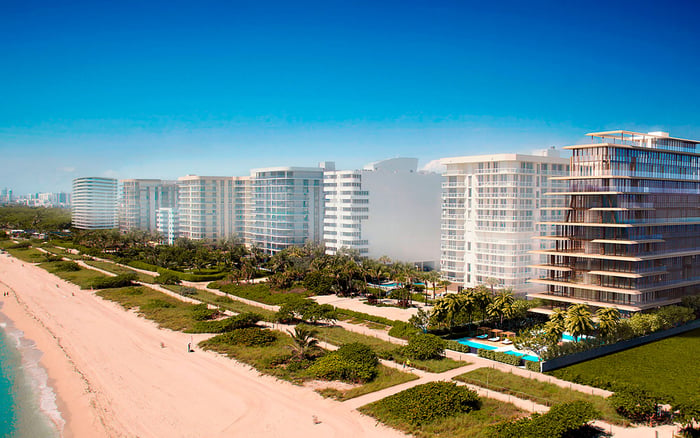
A buyer considering Rivage Bal Harbour should keep residential due diligence separate from dockage negotiations. Purchasing a residence does not, by itself, secure marina access or a yacht slip. Neither a waterfront setting nor proximity to the water replaces written confirmation that the vessel can be accommodated.
The most useful starting point is not a shipping date. It is a coordinated brief covering the residence, receiving berth, local decision-maker, and storm destination. Each element should be workable before the yacht’s arrival becomes a fixed commitment.
Miami-Dade’s marina network offers wet slips, dry storage, transient dockage, fuel, boat ramps, and other services, with facilities varying by location. Transient dockage is available across the network, but rates depend on the marina, dockage type, and rental period. That range of services does not establish suitability for a particular yacht.
Ask the receiving marina to confirm availability against the vessel’s dimensions and operating requirements. Length, beam, draft, electrical needs, and arrival arrangements require direct answers-not assumptions drawn from a marina’s name or general description. Confirm launch conditions where relevant, parking arrangements, and weather-related operating status before planning arrival.
For a household evaluating Oceana Bal Harbour, the practical comparison should treat the proposed berth as a separate destination. Consider how the owner, guests, and crew would move between the residence and vessel without relying on an unverified travel-time estimate.
A reassuring marina name is not enough. Verify the facility’s physical location and operating terms before relying on advertised slip counts, vessel limits, or fees. Written confirmation should identify the receiving facility and the arrangement offered, including whether it is temporary or intended as the yacht’s continuing base.
The Abu Dhabi-to-Florida relocation requires its own professional review. Request vessel-specific advice on transport arrangements, customs handling, insurance, and arrival coordination before selecting a departure date. These matters must be resolved for the individual yacht; they cannot safely be inferred from the residential purchase.
Build the relocation brief around dependencies. The receiving marina should be ready to accept the vessel, the arrival team should know who has authority to act, and the owner should understand what happens if arrival conditions change. Ask each provider to identify its responsibilities and exclusions in writing.
Keep cost discussions equally specific. Examine what a transport quote includes rather than treating it as the complete relocation budget. Obtain clear answers about receiving arrangements and any services that must be organized separately. Do not commit the household’s arrival schedule to an unresolved marine timetable.
The goal is not merely delivery to Florida. It is delivery into an operating arrangement that remains manageable after the owner returns to Abu Dhabi.
Crew logistics should begin with responsibility, not headcount. Identify who communicates with the marina, who checks the vessel while the owner is absent, and who can activate the hurricane plan. Discuss crew entry, employment, and accommodation arrangements with qualified advisers before treating them as settled.
For an owner abroad, a trusted local representative provides an important safeguard. A friend or family member can assist when the owner is unavailable, but the operating plan should make that assistance practical: set out contacts, instructions, and the decisions that require advance authorization.
A residential comparison extending to Surfside and The Surf Club Four Seasons Surfside should apply the same discipline. Evaluate household arrangements separately from crew access and vessel supervision. Do not assume a residential service team will undertake marine responsibilities unless those duties have been expressly agreed.
Prepare a concise contact sheet for the owner, captain or designated operator, local representative, and marina. Rehearse the communication sequence so a time-sensitive decision does not have to wait for an owner who is traveling or unavailable.
A vessel hurricane plan should specify where the boat will go, what actions will be taken, and when they will occur. Rehearse it before a storm approaches, including the relocation route and the people responsible for each step.
In Miami-Dade, marina closure guidance uses sustained winds of 39 mph. Intracoastal bridges generally enter lockdown at least eight hours before winds of 39 mph are expected. A route that depends on an opening bridge may therefore become unavailable before the marina closes.
Prepare to move the boat when a hurricane is likely, potentially before a Hurricane Watch is issued. Waiting for a later alert can leave the vessel behind a locked bridge. These thresholds are reasons to act early, not targets for a last-minute departure.
City of Miami marinas follow a separate operating deadline: public operations shut down when a Hurricane Warning is issued or 24 hours before expected landfall, whichever occurs first. Owners should be off their vessels by then. Neither that policy nor the county’s wind-based guidance establishes the terms of a particular private marina; confirm its requirements directly.
Secure the boat well before a storm approaches. Preparations include doubling dock lines or considering dry-dock storage, along with additional fenders, chafe protection, anchors, and mooring lines. Remove vulnerable or movable equipment, including canvas, sails, dinghies, cushions, and Bimini tops.
Pre-storm checks should cover fuel filters, batteries, charging systems, bilge pumps, firefighting equipment, through-hulls, and watertight closures. Do not assume shore power will remain available: marina electrical service may be disconnected if significant storm surge is expected. Never ride out a hurricane aboard the vessel.
If the residential search includes Onda Bay Harbor, maintain the distinction between the home and the boat’s storm destination. A preferred residence is not a substitute for a confirmed relocation plan.
The strongest second-home arrangement works without the owner’s immediate presence. A confirmed berth, defined local authority, rehearsed relocation route, and shore-side safety plan allow the residence and yacht to complement one another without becoming operationally dependent.
For a discreet residential search aligned with your yacht-ownership priorities, connect with MILLION.
If branded residences are on your mind — as a home or as an allocation — we would be glad to share what we are seeing, privately.
Begin a quiet conversationNo berth entitlement should be assumed from a residential purchase. Confirm marina access and any slip arrangement separately in writing.
Confirm berth availability, vessel suitability, arrival arrangements, parking, and weather-related operating status directly with the receiving marina.
Transient dockage is available across the county marina network. Rates vary by marina, dockage type, and rental period.
Obtain vessel-specific professional advice on transport, customs handling, insurance, and arrival coordination before fixing departure. Keep the shipping schedule conditional on the receiving arrangements.
Define who communicates with the marina, supervises the vessel, and activates the storm plan. Resolve crew entry, employment, and accommodation questions with qualified advisers before relying on those arrangements.
A trusted local representative, including a friend or family member, can assist when the owner is unavailable. Give that person clear contacts, instructions, and agreed responsibilities.
Intracoastal bridges generally enter lockdown at least eight hours before winds of 39 mph are expected. Plan relocation early enough that bridge access is not lost.
No. Miami-Dade's wind-based guidance and City of Miami marinas' warning-or-landfall operating deadline are distinct, and a private marina's requirements must be confirmed directly.
Never ride out a hurricane aboard the vessel. Complete preparations early and include a shore-side safety plan for everyone involved.
Prepare lines, fenders, and chafe protection, remove vulnerable equipment, and check essential mechanical and safety systems. Rehearse relocation and do not assume shore power will remain available.