A second-home buyer’s assessment of advertised exterior-noise reduction, unresolved equipment-room adjacency, and the flooring rules and acoustic evidence worth requesting before choosing a residence.
For a second-home buyer, luxury includes arriving, closing the door, and resting without negotiating the building’s daily rhythms. At The Residences at Mandarin Oriental Boca Raton, acoustics deserve the same attention as the floor plan: what is advertised, what remains unestablished, and what can be evaluated for the particular residence?
The condominium address is 105 E. Camino Real, Boca Raton, FL 33432. Advertised specifications include exterior-noise mitigation and private elevator foyers-both relevant to a buyer seeking retreat. Neither, however, establishes comprehensive sound isolation.
A defensible assessment stops short of declaring the building quiet or noisy. Exterior-noise reduction is advertised; residence-specific acoustic performance, equipment-room adjacency, and impact-noise enforcement remain unverified. This is not a firsthand listening review. Those unresolved questions should inform the purchase decision, not be treated as evidence of a defect.
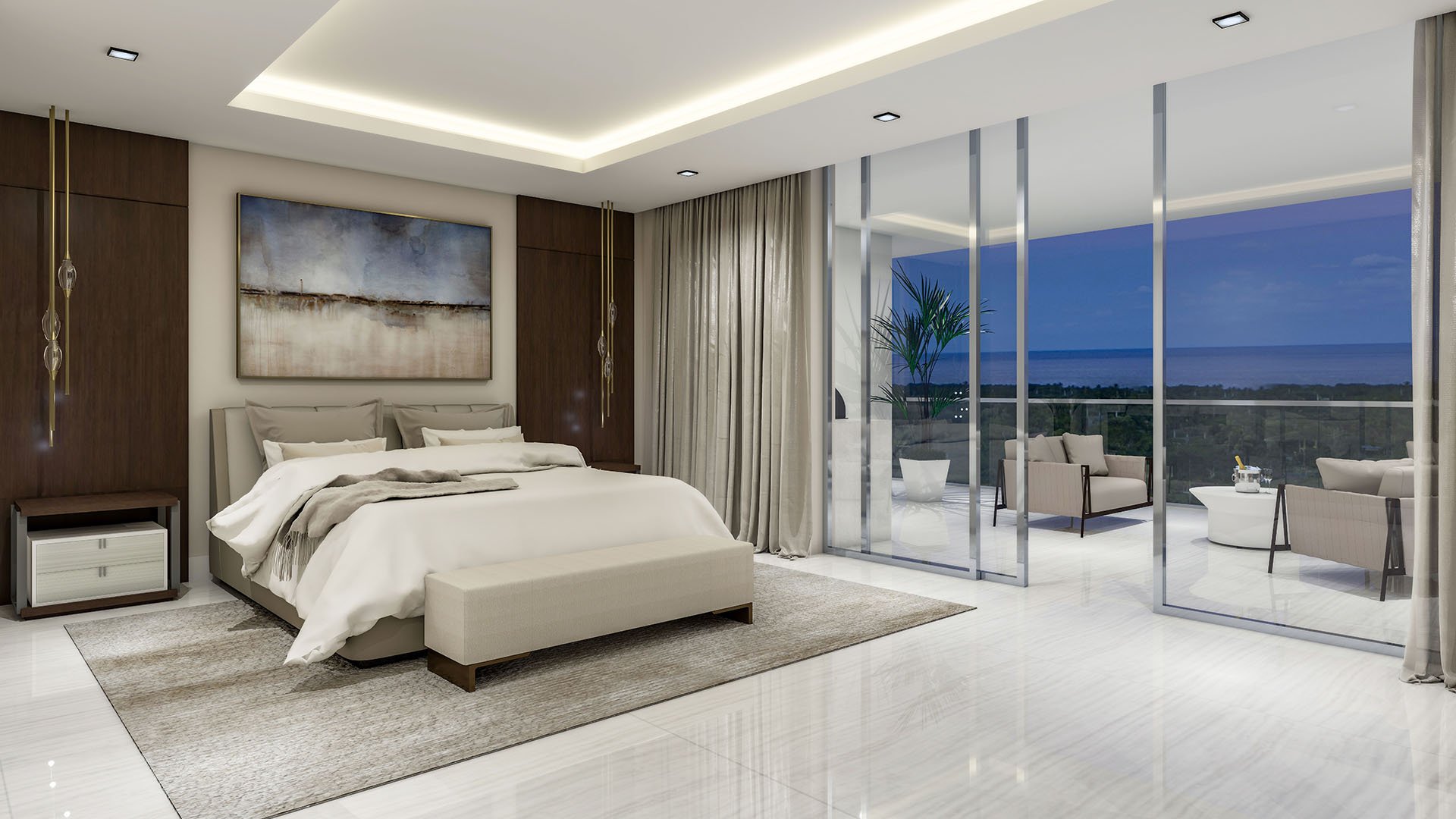
The advertised window and door package includes floor-to-ceiling aluminum-frame windows and insulated sliding doors, tinted dark bronze. The specifications expressly promise “enhanced noise reduction from outside activities.” That addresses exterior sound, not footsteps overhead, dropped objects, moving furniture, plumbing, or equipment within the building.
The advertised specifications identify no tested Sound Transmission Class, or STC, rating for demising walls or doors, nor an Impact Insulation Class, or IIC, rating for floor-ceiling assemblies. These omissions leave important questions unanswered; they do not establish poor performance.
Request available acoustic testing documentation and confirmation of the walls, doors, and floor-ceiling assemblies it covers. Have an acoustic professional assess its relevance to the selected residence. A general assurance of quiet should not substitute for evidence tied to the spaces where you will sleep, read, and entertain.
Mechanical-room adjacency cannot be established from the advertised specifications. There is no residence-by-residence map locating mechanical, electrical, pump, trash, laundry, or HVAC equipment rooms. The next step is spatial: establish what sits beside, above, and below the proposed home.
Request unit-specific architectural and mechanical plans, along with as-built plans when available. Ask the team to identify elevator machinery and shafts, pumps, rooftop equipment, service areas, and adjoining amenities. Pay particular attention to the bedroom arrangement, not just the living room’s exposure. These are locations to investigate, not confirmed noise sources at this property.
Private elevator foyers served by semi-private elevators are advertised. Treat them as an arrival and privacy feature, not proof that elevator sound or vibration cannot reach a residence.
Ceiling geometry also warrants careful reading. Advertised heights are measured from unfinished floor to finished ceiling. Actual heights may vary because of mechanical drops, soffits, decorative ceilings, lighting packages, and normal construction variations. A ceiling drop does not establish equipment-room adjacency. Ask what occupies the space above it rather than inferring a problem-or protection-from its appearance.
The available information does not establish actual flooring restrictions, rug requirements, quiet hours, or an enforcement history. Missing evidence should not be mistaken for an absence of rules, complaints, or remedies.
Request the declaration, bylaws, current rules, architectural standards, and flooring-approval requirements. Ask whether STC, IIC, or underlayment criteria apply, which alterations require approval, and what documentation owners must submit. The question is not merely whether a flooring standard exists, but how compliance is checked.
Then ask how a noise concern would be handled: who receives it, what supporting information is requested, how a potential violation is evaluated, and how resolution is documented. Seek available noise-related complaint, violation, and resolution records, subject to applicable access rules. Do not infer an operating association’s track record from marketing materials.
For buyers also considering Alina Residences Boca Raton, make the same document requests. This is a comparison framework, not a claim that either property has stronger acoustic performance or enforcement. Compare evidence for specific residences and the rules that apply to them.
Second-home buyers should resist treating one quiet appointment as a complete acoustic assessment. Where access and building conditions permit, arrange visits at different times, preferably with neighboring residences occupied. A silent interval cannot reveal what happens during activity elsewhere in the building.
Listen in bedrooms as well as living areas. Allow time for HVAC cycling, and pay attention to plumbing, elevators, service activity, footsteps, and furniture movement when those sounds occur naturally. Note the room, time, and circumstances. If something concerns you, request a targeted follow-up rather than accepting broad reassurance or drawing a building-wide conclusion.
Advertised amenities include fitness facilities, a pool, spa, clubhouse, business center, cabanas, and recreation facilities. Their relevance to acoustic due diligence depends on their actual relationship to the residence, which requires confirmation in the plans.
A buyer weighing Glass House Boca Raton alongside this address should apply an equivalent listening brief wherever feasible. Focus the comparison on observed conditions and documented adjacency, without assigning either property an unsupported acoustic advantage.
Brand identity can frame expectations, but the purchase decision here should turn on three distinct questions. What evidence addresses sound isolation? What equipment and activity areas adjoin the home? What standards and procedures govern impact noise?
Do not let an attractive answer in one category settle the others. Exterior-noise mitigation does not establish interior isolation. A private foyer does not resolve elevator adjacency. A written flooring requirement, if provided, does not by itself establish how a complaint would be resolved.
Before committing, assemble a concise file covering the selected floor plan, adjacent spaces, available acoustic testing, applicable flooring rules, and observations from permitted visits. Have your advisers distinguish resolved questions from those still open. That is a more useful basis for confidence than a general promise of serenity.
The Residences at Mandarin Oriental Boca Raton offers an advertised exterior-noise reduction feature worth examining. The available information does not support an independently verified conclusion about comprehensive sound isolation, mechanical-room separation, or impact-noise enforcement.
For a second home, the appropriate standard is personal as well as documentary: the residence should suit the way you intend to rest and live, with material uncertainties understood before purchase. Choose with the home and its adjacencies in view, rather than assuming every residence will offer the same experience.
For a discreet approach to South Florida second-home selection, connect with MILLION.
If branded residences are on your mind — as a home or as an allocation — we would be glad to share what we are seeing, privately.
Begin a quiet conversationThe condominium is located at 105 E. Camino Real, Boca Raton, FL 33432.
The specifications advertise enhanced noise reduction from outside activities and include floor-to-ceiling aluminum-frame windows and insulated sliding doors.
No. It does not establish protection against interior sounds such as footsteps, dropped objects, furniture movement, or plumbing.
The advertised specifications do not identify tested STC ratings for demising walls or doors, or an IIC rating for floor-ceiling assemblies. Request available acoustic testing documentation for the relevant assemblies.
No residence-by-residence equipment-room map is provided in the advertised specifications. Unit-specific architectural, mechanical, and available as-built plans should be reviewed.
No. Private foyers served by semi-private elevators are advertised, but that does not establish protection from elevator sound or vibration.
Not necessarily. Mechanical drops and soffits are among the stated reasons ceiling heights may vary, but they do not establish equipment-room adjacency.
The available information does not establish those rules. Request the governing documents, current rules, architectural standards, and flooring-approval requirements.
Ask how complaints are evaluated and resolved, and request available noise-related complaint, violation, and resolution records subject to applicable access rules.
Where access permits, visit at different times and listen for footsteps, furniture movement, elevators, plumbing, service activity, and HVAC cycling. Visits with neighboring residences occupied are preferable when feasible.