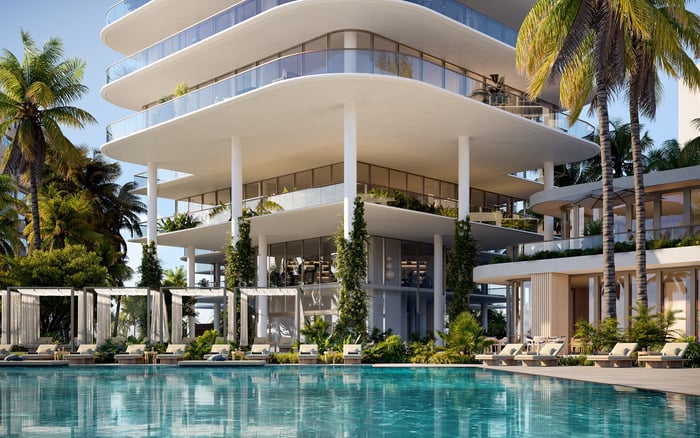
A second-home buyer’s due-diligence review of 57 Ocean Miami Beach, focused on documenting leak-detection coverage, automatic shutoff boundaries, and enforceable emergency-response arrangements before purchase.

For a second-home buyer considering 57 Ocean Miami Beach, confidence should extend beyond the experience of arriving. It should rest on a clear understanding of what happens when water escapes while the residence is unoccupied: what detects it, what stops it, who receives the alert, and who can enter to act.
Whole-unit leak detection, residence-level automatic shutoff, and a named damage-response contract at 57 Ocean should remain unconfirmed until supported by property-specific documentation. That does not mean these protections are absent. It means their scope belongs explicitly in the purchase review, not among the assumptions of luxury ownership.
The essential distinction is between a product capability, an installed configuration, and a contractual commitment. A system’s ability to detect and stop leaks does not establish that it serves the residence under consideration. Likewise, an emergency contractor’s local presence does not establish that the association has retained it.
Automatic leak-protection systems can combine continuous monitoring for hidden leaks, automatic water shutoff, and user alerts. Verify those three functions separately. The presence of one is not proof of the other two.
Ask for a residence-specific description of the installed equipment, along with any available plans, commissioning records, and maintenance documentation. Have the seller or management identify what is monitored and explain the basis for calling the coverage whole-unit. Request exclusions in writing rather than relying on a broad phrase such as water protection.
A practical review should establish:
Which areas or water supplies are monitored, and by what equipment.
What conditions generate an alert and what conditions initiate shutoff.
Who receives notifications when the owner is away.
What testing and maintenance are required, and who performs them.
These are questions about the installed system, not claims about 57 Ocean’s equipment. Ask the appropriate professional to explain how the documented configuration serves the particular residence. A brochure describing a manufacturer’s capabilities cannot settle that question.
The most consequential word in automatic shutoff is not automatic. It is scope. Ask exactly which water supply the valve controls: a residence main, an individual branch, a riser, or a common-area supply. Those configurations are not interchangeable.
Request a marked plumbing plan or a written explanation from a qualified professional identifying the controlled supply and anything outside its boundary. Ask who may operate the valve manually, how its status is checked, and who is authorized to restore service after an incident. Document each answer rather than inferring it from a sales description.
Turning off the main water supply after discovering a leak is a general measure to help prevent further damage. For an absentee owner, the due-diligence task is to establish how that step would occur safely and within the building’s procedures when nobody is home.
A buyer also considering Faena House Miami Beach should bring the same questions to that evaluation. This is a common standard for comparing documentation, not a claim that either property has a particular system or provides equivalent protection.
Miami has businesses advertising round-the-clock emergency leak repair, local leak detection, and electronic detection services. That availability is useful context. It does not establish a vendor agreement with 57 Ocean or a building-specific response-time commitment.
Ask whether an executed agreement covers the building, the residence, or both. If one exists, review its actual scope rather than a contact sheet. The contract review should distinguish answering a call, dispatching a technician, arriving on site, locating the leak, and performing authorized work.
For damage response, ask counsel or the buyer’s adviser to examine:
The contracting parties, covered locations, and agreement term.
Any stated response commitments, conditions, and exclusions.
Whether the scope includes detection, plumbing repair, mitigation, or restoration.
Who can authorize emergency expenditure when the owner is unreachable.
How access, incident documentation, and payment are handled.
Do not presume that an emergency plumbing arrangement also covers resulting damage or restoration. Ask where one provider’s responsibility ends and who coordinates the next step. For a second home, that handoff deserves as much attention as the first telephone call.
Florida condominium common-element maintenance is addressed by Section 718.113(1). That starting point does not establish that every plumbing component serving a residence is the association’s responsibility, nor does it settle responsibility for every consequence of a leak.
Review the declaration and relevant governing documents with condominium counsel. Identify whether the component in question belongs to the unit, is a limited common element, or is a common element. Then separate the maintenance obligation from emergency-work authorization, payment, and resulting damage.
Connect each relevant component to the document language governing it. Ask counsel to distinguish condominium provisions from homeowners’ association rules rather than applying a general common-area principle to a residence-specific question. Responsibility should be documented before an incident, not reconstructed during one.
The ownership plan should explain what happens if an alert arrives while the buyer is traveling. Ask management to walk through the scenario: the owner does not answer, the residence is locked, and a technician needs permission to enter. Establish the authorized contacts, access procedure, spending authority, and escalation route in writing.
For buyers weighing The Perigon Miami Beach alongside 57 Ocean, the same exercise can organize the comparison. Compare the documentation supplied for each residence rather than assuming an address or service positioning answers operational questions.
Before closing, request a coordinated review with the seller, management, and appropriate technical advisers. Where permitted, seek a supervised demonstration of the documented detection, notification, and shutoff functions. Request written answers to outstanding questions, including who maintains the equipment and whether any service arrangement requires action by the new owner.
A defensible review of 57 Ocean is conditional, not categorical. Seek three distinct forms of assurance: evidence of detection coverage, a precise shutoff boundary, and documented emergency-response responsibilities. None should stand in for the others.
The goal is not a promise that damage can never occur. It is an ownership arrangement in which the buyer understands the equipment, knows its limits, and has a clear route to authorized action while away. For a second home, that operational clarity is a meaningful part of comfort.
Explore South Florida residences with a more considered ownership perspective at MILLION.
If branded residences are on your mind — as a home or as an allocation — we would be glad to share what we are seeing, privately.
Begin a quiet conversationWhole-unit coverage is not established here. Buyers should request residence-specific documentation before relying on that protection; unconfirmed coverage does not mean it is absent.
Residence-level automatic shutoff is not confirmed here. Request documentation identifying the installed valve and the water supply it controls.
Verify detection, automatic shutoff, and user alerts separately. Evidence of one function should not be treated as confirmation of the others.
It means the water supply controlled by the valve, such as a residence main, branch, riser, or common-area supply. Ask a qualified professional to identify the boundary and any exclusions.
No. Advertised emergency availability does not establish a 57 Ocean vendor agreement or a building-specific response-time commitment.
Review covered locations, response commitments, exclusions, access, authorization, and payment. Clarify whether detection, repair, mitigation, and restoration are included or require separate arrangements.
Do not assume so. Review the governing documents to identify whether the component belongs to the unit, a limited common element, or a common element and determine the applicable obligations.
Not automatically. Responsibility for emergency work and resulting damage requires a separate review of the applicable documents and circumstances with counsel.
Document alert recipients, authorized contacts, entry procedures, spending authority, and escalation steps. Clarify what happens if the owner cannot be reached.
Coordinate a residence-specific review of equipment documentation, shutoff scope, and response arrangements. Where permitted, request a supervised demonstration of the documented system functions.