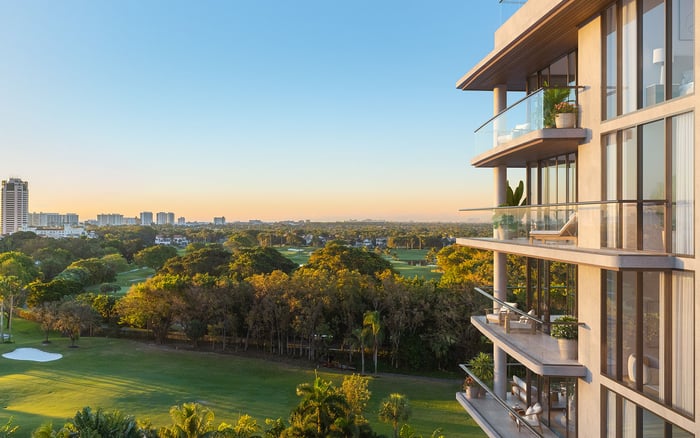
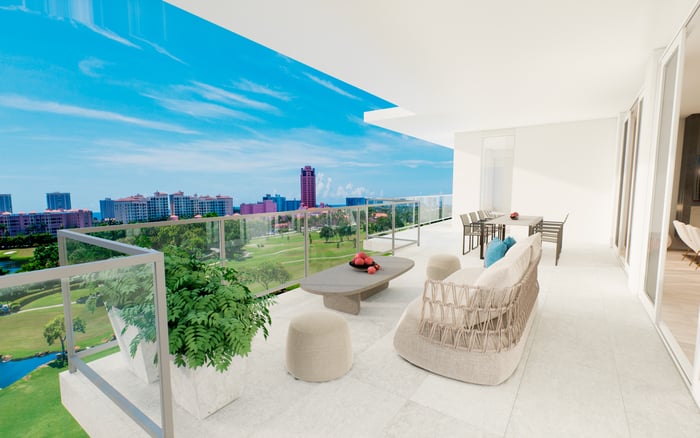
A discreet buyer’s briefing on ALINA’s flood-mapping review, unverified claim history and garage-equipment questions, with the insurance and continuity documents to request before committing.
For a buyer considering Alina Residences Boca Raton, the most consequential storm questions concern what happens behind the residential experience: whether water has entered, which systems could be exposed and how essential services would recover. These are questions of ownership quality, not simply insurance compliance.
This briefing does not establish ALINA’s flood classification, association flood-claim history, critical-equipment elevations or business-continuity capabilities. Those gaps should not be read as evidence of a defect. Each warrants a specific document request before purchase.
Request the current flood map panel for the exact address and review the classification with the insurer. Do not extend a designation associated with one parcel or residence automatically to every building under consideration.
Keep mapping and elevation evidence separate. A listing summary or approximate ground elevation cannot establish a garage-entry threshold, locate an electrical room or demonstrate flood protection. Ask for the relevant survey and documentation identifying finished-floor, garage and equipment elevations.
If the property is described as Zone X, ask the insurance adviser to explain what that designation means for the specific purchase. Confirm the lender’s requirements separately from the owner’s preferred protection, and do not treat a mapping label as a promise of zero flood risk.
ALINA should not be described as claim-free without supporting records. Flood-claim history remains unverified in the materials provided for this briefing, and an absence of disclosed claims in marketing material is no substitute for association insurance loss runs.
For a resale purchase, request association loss runs and the seller’s disclosures together. The review should address flood damage, water intrusion, garage incidents, claim amounts and remediation. Confirm the coverage periods and buildings included, so a clean period for one entity is not mistaken for the history of the entire community.
Where an incident appears, seek the cause, affected areas, repair scope, completion records and any subsequent recurrence. Ask separately about water-related events that did not become insurance claims. The purpose is to distinguish a documented, resolved event from an unresolved exposure-not to treat every past incident as disqualifying.
Consider how much operating history the records actually cover. A limited record should be evaluated for its scope rather than treated as proof of storm performance.
Parking provision does not establish a garage’s elevation, drainage performance or flood defenses. Likewise, a residence’s appliance or heating specifications do not locate shared electrical, pumping or emergency-power equipment. This briefing does not establish that ALINA’s critical equipment is at garage level.
An engineering review should request as-built drawings, relevant surveys and a schedule locating critical systems. Ask specifically about main electrical distribution, elevator controls, pumps, emergency-power equipment and the connections those systems depend on. These are proposed diligence categories, not assertions about ALINA’s configuration.
The next question is how any exposed area is protected. Request documentation of drainage arrangements, barriers if installed, inspection routines and testing. Evaluate equipment elevation alongside access routes and the systems needed to operate it.
A buyer also weighing Glass House Boca Raton should apply the same standard of evidence. A meaningful comparison rests on documented equipment locations and protective measures, not inferences from architecture or price.
For second-home owners, continuity includes the ability to assess conditions remotely and make a reliable return decision. ALINA-specific generator capacity, runtime, hurricane procedures and service-restoration commitments are not established here. Keep those capabilities as open questions until management supplies the applicable documents.
Request the written storm operating plan and identify who makes shutdown, access and reopening decisions. Ask how residents receive updates when ordinary communications are interrupted, and whether absent owners have a defined process for arranging authorized unit checks.
Emergency power deserves a precise scope. Ask which loads are supported, under what operating assumptions and for how long. Seek maintenance and testing records, fuel arrangements where applicable, and the procedure for restoring normal service. Do not assume emergency power means uninterrupted private-residence comfort.
Finally, ask for the sequence and prerequisites for restoring elevators, water service, access control and occupied use. A continuity plan should explain responsibilities and dependencies, not offer an unsupported restoration timetable.
The insurance review should distinguish flood coverage, the association’s master policy and the owner’s HO-6 policy. Do not assume one document answers every question about building damage, personal obligations or loss assessments.
Master-policy wind deductibles merit particular attention. Ask an insurance adviser to explain potential deductible-related funding shortfalls and owner assessments under the applicable documents. Review HO-6 loss-assessment coverage rather than assume every assessment would be reimbursed.
Ask the association to explain applicable limits, deductibles and funding arrangements alongside current financial documents. Neither luxury pricing nor high association fees establishes adequate reserves or sufficient coverage.
If The Residences at Mandarin Oriental Boca Raton is also under consideration, apply the same policy-by-policy review. Investment discipline requires comparable documentation, not assumptions about protection based on a residential name.
Before committing, organize the diligence into three files: claims and remediation; equipment location and protection; and continuity procedures with insurance funding. Have the appropriate legal, insurance and engineering advisers identify what is established and what still requires a written answer.
The strongest purchase decision is neither alarmist nor complacent. For an ALINA purchase, the decisive evidence remains building-specific: what happened previously, where essential systems sit, how they are protected and who is responsible for recovery.
For a discreet perspective on South Florida ownership and residential selection, explore MILLION.
If branded residences are on your mind — as a home or as an allocation — we would be glad to share what we are seeing, privately.
Begin a quiet conversationStart with the exact building’s flood mapping, association loss records and critical-equipment documentation. Review continuity procedures and insurance funding alongside those records.
It is not verified in the materials provided for this briefing. Buyers should obtain association loss runs, seller disclosures and incident-remediation records before drawing conclusions.
Not on the information established here. An absence of claims in marketing material does not establish an absence of insured losses or water-related incidents.
No building-specific classification is established here. Request the current flood map panel for the exact address and review it with an insurance adviser.
No; ask the insurance adviser to explain the designation for the specific property. Review mapping alongside elevation, equipment-protection and coverage documents.
Confirm requirements with the lender and insurer for the exact property. Evaluate the owner’s preferred protection separately from any lending requirement.
No; it does not establish garage-entry thresholds, finished-floor elevations or equipment locations. Request the relevant survey and engineering documentation.
No such location is established here. Request drawings, surveys and an equipment-location schedule rather than infer system locations from parking or unit specifications.
Neither is established in this briefing. Request the operating plan, supported emergency-power loads, runtime assumptions and maintenance records from management.
Review flood coverage separately from the association master policy and owner HO-6 policy. Ask an adviser to explain wind deductibles, loss-assessment coverage and potential owner obligations.