A buyer-focused briefing on the domestic-water documents to request at 888 Brickell by Dolce & Gabbana, from upper-floor pressure testing and pump redundancy to maintenance accountability and mixed-use cost allocation.
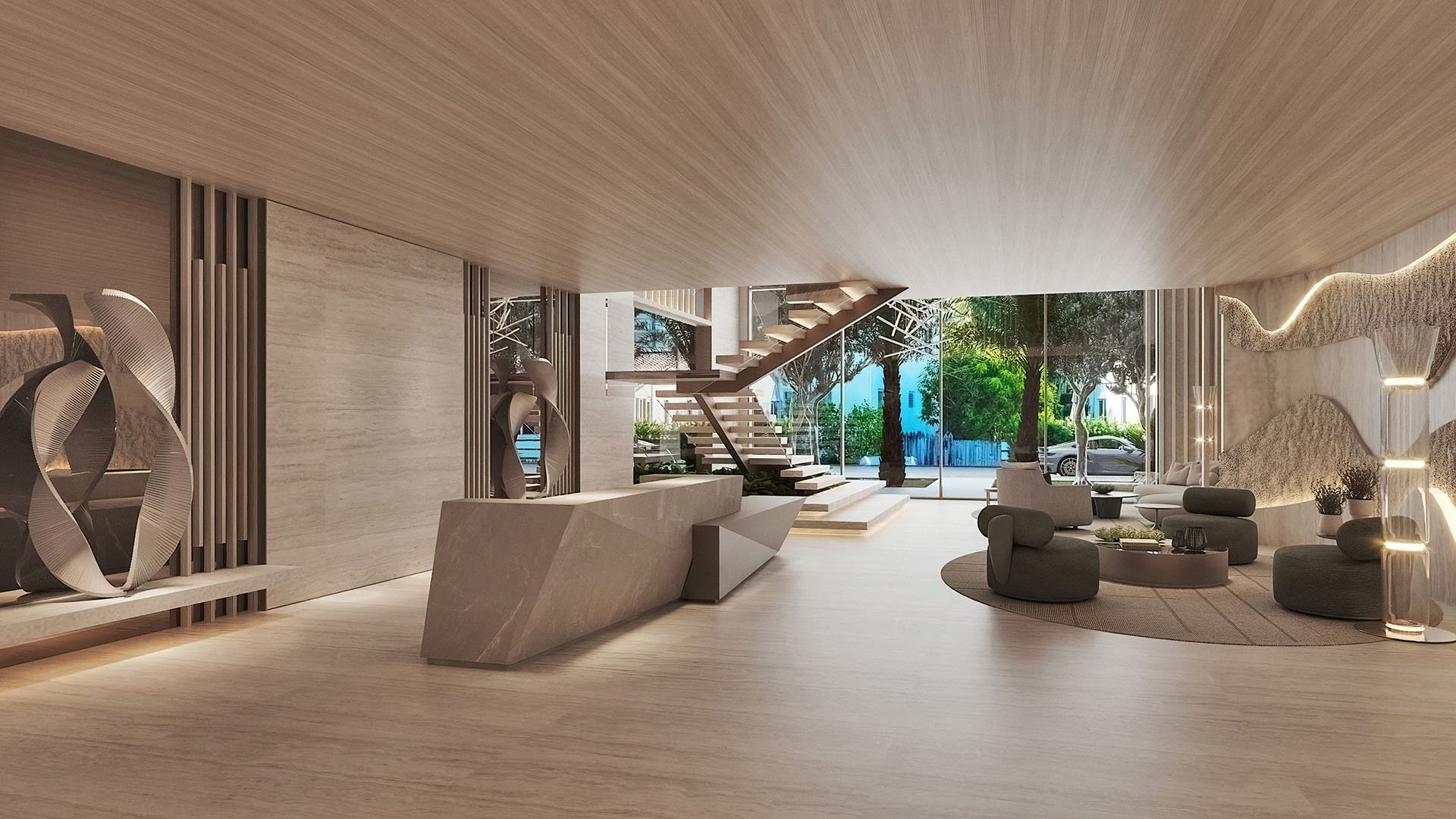
At 888 Brickell by Dolce & Gabbana, the proposition is deliberately expansive: a tower marketed at 90 stories and approximately 1,049 feet, with 259 residences, a hospitality program, and approximately 115,000 square feet of amenities. For a private client considering an upper-floor home, however, a critical specification lies behind the finishes: how domestic water reaches the residence and remains available during maintenance or an equipment interruption.
The appropriate position is neither reassurance by association nor suspicion by omission. The information supplied for this briefing does not establish the domestic-water configuration, verified upper-floor pressure, or pump-maintenance history. That information gap does not demonstrate inadequate pressure, absent redundancy, or poor upkeep. It defines the documents a purchaser should request before treating water-service continuity as an established feature.
Begin with approved plumbing plans, domestic-water risers, and hydraulic calculations. Ask the project team to identify incoming services, any storage tanks, booster-pump groups, transfer pumps, and the pressure-zone boundaries serving the proposed residence. That schematic, along with domestic-water pump manufacturers, controls platforms, and commissioning protocols, is not established by the supplied information.
The objective is a traceable route from the incoming supply to the fixtures within the home. Request a written explanation of which equipment serves that route and which components, if any, are shared with hotel, amenity, or service areas. Keep the request specific to domestic water; an undifferentiated building-equipment schedule is not a substitute.
A purchaser also considering Cipriani Residences Brickell should apply the same document standard independently. A comparable address is a reason to standardize questions, not evidence that two buildings share engineering arrangements or performance.
No project-specific N+1 domestic-water configuration is confirmed by the supplied information. In this context, N+1 means the capacity to meet design demand with one pump offline. A statement that equipment is redundant should therefore be supported by pump schedules, zone-by-zone capacity calculations, and the intended duty/standby operating sequence.
Ask the engineer to demonstrate what remains available when a pump is isolated for service. The response should address the relevant demand assumption and pressure zone, not merely count installed pumps. Request documentation of power, controls, sensors, isolation valves, and storage arrangements so the explanation covers the supporting system as well as the pump itself.
Emergency power deserves a separate question. Request the emergency-power load schedule and written identification of the domestic-water equipment it supports. A general reference to backup power does not confirm that the relevant pumps, controls, and associated components will operate through an interruption. Commissioning evidence should address the intended operating sequence where applicable.
The supplied information contains no verified upper-floor pressure results for static conditions, peak simultaneous demand, or duty-to-standby pump transfers. Tower height alone does not establish the pressure a particular residence will experience. A fixture demonstration likewise should not be treated as evidence of performance under every relevant operating condition.
Request pressure and flow testing at representative upper-floor fixtures, with test locations identified against the pressure-zone drawings. Ask for results that distinguish static conditions from simultaneous demand and show what happens during a pump transfer. The buyer's engineer should review the test conditions and acceptance criteria against the approved design.
For a client comparing the project with The Residences at 1428 Brickell, this provides a useful comparison framework: design documents, test conditions, results, and unresolved questions. It does not imply a verified pressure advantage for either property. The distinction that matters is between a performance claim and evidence tied to a defined location and operating condition.
Domestic-water pump-maintenance logs and corrective-work records are not included in the information supplied for this briefing. Their availability must also be considered in relation to project stage. Current completion or occupancy is not established by the supplied information, so a buyer should distinguish records that can exist now from future commissioning and operating records.
Request equipment identification, preventive-maintenance logs where available, corrective-work orders, alarm and trip history, warranty claims, and current service contracts. Each record should identify the relevant asset. A service entry is more useful when linked to a specific pump and, where applicable, the issue that prompted the work.
Read the records together. An alarm entry, work order, repair, and subsequent test should be examined as a sequence, not as isolated paperwork. For any open item, request its status and identify the party responsible for closing it. The purpose is to understand service accountability, not to infer poor maintenance from ordinary service activity.
The advertised program includes a signature restaurant, fitness and wellness facilities, a beauty salon and barber shop, meeting facilities, and an approximately 3,800-square-foot pool. Cold- and hot-plunge pools and recovery-spa facilities are also included. These amenities make system boundaries and operating responsibility important questions, but they do not establish the hydraulic relationship between pool equipment and potable water.
Keep domestic-water booster records separate from fire, pool, chilled-water, sump, irrigation, and wastewater pump records. A substantial equipment file does not necessarily answer the residential domestic-water inquiry.
Ask whether residential, hotel, amenity, and service-area systems are shared or separate, and who pays for operation, maintenance, and eventual replacement. Request the relevant allocation documents rather than assuming that physical separation and financial responsibility follow the same boundaries. Where applicable, also request disinfection and bacteriological results, flushing records, and tank-cleaning records as part of the water-quality review.
Treat preliminary specifications, pricing, and amenities as subject to change. Do not treat language making improvements, designs, and construction subject to applicable permits and approvals as evidence that final mechanical approvals have been issued.
A disciplined private-client brief should therefore distinguish approved design, completed testing, current operating records, and future deliverables. Ask the project team to identify what is available, what remains pending, and who will provide each outstanding item. Have the buyer's engineer assess the technical evidence and counsel address any proposed contractual commitments.
The purchasing standard is straightforward: appreciate the residential proposition while requiring precise support for the systems that sustain daily comfort.
For a discreet conversation about your Brickell property search, connect with MILLION.
If branded residences are on your mind — as a home or as an allocation — we would be glad to share what we are seeing, privately.
Begin a quiet conversationThe project is marketed as a 90-story tower rising approximately 1,049 feet, with 259 residences and approximately 115,000 square feet of amenities.
The supplied information does not confirm a project-specific N+1 configuration. Buyers should request pump schedules and capacity calculations demonstrating design demand with one pump offline.
No. Missing disclosure does not establish inadequate pressure, absent redundancy, or poor maintenance.
Request approved plumbing plans, domestic-water risers, hydraulic calculations, and pressure-zone boundaries. Ask the project team to identify the equipment serving the proposed home.
The supplied information provides no verified results for static conditions, peak simultaneous demand, or duty-to-standby pump transfers.
Request representative fixture pressure and flow results with locations and operating conditions identified. Ask the buyer's engineer to assess simultaneous-demand and pump-transfer testing against the approved design.
Request equipment identification, preventive-maintenance logs, corrective-work orders, alarm and trip history, warranty claims, and service contracts, as available for the project stage.
No. The approximately 3,800-square-foot pool does not establish its hydraulic relationship to the potable-water system or prove residential pressure performance.
Ask whether the systems are shared or separate and who bears operating, maintenance, and replacement costs. Request the documents establishing those responsibilities.
No. Language making construction subject to applicable permits and approvals does not establish that final mechanical approvals have been issued.