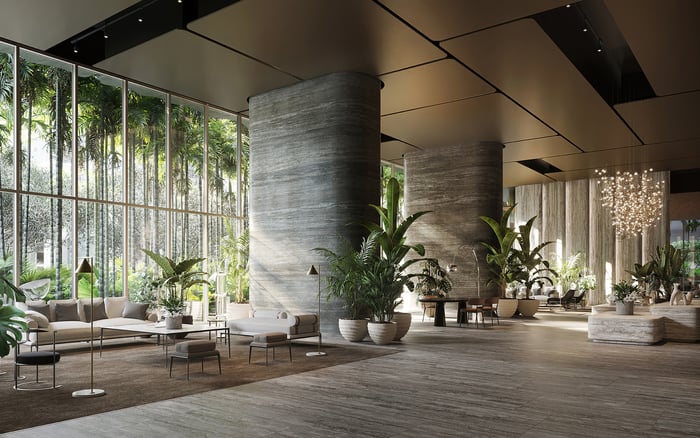
The Residences at 1428 Brickell advertises private wine lockers and staffed delivery handling. For collectors, the ownership decision also calls for written clarity on backup power, custody, climate records, and responsibility.
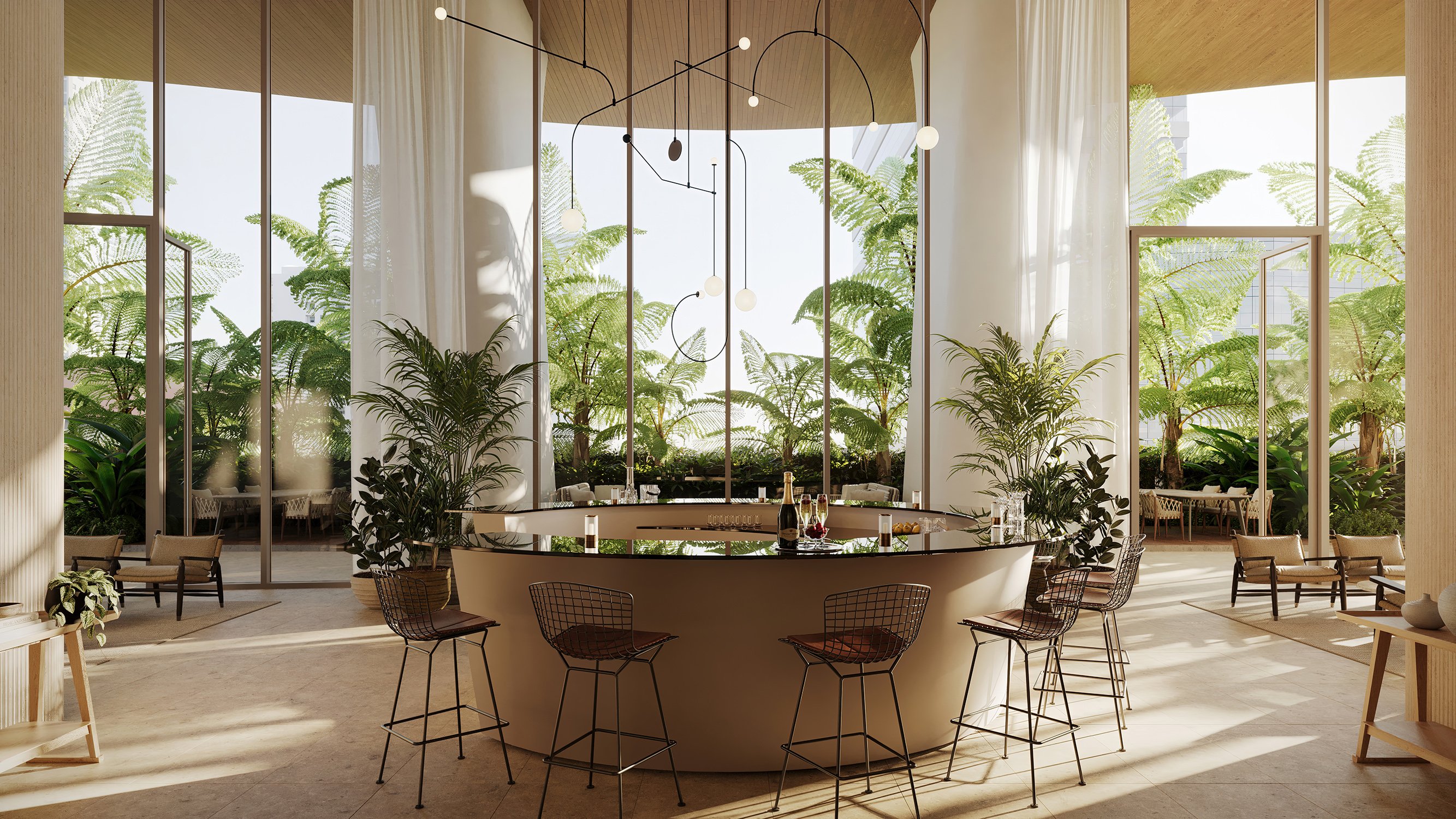
For a collector considering The Residences at 1428 Brickell, the appeal is clear: a private, temperature-controlled wine locker for every residence within a two-story wine-and-spirits lounge. The planned service model includes a beverage director and sommelier to advise owners on purchases for their private cellar. Seating on the main and mezzanine levels, connected by an elevator or floating spiral staircase, gives the amenity a social dimension beyond storage.
The practical purchase decision begins where that hospitality promise ends. Temperature control, electrical continuity, delivery custody, and access to records are separate questions. Advertised features do not establish commissioned-system test results or operating performance. Undisclosed details should remain unresolved-not be treated as assurances or deficiencies.
For owners who travel frequently, the essential question is not simply where bottles will sit. It is who will protect them, document conditions, and respond when the owner cannot.
Three distinct features warrant separate review: the shared-lounge wine lockers, package-room cold storage, and the penthouse’s separately advertised in-residence walk-in wine cellar. Specifications for one should not be assumed to govern another.
The wine lockers are advertised as temperature-controlled, but temperature setpoints, humidity controls, cooling equipment, and refrigeration redundancy remain unspecified. Package-room cold storage is advertised for perishables, but its temperatures, alarm thresholds, backup refrigeration, and maximum holding times remain undisclosed.
Penthouse buyers should request a separate equipment and responsibility schedule for the walk-in cellar. Cooling, backup-power, monitoring, and maintenance specifications are not publicly detailed. A private location does not, by itself, establish who services the equipment or whether it shares infrastructure with the lounge.
Define the exact storage environment before assessing the service promise surrounding it.
Emergency-power coverage for wine cooling, controls, and monitoring equipment remains unconfirmed. So do the protected circuits, refrigeration load allocation, transfer arrangements, and outage runtime. Seek equipment-specific confirmation rather than infer protection from a general description of building power.
Request the electrical one-line diagram and generator documentation identifying the relevant cooling equipment, controls, sensors, and alarms. Ask how transfer occurs, what interruption is anticipated, and whether refrigeration remains protected when other building demands compete for available power. Load-shed documentation should clarify which equipment may be disconnected and under what conditions.
Runtime also warrants a written explanation tied to the intended operating load. Keep this inquiry separate from refrigeration redundancy: backup electricity and backup cooling equipment are different protections, each requiring its own answers.
For buyers also considering Una Residences Brickell, the same equipment-level questions offer a useful comparison framework. They are diligence requests, not claims about either property’s installed systems.
The advertised package-room service calls for a dedicated team to accept, store, and deliver packages. Perishables can be held in cold storage, and dry cleaning is expressly included among the items staff can manage. Earlier advertised arrangements also provided for packages to be stored or delivered to each residence’s private storage.
That is a meaningful convenience, but it does not establish a wine-specific intake procedure. Bottle inspection, insurance, and chain of custody remain undefined. Nor is it established that a wine shipment will move directly from the receiving area into the owner’s lounge locker.
Ask management to set out the intended delivery sequence in writing: who accepts alcohol, how signature and age-verification requirements are handled, when the owner is notified, where the shipment waits, and who authorizes its final placement. Request holding limits and instructions for deliveries arriving outside the usual service window.
Damaged-delivery rules deserve equal attention. Ask whether staff document visible damage, when they contact the owner, and who can authorize refusal or transfer. Do not assume general perishable cold storage is the designated holding environment for a collection without confirming its conditions and permitted use.
A temperature-controlled designation does not establish access to historical temperature or humidity records. Resident access to those records remains unconfirmed for both wine lockers and package-room cold storage. Remote temperature-excursion alerts, notification channels, and designated recipients are likewise unresolved.
Start with mechanical specifications and the monitoring layout. Does measurement occur at room level or locker level? What does each sensor represent? Then request available temperature logs, alarm histories, calibration records, and maintenance documentation. Ask how long records are retained and whether an owner can obtain records relevant to their storage location.
The response procedure matters as much as the data. Seek written confirmation of who receives an alert, who responds after hours, how escalation works, and how the resolution is recorded. This is especially relevant to second-home ownership: an absent owner needs an agreed point of contact, not an assumed notification pathway.
If historical records are not yet available, request the intended operating protocol and clarify when commissioning evidence and resident-facing records will become available. This is a verification step, not evidence of a current failure.
Lifestyle appeal is easiest to evaluate when access, maintenance, and liability are equally clear. Review the declaration, rules, service agreements, and insurance terms to establish responsibility for cooling equipment, staff access to stored bottles, permissible alterations, and after-hours response.
Ask who authorizes intervention during an incident and whether an owner may arrange monitoring or service independently. Have the relevant insurance adviser explain how the proposed storage and handling arrangements interact with the owner’s coverage. Do not infer collection coverage from the existence of a staffed amenity.
A buyer weighing Cipriani Residences Brickell alongside 1428 Brickell can apply the same responsibility questions without assuming that the properties share amenities, policies, or protections.
The advertised wine lounge, specialist beverage service, and package handling create an appealing ownership proposition. For a collector, confidence should also rest on equipment-specific power coverage, a written delivery pathway, accessible climate information, and clearly assigned responsibility.
Keep those requests separate for the lounge lockers, delivery cold storage, and any private cellar. Written answers can distinguish a service suited to the owner’s intended collection from one that still requires additional arrangements. The goal is not to discount the amenity, but to understand precisely what ownership includes.
For a discreet conversation about your Brickell ownership priorities, connect with MILLION.
If branded residences are on your mind — as a home or as an allocation — we would be glad to share what we are seeing, privately.
Begin a quiet conversationThe Residences at 1428 Brickell advertises a private, temperature-controlled wine locker for every residence within its two-story wine-and-spirits lounge.
The planned service model includes a beverage director and sommelier to advise owners on wine and spirits purchases for their private cellar.
Emergency-power coverage for wine cooling, controls, and monitoring remains unconfirmed. Buyers should request equipment-specific electrical and generator documentation.
Temperature setpoints, humidity controls, cooling equipment, and refrigeration redundancy remain unspecified. These details remain subjects for verification.
A dedicated team is advertised to accept, store, and deliver packages, with cold storage for perishables. Dry cleaning is also expressly included.
Wine-specific intake, bottle-inspection, insurance, and chain-of-custody procedures remain undefined. Buyers should request written alcohol-acceptance and damaged-delivery rules.
Resident access to historical temperature or humidity records for wine lockers or package-room cold storage remains unconfirmed. Buyers should clarify record availability and retention.
Remote temperature-excursion alerts, notification channels, and designated recipients remain unresolved. Owners should request the intended notification and escalation procedure.
The penthouse is separately advertised with an in-residence walk-in wine cellar. Cooling, backup-power, monitoring, and maintenance specifications remain subjects for verification.
Review the declaration, rules, service agreements, and insurance terms for maintenance, staff access, liability, alterations, and after-hours response. Request separate clarification for each storage environment.
.jpg&width=700&height=438&fit=cover)