A disciplined framework for evaluating liquidity, stack quality, view durability, and resale positioning before purchasing a luxury Hallandale Beach residence.
A luxury residence can be compelling on arrival yet prove difficult to resell. For a Hallandale Beach buyer in 2026, the central question is not simply whether a condominium feels exceptional today, but whether another discerning buyer will recognize the same value when the time comes to sell.
That requires separating three ideas often blended together: resale depth, line selection, and view scarcity. Resale depth describes the realistic pool of future buyers and substitutes. Line selection concerns the repeatable characteristics of a stack within a building. View scarcity asks whether the visual experience is both desirable and difficult to replicate.
This deliberately practical framework is intended to help purchasers compare residences without allowing finishes, staging, or a single dramatic showing to obscure long-term positioning.
Resale analysis should begin with a narrow competitive set. A residence does not compete equally with every unit in its building or every luxury listing in Hallandale Beach. Its closest substitutes generally share a similar bedroom profile, layout utility, exposure, elevation band, condition, and view character.
Create two groups. The first should contain direct substitutes: homes a future buyer could reasonably choose instead. The second should contain aspirational alternatives: homes requiring a meaningful change in budget, location, size, or lifestyle. This distinction prevents an attractive but irrelevant listing from distorting the analysis.
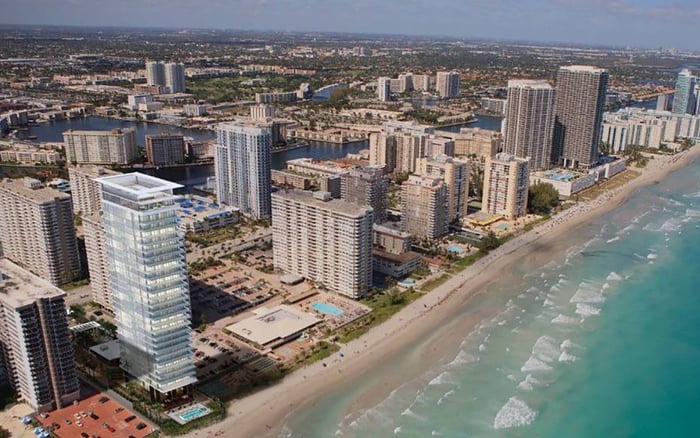
When reviewing 2000 Ocean Hallandale Beach, for example, evaluate the specific residence before broadening the comparison to other options. Building identity can frame demand, but the selected line and its enduring attributes define the unit-level proposition.
Depth is not merely the number of listings visible at one moment. Ask how many close substitutes could plausibly appear, whether several owners share nearly identical layouts, and what would make the chosen residence prevail if comparable inventory reached the market simultaneously.
A line is the architectural DNA repeated vertically through a tower. Its orientation, window placement, room proportions, terrace relationship, privacy, and circulation are generally more consequential than removable decoration.
Study the floor plan without furniture. Trace the path from the entry to the living areas, bedrooms, kitchen, terraces, and service spaces. Look for wasted corridors, compromised bedroom privacy, difficult wall placement, or rooms that depend on staging to appear functional. Then compare the same line at different elevations, if available, to isolate what the floor premium actually buys.
A preference for high floors should not become an automatic rule. Elevation may alter outlook, privacy, light, weather exposure, and the emotional quality of arrival, but a lower residence with a stronger plan can remain the more rational acquisition. The question is whether the premium reflects a benefit that future buyers can immediately understand.
Use Shell Bay by Auberge Hallandale as another comparison point only after defining the lifestyle and residence type under consideration. Different propositions should clarify a buyer's priorities, not be treated as interchangeable solely because they share a geographic label.
Water-view value has several layers: breadth, direction, foreground quality, privacy, and perceived permanence. A wide view can be less scarce if many lines reproduce it. A narrower outlook can be more defensible if it is composed, private, and difficult to duplicate.
For an oceanfront search, distinguish direct water orientation from angled or partial exposure. Assess the view from the principal seating position, dining area, primary bedroom, and terrace. A view that appears persuasive only when standing near the glass may have less daily impact than photography suggests.
Then test durability. Ask what sits between the residence and the horizon, which nearby parcels or structures shape the outlook, and whether the view depends on a temporary gap. This is a due-diligence question, not an invitation to assume future development. Buyers should verify relevant conditions with appropriate professionals before assigning a scarcity premium.
Nearby alternatives can help calibrate emotional and financial preferences. A buyer might compare the selected Hallandale residence with Turnberry Ocean Club Sunny Isles to determine how much value rests on a different coastal context. The purpose is not to declare a winner, but to reveal which attributes remain essential after the initial impression fades.
Use a scorecard before discussing an offer. Grade each candidate independently across layout efficiency, line desirability, elevation, exposure, privacy, terrace usability, view quality, view durability, interior condition, carrying-cost comfort, and likely resale audience. Weight the categories according to intended use rather than assigning each equal importance.
A second-home buyer may emphasize lock-and-leave ease and the emotional force of the outlook. A primary resident may place greater weight on storage, circulation, bedroom separation, and daily usability. An investment-minded purchaser should be especially disciplined about the future buyer pool and the risk of paying for highly personal improvements.
Include a downside narrative beside every score. What is the first objection another buyer may raise? Is it correctable, price-sensitive, or permanent? Paint is correctable. An awkward plan, compromised privacy, or dependent view is not.
For broader context, Four Seasons Hotel & Private Residences Fort Lauderdale can sit within a cross-market comparison. Keep that comparison focused on the buyer's decision criteria, not superficial price-per-square-foot symmetry between unlike residences.
The strongest negotiating position comes from understanding replaceability. If several credible substitutes exist, patience has value. If the residence combines a preferred line, a scarce elevation, a durable view, and a layout that rarely reaches the market, excessive rigidity may carry its own opportunity cost.
Before offering, write a one-sentence acquisition thesis and a one-sentence exit thesis. The acquisition thesis should explain why this home is superior for the intended use. The exit thesis should identify the future audience and the attributes that audience is likely to value. If either sentence relies mainly on decoration or optimism, revisit the underwriting.
The aim is not to eliminate emotion from a luxury purchase. It is to ensure that emotion remains attached to qualities with enduring relevance.
What does resale depth mean for a Hallandale Beach condominium? It is the breadth of realistic future demand and the number of close substitutes that could compete with the residence.
Should buyers compare every listing in the same building? No. Start with residences that share a similar layout, exposure, elevation, condition, and view character.
Is the highest floor always the best choice? No. The floor premium should correspond to recognizable gains in outlook, privacy, light, or scarcity.
How should a buyer evaluate a condominium line? Review orientation, room proportions, circulation, privacy, window placement, and terrace usability before considering finishes.
What makes a view scarce? Scarcity comes from desirability, limited replication, strong composition, privacy, and credible durability.
Can an angled water view outperform a direct one? It can if the overall composition, room experience, privacy, and price are more convincing to the likely buyer pool.
How important are renovated interiors to resale? Condition matters, but removable finishes should not outweigh permanent characteristics such as layout, line, and exposure.
What is the best way to compare nearby luxury markets? Compare lifestyle, residence type, carrying-cost comfort, and buyer priorities before applying broad pricing measures.
When is paying a scarcity premium reasonable? It is more defensible when the favored attributes are permanent, readily understood, and difficult for competing inventory to reproduce.
What should buyers verify before making an offer? Confirm property documents, costs, physical condition, view assumptions, and other material considerations with qualified professionals.
To compare the best-fit options with clarity, connect with MILLION.
If branded residences are on your mind — as a home or as an allocation — we would be glad to share what we are seeing, privately.
Begin a quiet conversation