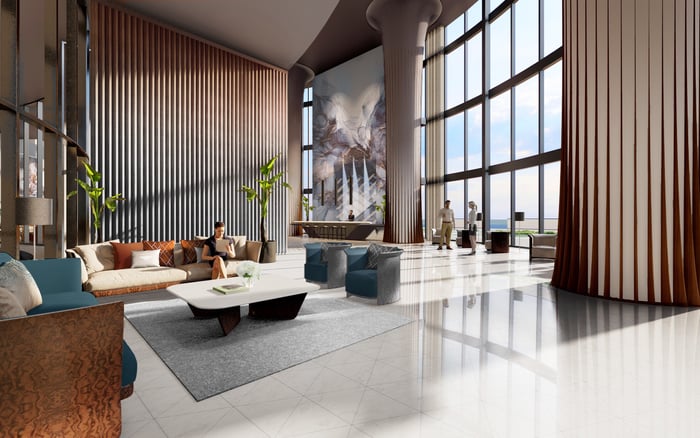
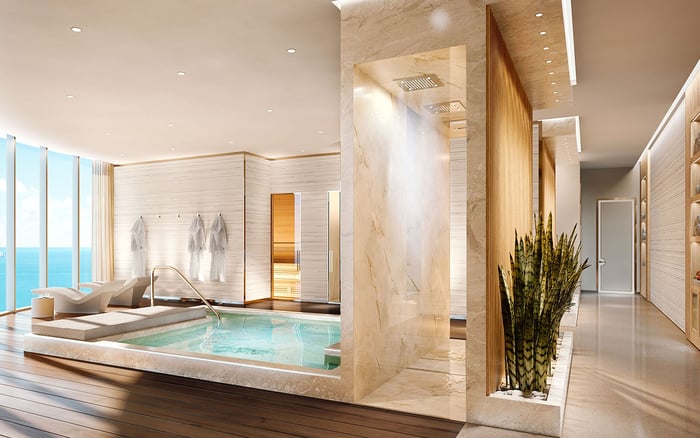
A room-by-room framework for evaluating display walls, art storage, lighting, climate strategy, service access, and specialist coordination before buying in Sunny Isles Beach.

For an art-minded buyer, a Sunny Isles Beach residence must be evaluated as both a home and a setting for objects that may require deliberate care. The essential question is not simply whether a room has an impressive wall, but whether the residence can support the collection’s display, storage, movement, monitoring, and maintenance needs without compromising daily life.
Before touring, prepare a confidential collection brief with approximate dimensions, weights, preferred orientations, framing notes, storage requirements, and any specialist instructions already on file. Organize works into display, rotation, and off-site categories. This gives the architect, conservator, lighting designer, art installer, and mechanical consultant a common starting point while limiting unnecessary disclosure of values or ownership details.
An oceanfront home can be visually compelling, but the view should not dictate every placement decision. Identify which works belong in prominent rooms, which require a more controlled setting, and which should remain in professional storage until the residence is fully commissioned.
During a showing, look beyond the finishes. Map usable wall widths, ceiling conditions, door clearances, elevator access, loading procedures, and the route from arrival to final placement. Before work begins, ask the appropriate specialists to review any proposed anchoring, reinforcement, suspension, or display system.
At Jade Signature Sunny Isles Beach, for example, an art-focused tour can be organized around precise questions rather than general impressions: Where would large works turn within the residence? Which walls must remain clear for circulation? Can service teams work discreetly without passing through every principal room?
Apply the same exercise when considering Muse Residences Sunny Isles Beach. A scaled furniture and art plan can expose conflicts among sightlines, switches, doors, millwork, televisions, and sculpture bases before the buyer commits to a decorative scheme.
Treat lighting as a coordinated system, not a package of decorative fixtures. Begin with a room-by-room schedule identifying each work, its intended location, viewing distance, fixture position, control zone, and desired scene. A qualified lighting designer and conservator should determine the appropriate equipment and settings for the objects involved.
Ask whether window treatments, dimming controls, fixture locations, and electrical points can be adapted without visually cluttering the interior. When possible, review daylight at more than one time of day, then test evening scenes separately. Flexibility is the objective: entertaining, quiet viewing, housekeeping, and periods of absence may each require a different setting.
When touring Bentley Residences Sunny Isles, bring a preliminary reflected-ceiling plan and wall elevations if the collection is central to the purchase. This exercise is not a judgment about the project. It is a disciplined way to determine whether the selected residence, orientation, and interior concept can accommodate the buyer’s lighting priorities.
A thermostat reading alone does not constitute an art-care plan. Ask an independent mechanical professional and conservator to define appropriate conditions, measurement locations, alarm thresholds, and response procedures for the specific collection. Their review should encompass both displayed works and any storage room under consideration.
Discuss how the residence will operate when occupied, during entertaining, after housekeeping, and while vacant. Determine who receives alerts, who may enter during an incident, and which vendors are authorized to assess equipment or move a work. If backup power, supplementary equipment, or dedicated monitoring is under consideration, confirm feasibility and building approvals before relying on it.
At St. Regis® Residences Sunny Isles, these questions can become part of the buyer’s technical due diligence: Which systems serve the residence? What alterations require review? Where could monitoring devices be placed? What access protocol would apply while the owner is away?
A spare closet should not automatically become art storage. First define what will be stored, how often it will rotate, who will handle it, and what clearance each object requires. Have specialists design any racks, shelves, crates, cabinets, or raised supports, and keep the room clear of unrelated household overflow.
Create an inventory convention that links each object to a location without displaying sensitive information in plain view. Photograph condition at agreed milestones, maintain handling instructions, and record authorized contacts. For works stored off-site, coordinate delivery windows and installation sequencing with the building before scheduling transport.
Security planning should remain discreet and layered. Review access permissions, key or credential management, contractor supervision, insurance requirements, and privacy expectations with the relevant advisers. Avoid sharing collection details beyond what the installation and care plan requires.
Before closing, assemble a written matrix covering each proposed work, location, wall condition, lighting zone, environmental review, installation route, storage decision, and responsible specialist. Flag every assumption that still depends on measurement, approval, or testing.
The strongest plan also addresses commissioning and handover. Specify who tests the controls, documents final settings, trains household staff, and remains available after move-in. A beautiful interior is only the beginning. For a serious collector, operational clarity allows the residence and collection to coexist with confidence.
When should art planning begin during a Sunny Isles Beach purchase? Begin before selecting a final floor plan, particularly when large works, sculpture, or dedicated storage may influence the decision.
Who should review a residence for an important collection? The team may include a conservator, architect, lighting designer, mechanical consultant, art installer, security adviser, and insurance professional.
Is an attractive blank wall automatically suitable for art? No. Ask specialists to review its dimensions, substrate, services, circulation, daylight, fixture positions, and installation requirements.
Should buyers request a dedicated art-storage room? Only after defining what will be stored and obtaining specialist guidance on layout, access, monitoring, and building constraints.
How should lighting be evaluated during a showing? Note daylight, window-treatment options, fixture locations, control zones, wall dimensions, and viewing distances for subsequent professional review.
Can standard residence controls support an art collection? Do not assume they can. Have qualified advisers evaluate the proposed collection plan and specify any required monitoring or operational changes.
What should be checked for large-scale installation access? Confirm the entire route, including loading procedures, elevators, corridors, doors, turns, ceiling clearances, and in-residence staging space.
How should a vacant residence be managed? Establish written monitoring, alert, access, escalation, and vendor protocols with the household team and relevant specialists.
What belongs in an art handover file? Include approved locations, condition records, handling instructions, control settings, inventory references, contacts, permissions, and response steps.
What is the most useful pre-closing deliverable? A coordinated matrix linking every proposed work to placement, lighting, climate review, installation logistics, approvals, and accountable parties.
For a tailored shortlist and next-step guidance, connect with MILLION.
If branded residences are on your mind — as a home or as an allocation — we would be glad to share what we are seeing, privately.
Begin a quiet conversation