Five Park offers documented bicycle storage and extensive family amenities, but its public materials do not expressly confirm dedicated storage for strollers, sports gear, or watercraft. Buyers should treat storage as a rights-and-rules inquiry, verifying dimensions, allocation, access, and permitted items in writing before closing.
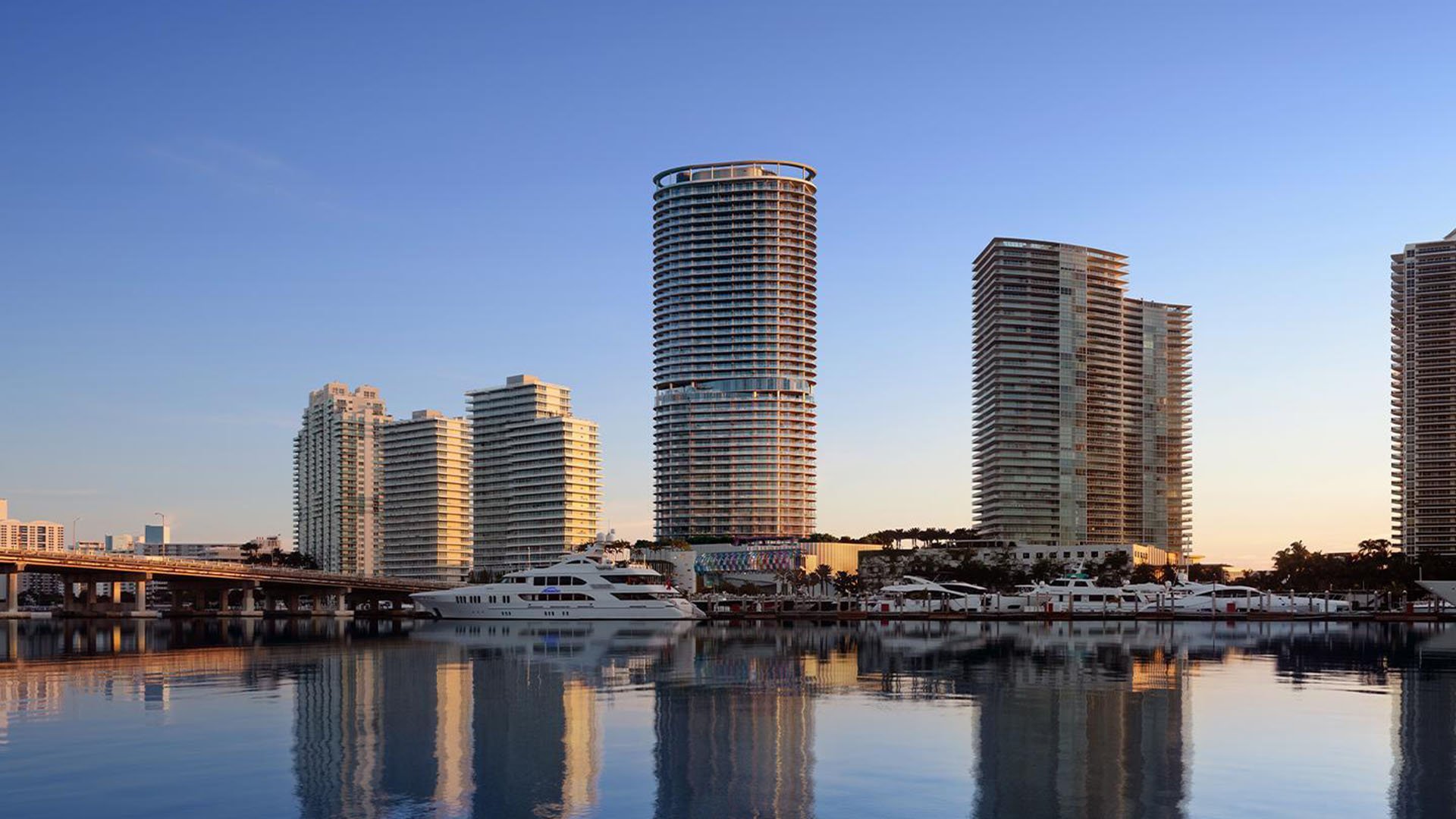
At Five Park Miami Beach, the broader lifestyle proposition is immediately clear: a 48-story tower at 500 Alton Road, approximately 51,000 square feet of amenities, and a three-acre park outside the building. For families, however, daily ease often turns on a less visible question: Where do the stroller, bicycles, beach equipment, racquets, boards, helmets, and other bulky items go when not in use?
The answer is not simply a matter of closet volume. It involves ownership rights, building rules, elevator routes, parking arrangements, and the practical distinction between dry recreational gear and wet or fuel-powered equipment. Bicycle storage is expressly identified, but dedicated storage for strollers, sports equipment, or watercraft is not.
In a family residence, storage is not a footnote; it is part of the circulation plan.
Within MILLION’s Buyer's Guides, this distinction is especially important for second-home households. Equipment may remain in Miami Beach between visits, making an informal assurance less useful than a written right that can be understood before closing.
The clearest storage provision is bicycle storage. The phrase “ample storage for bicycles and other vehicles” is also used, but without dimensions or allocation terms. Buyers should not treat “other vehicles” as automatic confirmation that paddleboards, kayaks, personal watercraft, trailers, or boats are permitted.
The building’s arrival and parking infrastructure may still support family logistics. It includes valet service and a dedicated ride-share drop-off area. Private, enclosed individual garages are designed for self-parking, with EV-charging provisions and an optional lift for a second vehicle. A separate valet parking building also offers EV charging. These features may make car seats, bicycles, or sports bags easier to manage, but garage use for equipment should be confirmed rather than presumed.
Mail and package rooms add another practical layer for seasonal owners. They can simplify deliveries of children’s supplies or replacement gear before arrival, although package handling should not be confused with long-term personal storage.
Parents should assess the entire movement sequence, not merely the residence entry. Begin with arrival by private car, valet, or ride-share. Then trace the route to the elevator, residence, pool areas, park, and departure point. A stroller solution succeeds only if it works at every stage without obstructing a corridor or relying on staff discretion.
Ask whether folded strollers may remain inside an assigned garage, whether any common storage room accepts them, and whether hallway parking is prohibited. Establish elevator access hours, service-elevator rules, and whether oversized double strollers fit through the relevant doors and turning points. A dedicated stroller room is not confirmed, so buyers should plan around verified dimensions and written policy.
This operational review can also sharpen comparisons with established South Beach residences such as Apogee South Beach and Continuum on South Beach. The useful comparison is not which building sounds more convenient, but how each residence documents the route from vehicle to home and the rights attached to any storage area.
Bicycle racks are the clearest recreational-storage category at Five Park. Buyers should still determine whether racks are assigned or shared, how many bicycles a residence may keep, whether locks are permitted, and whether children’s bicycles or trailers fit. The same inquiry applies to golf bags, tennis equipment, scooters, surfboards, and beach carts; none should be assumed to have a dedicated locker.
The private garage may appear to be the natural solution, but its legal and physical use matters. Request the garage dimensions, parking assignment, lift configuration if applicable, fire-safety restrictions, and rules for wall racks or freestanding cabinets. Confirm whether gear may remain beside a vehicle and whether installation requires association approval. If storage is shared, ask about identification, security, guest access, and removal procedures.
For active households comparing The Ritz-Carlton Residences® South Beach with Five Park, the essential discipline remains consistent: compare written rights, measured space, and operating rules rather than amenity labels alone.
“Watercraft” can describe very different objects. A dry inflatable paddleboard stored in a bag raises different issues from a rigid kayak, jet ski, trailer, or equipment containing fuel. Storage for any of these categories is not expressly confirmed. Nor does the phrase “other vehicles” establish permission for them.
Buyers should identify the exact item, its dimensions and weight, and the condition in which it will enter the property. Ask whether wet equipment is prohibited, whether rinsing or drying areas exist, and whether rigid boards may use passenger or service elevators. Fuel-powered equipment, batteries, trailers, and personal watercraft warrant explicit written answers because parking, fire, drainage, and insurance rules may apply.
Access to a private beach club is a meaningful part of the resident experience, even though the tower is not directly on the beach. It does not, by itself, establish an on-site place for boards or boating gear. Storage remains a separate question from access to the water.
Five Park’s family appeal extends beyond its equipment plan. The pool program accommodates younger and adult swimmers, with private cabanas and lounge seating. It distinguishes an adult pool with a wading area from a children’s and family-friendly pool. Indoor spaces include a children’s learning lab and teen club, while longer stays are supported by a fitness center, screening room, fiber-optic Wi-Fi, and a residents-only pool. An in-house wellness offering further rounds out the program.
The adjacent park can reduce the friction of everyday outdoor time, particularly for households balancing different ages. Yet these amenities also heighten the importance of storage circulation: the more frequently a family moves among home, pool, park, beach club, and car, the more valuable an orderly equipment routine becomes.
Review the condominium declaration, current rules, residence floor plan, parking assignment, and purchase contract together. Determine whether storage is deeded, assigned, licensed, shared, or merely available under a policy that may change. General descriptions do not resolve this distinction.
Request written confirmation of permitted items, internal dimensions, quantity limits, access hours, security, fees, and transfer rights. Ask who maintains the space, what insurance applies, and whether the right follows the residence upon resale. If a garage will serve dual duty, obtain a marked plan showing the vehicle, optional lift, cabinets, bicycles, and required clearances.
Search language can blur neighborhood distinctions, with buyers using Miami Beach, South of Fifth, South of Fifth, or SoFi when considering the area. The practical response is to focus on the specific building documents and physical route, not the label.
Five Park offers a compelling family framework, including differentiated pools, children’s and teen spaces, package rooms, bicycle storage, private garage-style parking, wellness amenities, and access to a private beach club. The unresolved question is not whether the property supports an active life, but precisely where each family’s equipment may be kept and under what legal and operational terms.
For families with strollers, multiple bicycles, boards, or boating equipment, the best approach is to inventory every item before contract review. Match that inventory to measured spaces and written rules. If an item is central to how the residence will be used, its storage should be treated as a transaction requirement rather than a post-closing convenience.
For discreet guidance on evaluating Five Park and other South Florida residences, connect with MILLION.
If branded residences are on your mind — as a home or as an allocation — we would be glad to share what we are seeing, privately.
Begin a quiet conversationYes. Published project materials expressly identify bicycle storage, although dimensions and allocation terms are not publicly specified.
No dedicated stroller room is expressly identified in the published materials. Buyers should verify where strollers may be kept and obtain the rule in writing.
Dedicated sports-equipment lockers are not expressly confirmed. Buyers should ask whether an assigned garage or another permitted area can accommodate specific gear.
Published materials do not expressly confirm paddleboard or kayak storage. Permission, dimensions, elevator access, and wet-equipment rules should be verified in writing.
It should not be interpreted that way without written clarification. Fuel, fire-safety, drainage, parking, and insurance restrictions may be relevant.
The public description does not state whether bicycle storage is assigned, deeded, licensed, or shared. Allocation and transfer rights should be checked in the governing documents.
That use is not automatically established by the garage description. Buyers should confirm dimensions, clearances, permitted cabinets or racks, and association rules.
Family-oriented features include differentiated pool settings, a children’s learning lab, teen club, package rooms, bicycle storage, and the adjacent three-acre park.
No such connection is expressly confirmed. Beach club access and on-site equipment storage should be treated as separate questions.
Review the condominium declaration, rules, floor plan, parking assignment, and purchase contract. Written confirmation should cover permitted items, dimensions, access, allocation, fees, and transfer rights.