A long listing period is a reason to investigate, not a verdict on value. For Miami luxury buyers and sellers, the distinction between deliberate patience and property friction rests on comparable sales, buyer response, marketing execution, and ownership documentation.
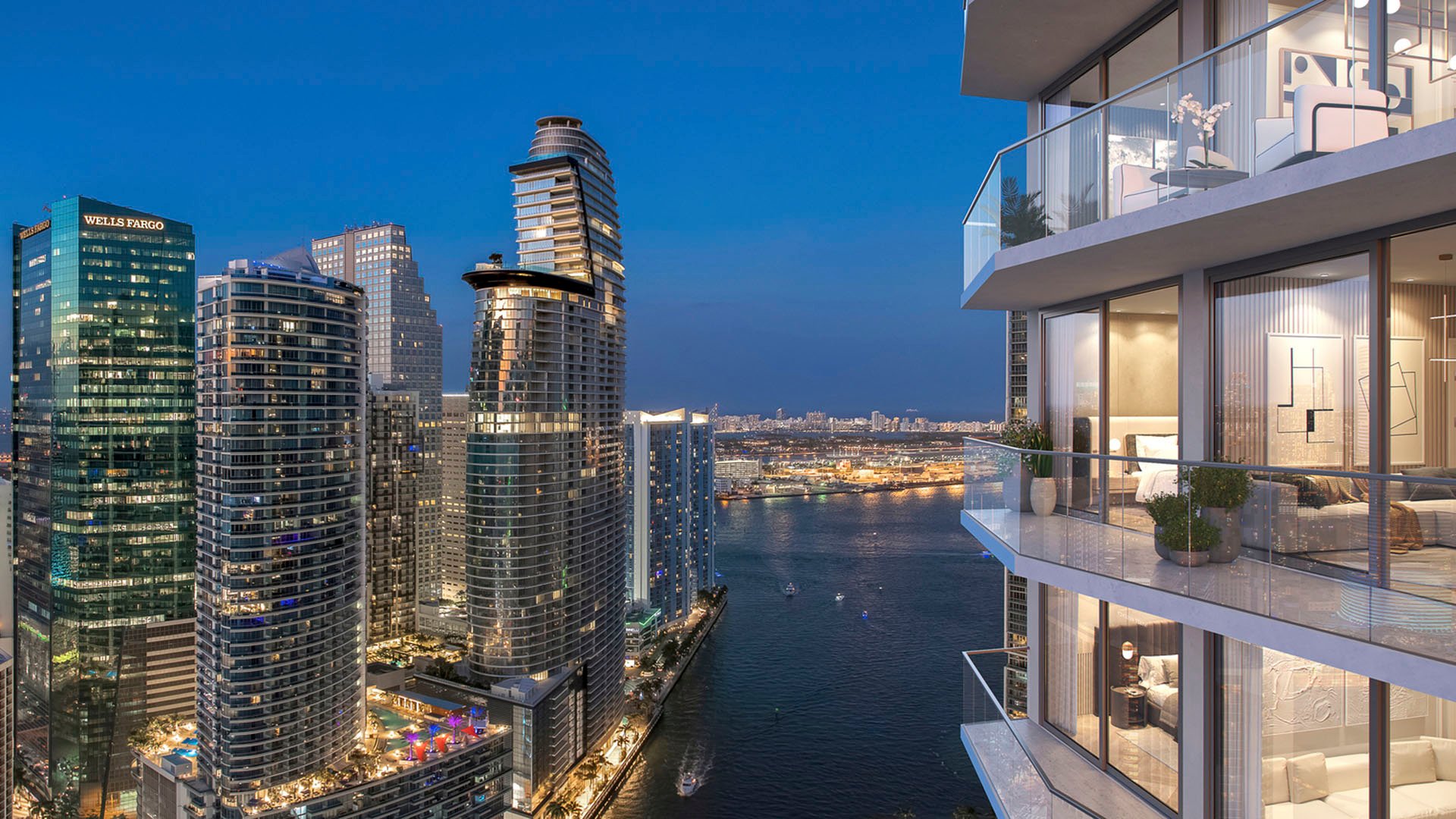
In Miami luxury real estate, a long marketing period invites two opposing interpretations: the owner is comfortably waiting for the right offer, or buyers have identified an obstacle. Neither conclusion follows from elapsed time alone. The useful question is what happened during that time-and whether the asking price, presentation, access, and ownership proposition withstand scrutiny.
A patient seller can still be overpriced. An attractive residence can still carry unresolved building questions. For a buyer, the objective is not to label a listing stale, but to distinguish negotiable positioning from a condition that will remain after closing.
Miami homes took a median 85 days to sell in September 2026, compared with 61 days nationally. That is broad-market context, not a benchmark for a particular luxury condominium, waterfront house, or penthouse.
Only 14.9% of Miami listings had a price reduction that month, versus 20.8% nationally. Longer exposure can therefore coexist with sellers holding their asking prices. It does not establish that those prices are justified or that owners will ultimately accept them unchanged.
The appropriate comparison is narrower: similar property type, location, price bracket, condition, and ownership structure. Confirm what each timing measure captures. Days on market, time to sell, and listing-to-contract periods should not automatically be treated as interchangeable.
The strongest test of seller strategy is recent closed comparable sales. Competing asking prices reveal what other owners hope to achieve; completed transactions show what buyers accepted.
For a Brickell buyer considering Una Residences Brickell alongside other residences, the discipline is to build a relevant comparison set rather than apply a citywide average. Project references here illustrate search contexts, not assessments of any individual listing's performance.
Ask the listing representative to explain the price through comparable evidence. Which closed transactions support it? What differences justify an adjustment? Has new competing inventory changed the calculation?
A seller's willingness to wait is a negotiating position, not proof of market value. Conversely, a lengthy listing history does not prove that a discounted offer is warranted. Both sides need a defensible explanation of price.
Before concluding that the property itself is the problem, examine the campaign. Poor photography, dated presentation, and restricted showing access can all impede a buyer's ability to evaluate a residence.
Low showing volume should prompt a review of price, presentation, and availability. Meaningful showings without offers call for closer examination of feedback. Neither pattern identifies the cause on its own; each tells the seller where to investigate next.
In Miami Beach, a buyer evaluating Setai Residences Miami Beach should make the same distinction: does hesitation emerge before a viewing, after the visit, or during document review? Those stages suggest different questions, not automatic conclusions.
A useful review tracks showing volume, competing inventory, the marketing periods of recent comparable sales, and the gap between asking and closing prices. Without those reference points, seller patience is difficult to distinguish from an untested narrative.
A beautiful interior cannot answer questions about the building around it. Insurance, association dues, reserve funding, special assessments, and structural repairs can create obstacles independent of a unit's finishes or presentation.
Florida condominium inventory stood at approximately 12 months as of May 2026, above a six-to-nine-month range considered balanced. That statewide context should not become a diagnosis of every Miami luxury building. It does reinforce the importance of examining the ownership proposition alongside the purchase price.
For a Sunny Isles Beach search that includes Jade Signature Sunny Isles Beach, request the relevant building documents rather than infer financial condition from the residence's appearance or listing age. Review structural-inspection findings, repair funding, current and pending assessments, reserves, litigation, insurance coverage, and association budgets.
Separate questions with documented answers from those still unresolved. A price concession may address an identified expense; it does not, by itself, resolve uncertainty about future obligations.
Overpricing at launch can weaken early interest and leave a stale impression even after the price becomes more competitive. Repeated small reductions may also fail to restore attention if the asking price remains outside the range buyers consider credible.
A substantive reset addresses the obstacle. That might mean meaningful repricing supported by closed sales, improved photography and staging, clearer listing copy, or renewed broker outreach. If showing access has been restrictive, changing the images alone leaves that friction intact.
The same principle applies to a Coconut Grove search involving Park Grove Coconut Grove and other alternatives: distinguish a revised offer to the market from a cosmetic restart of the listing clock. Ask what changed in price, presentation, access, or available documentation.
For sellers, the aim should be to improve the buyer's decision, not merely make the listing appear younger.
A 30-, 60-, and 90-day schedule can provide useful structure, but it is a suggested decision framework, not a validated Miami luxury-market rule.
At 30 days, consider whether the launch generated relevant attention and whether showings were easy to arrange. At 60 days, revisit closed comparables, new competition, and recurring feedback. At 90 days, assess whether the original positioning remains defensible or requires a more substantial change.
There is no reason to wait for a calendar milestone when meaningful showings produce no offer or new inventory materially changes the comparison. Pricing deserves review every few weeks and after such developments.
A seller choosing to hold firm should be able to explain that choice against current evidence. A buyer should evaluate the explanation without assuming either distress or exceptional value.
The most useful conclusion is specific. An asking-price mismatch calls for a valuation discussion. Weak presentation calls for a clearer inspection of the residence. Restricted access calls for a workable viewing arrangement. Unresolved association questions call for documents and professional review before confidence in the purchase can be established.
A long marketing period is an invitation to investigate, not a verdict. The distinction between strategy and friction becomes clearer when price, buyer response, campaign execution, and building obligations are considered together.
For a considered approach to Miami luxury property decisions, explore MILLION.
If branded residences are on your mind — as a home or as an allocation — we would be glad to share what we are seeing, privately.
Begin a quiet conversationNot necessarily. Pricing, buyer response, presentation, showing access, and building documentation should be evaluated together before drawing that conclusion.
No. The September 2026 median of 85 days describes Miami's broader housing market, not a specific luxury segment.
No. Holding an asking price indicates a pricing position, but does not establish the seller's circumstances or the property's market value.
Recent closed sales of similar properties provide a stronger pricing reference than competing asking prices. Location, property type, condition, and ownership structure should inform the comparison.
Yes. Poor photography, dated presentation, and restricted showing access are potential obstacles that deserve investigation.
Review structural-inspection findings, repair funding, assessments, reserves, litigation, insurance coverage, and association budgets. These can reveal ownership questions unrelated to the unit's finishes.
No. Small reductions may fail if the asking price remains outside the range buyers consider competitive.
A meaningful reset addresses the actual obstacle through measures such as substantive repricing, better presentation, improved access, or clearer documentation. Restarting the visible listing clock alone does not do that.
No. It is a suggested framework for reviewing launch performance, comparable sales, buyer feedback, and positioning.
Review pricing every few weeks and after meaningful showings without an offer or the arrival of new competing inventory. Calendar milestones should not delay a necessary reassessment.