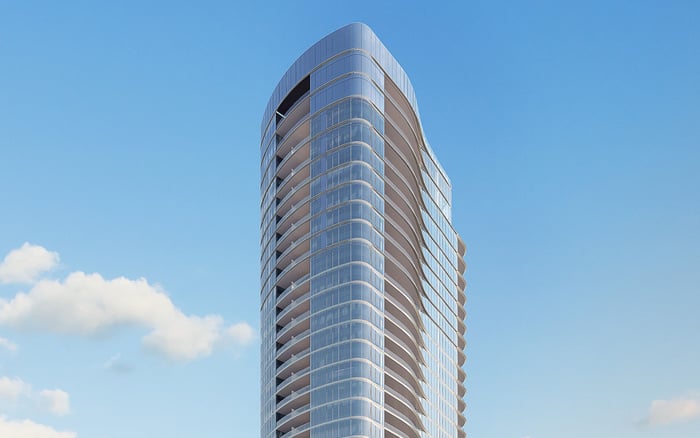
A practical audit for absent Brickell owners: establish emergency access, verify drying and mold procedures, qualify restoration vendors, and put owner communication and closeout requirements in writing.

The most valuable lock-and-leave amenity is not visible from the lobby. It is a clear chain of responsibility when water is discovered inside a residence and the owner is elsewhere. Second-home ownership deserves an operating plan as considered as the interiors: who enters, who stops the water, who authorizes work, and who explains what happens next.
For a buyer considering Una Residences Brickell, that means requesting written procedures rather than treating a service-oriented presentation as proof of emergency readiness. The same audit applies across Brickell. Neither response capability nor deficiency should be inferred from a project's name, branding, or inclusion here.
A useful audit ends with evidence, not reassurance. Ask for an emergency contact chain, an access arrangement, a qualified vendor roster, a communication schedule, and a closeout checklist. Together, these define the response you expect management and your representatives to deliver.
Start with a scenario: water is discovered while you are unreachable. Ask management to walk through the sequence from discovery to entry, source control, vendor dispatch, and owner notification. Identify the primary decision-maker and the backup.
Request written emergency-entry authorization appropriate to the building, documented shutoff locations, and clear instructions on who may operate them. Agree on which actions can proceed without further approval and which expenditures or invasive work require a decision. Do not assume a concierge relationship confers that authority.
Keep responsibilities distinct. A general checklist cannot establish association duties, unit-owner obligations, insurance coverage, or emergency-access rights. Review the governing documents, management arrangements, and relevant policies with appropriate advisers. The audit should record the applicable arrangements, not presume that either the association or the owner handles everything.
Water-damaged areas and contents should be dried within 24-48 hours to help prevent mold growth. That benchmark is neither permission to wait nor a guaranteed safe window. Mold may develop even when materials are dried within 48 hours.
Ask how the response team will document discovery time, any known duration of wetting, extraction, equipment installation, and subsequent moisture findings. If the onset is unknown, the record should say so. A dispatch confirmation is not evidence that materials have dried.
When evaluating a purchase at The Residences at 1428 Brickell, request the proposed documentation standard alongside the emergency procedure. This is a diligence question, not a statement about that project's operations.
Water extraction, dehumidification, and fans are recognized methods for drying water-damaged carpet and backing. Equipment selection should remain with qualified professionals. Request moisture maps and drying logs that identify affected materials and track progress; equipment photographs alone are not a complete record.
A dry-looking surface does not establish the extent of damage. Mold can grow behind drywall and beneath carpets, making concealed conditions an important part of the assessment. Ask who decides whether further investigation is needed and how any opening of finishes will be authorized and documented.
The protocol should address escalation when mold is present or materials have remained wet for more than 48 hours. Specify assessment, containment, remediation, and closeout requirements in the written scope. Tailor them to the incident rather than treating them as a universal package.
Correcting the source is essential: unless the underlying water or moisture problem is resolved, mold is likely to return. Require confirmation of the repair, not simply a statement that cleanup has finished.
HVAC operation requires a clear boundary. A system suspected of mold contamination should not be run because it could spread mold throughout the building. The plan should identify who evaluates that concern and communicates operating instructions to the owner and building team.
A preferred vendor is a starting point, not a completed audit. Ask for primary and backup contacts, current dispatch coverage, insurance documentation, and relevant high-rise experience. Confirm how the team would coordinate building access and equipment delivery, and who would provide the owner-facing record.
For buyers assessing Cipriani Residences Brickell, vendor questions belong alongside questions about everyday service. Advertised around-the-clock availability is not an independently verified arrival guarantee. Ask what response commitment can be documented for the residence.
Mold assessment and mold remediation are distinct Florida licensing categories. Verify current credentials against state licensing records for the assigned role rather than relying on a company website or certification logo. Florida law includes exemptions from portions of its mold-related licensing provisions, so do not assume every cleanup task requires the same license.
The vendor file should distinguish emergency stabilization, assessment, remediation, and restoration. Request a written scope and approval process for each applicable phase, with responsibility for documentation clearly assigned.
For an absent owner, communication should be a defined deliverable. A practical proposed cadence is an immediate emergency alert, a same-day condition report, daily updates during drying, and a final closeout package. These are expectations to negotiate, not a universal Brickell-specific legal deadline.
Ask for the initial notice to include discovery time, suspected source, affected rooms, immediate actions, vendors contacted, access needs, and the next decision requiring approval. Subsequent updates should add equipment installed, moisture findings, photographs, and scope changes.
Designate a primary owner contact and an alternate who can make decisions if needed. Specify the communication channel and what happens when a message goes unacknowledged. An alert sent but never acted upon should not leave the team uncertain about its next authorized step.
Agree on the closeout standard before the incident is declared resolved. Cleanup completion includes correcting the moisture problem and removing visible mold and moldy odors. It should not rest solely on an air-test result.
Sampling is generally unnecessary when visible mold is present, and there are no federal limits for mold or mold spores. Independent clearance or air sampling should therefore not be presented as universally required. Where project-specific assessment or testing is appropriate, define its purpose and acceptance criteria in the scope.
For a buyer considering 2200 Brickell, the final question is straightforward: what evidence would I receive before considering the residence ready for my return? Request incident photographs, moisture maps, drying logs, vendor credentials, invoices, and confirmation that the source was repaired. Require unresolved items to be explicitly identified.
That is the distinction between convenience and a documented lock-and-leave plan: knowing not only that someone will respond, but how the work will be authorized, communicated, and closed.
Explore Brickell residences with a more exacting ownership checklist at MILLION.
If branded residences are on your mind — as a home or as an allocation — we would be glad to share what we are seeing, privately.
Begin a quiet conversationIt should document emergency access, decision-making authority, source control, vendor dispatch, owner communication, and closeout evidence.
Water-damaged areas and contents should be dried within 24–48 hours to help prevent mold growth. Response should begin promptly rather than waiting for that window to expire.
No. Mold may develop even when materials are dried within 48 hours, so the benchmark is prevention guidance rather than a guarantee.
No. Mold can grow behind drywall and beneath carpets, so surface appearance alone cannot establish the extent of damage.
The written protocol should address escalation when mold is present or materials have remained wet for more than 48 hours. The assessment and work scope should reflect the incident.
No. A system suspected of mold contamination should not be run because it could spread mold throughout the building.
Check current Florida licensing records for the assigned assessment or remediation role. Licensing exemptions exist, so requirements should be checked for the particular work.
No. Confirm current dispatch coverage and obtain any available response commitment in writing, along with insurance and relevant high-rise experience.
A proposed contractual standard is an immediate alert, a same-day condition report, daily drying updates, and final closeout documentation. This is not a universal Brickell-specific legal deadline.
No. Completion includes correcting the moisture problem and removing visible mold and moldy odors; air sampling is not universally required.