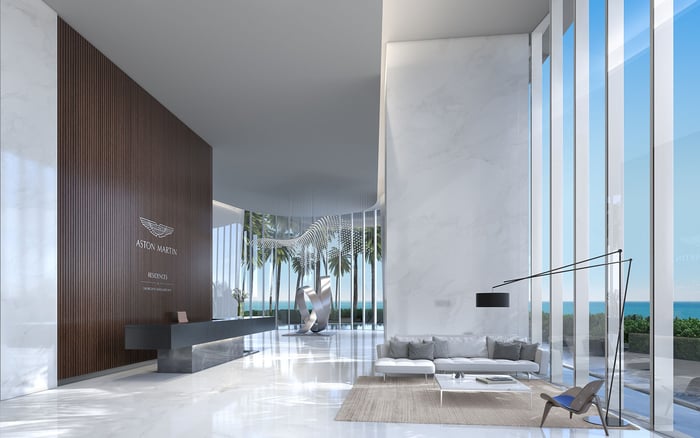
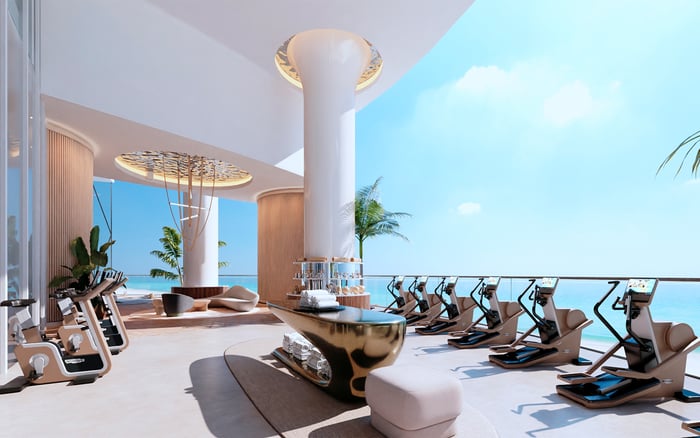
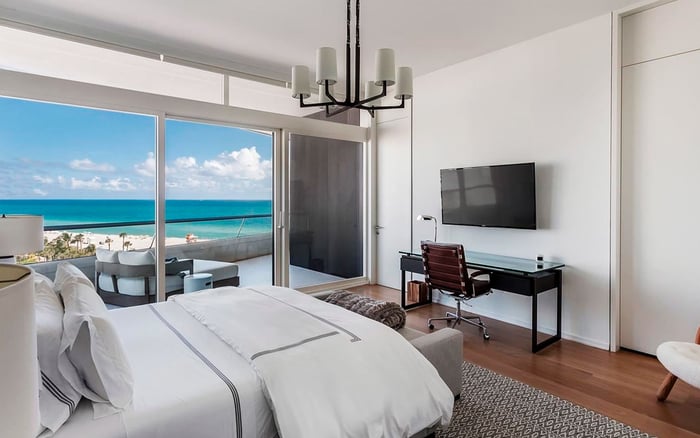
Mandarin Oriental’s explicit design and lighting credentials contrast with Ritz-Carlton Sunny Isles’ turnkey, branded-management positioning. For art-owning families, neither proposition substitutes for written conservation specifications, installation permissions, and collection-service agreements.
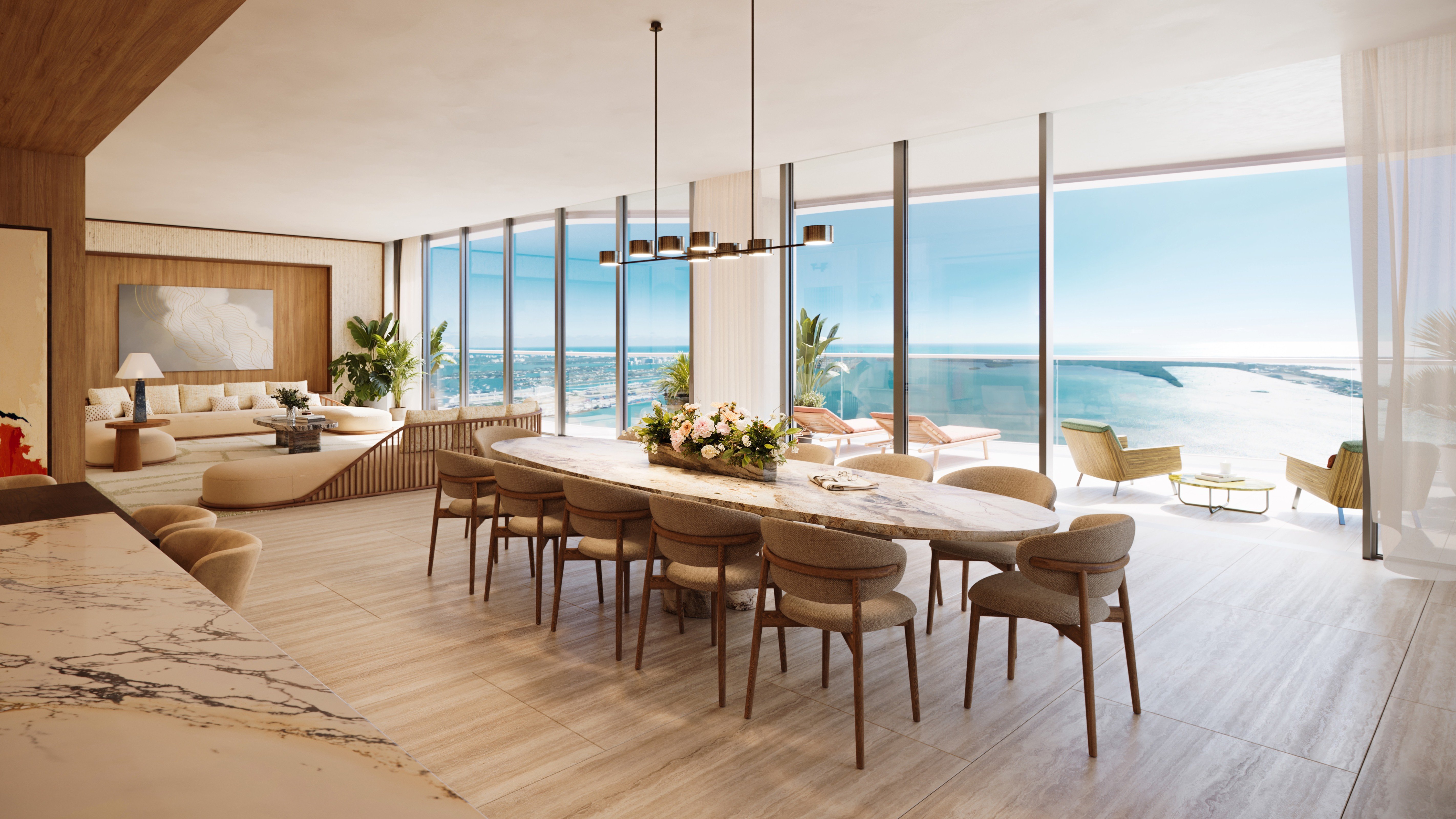
For a family office acquiring a South Florida residence, the distinction is consequential: a beautifully illuminated interior is not necessarily a home technically prepared for a significant art collection. Hospitality service, architectural authorship, and cultural programming can enrich ownership. None, on its own, establishes conservation performance or permission to install a demanding work.
The comparison between The Residences at Mandarin Oriental, Miami and The Ritz-Carlton Residences® Sunny Isles is therefore less a contest of prestige than a review of what each proposition establishes. Mandarin Oriental offers more explicit design, lighting, and communal-art credentials. Ritz-Carlton Sunny Isles presents a clearer turnkey and branded-management proposition.
For collection owners, the decisive evidence should be residence-specific: technical specifications, written permissions, and a defined division of responsibility among the household, its specialists, and building management.
The Mandarin Oriental development by Swire Properties occupies the southernmost tip of Brickell Key at 1 Island Drive. Its South Tower is planned as 66 stories with 228 residences. The North Tower is described as 33 stories with 70 Private Residences and 28 Hotel Collection Residences. These are distinct residential configurations, not interchangeable specifications for an individual apartment.
Kohn Pedersen Fox is responsible for architecture. Tristan Auer designs the South Tower interiors, while Laura González designs the North Tower private-residence interiors. Speirs Major Light Architecture is the named lighting designer, with a concept that integrates natural and artificial light with materials and atmosphere.
That authorship gives buyers a substantive starting point for discussions about illumination. It does not establish that any particular residence includes conservation-calibrated lighting. The South Tower’s description of state-of-the-art lighting, fixtures, and appliances should be read as a design statement, not an artwork-specific technical standard.
The more useful question is how the selected residence can accommodate a collector’s brief without compromising its architectural composition.
The Ritz-Carlton property is described as a 649-foot residential tower containing 212 residences, managed by The Ritz-Carlton. Its winding, ocean-facing arrival drive reinforces the oceanfront setting, while its turnkey positioning emphasizes ready-to-use ownership.
For an owner seeking a second home, that proposition deserves attention. For a collector, however, readiness for occupancy and readiness for installation are separate questions. Even a completed interior requires a work-specific review of anchoring, electrical requirements, lighting, access, and proposed alterations.
A named architectural-lighting consultant and an owner-facing art-curatorial service are not established here. That does not prove either is unavailable. It does warrant a precise written scope rather than an assumption of specialist support based on the brand.
The same distinction should guide any broader Sunny Isles shortlist that includes St. Regis® Residences Sunny Isles: evaluate art-readiness separately from hospitality identity, without assuming equivalent services or permissions.
Neither property’s established specifications substantiate museum-grade lighting for a private collection. No artwork-specific standard is established for color rendering, illuminance, ultraviolet exposure, glare, tunable-white controls, or dedicated circuitry.
Rather than negotiate around the phrase museum-grade, the family office should ask its conservator and independent lighting consultant to develop a brief for the intended works. The brief should distinguish the desired visual effect from the conditions required to protect each object. No universal numerical threshold should be inferred from these developments’ design descriptions.
Request fixture schedules, control capabilities, daylight-management options, and confirmation that independent specialists may revise the lighting design. Ask who approves new circuits, ceiling changes, and replacement fixtures, and whether those interventions affect restoration obligations.
The practical deliverable is an agreed lighting plan for the actual collection in the actual residence. A celebrated lighting designer can inform that discussion; the appointment alone cannot resolve it.
Mandarin Oriental’s planned podium art walk features curated exhibitions by rotating artists. Its resort-style podium also encompasses more than 100,000 square feet of amenities, with greenery connecting the development to the Brickell Key baywalk.
This establishes a cultural and leisure setting, not a private-collection service agreement. It does not guarantee that residents can lend works, select exhibiting artists, or install their own objects in common areas.
For either property, request a written distinction between building services and owner-retained collection services. Ask whether any offered assistance covers receiving, condition documentation, inventory, storage coordination, installation supervision, or ongoing conservation. If support is available, establish who performs it, what it costs, and where responsibility begins and ends.
Address fine-art insurance independently. Neither hospitality branding nor communal exhibition programming establishes coverage for a resident’s collection. A family office should confirm arrangements with its own advisers rather than treat residential management as a substitute for collection oversight.
A major installation requires clarity on both design approval and operational approval. The first concerns structure, aesthetics, electrical systems, and fire and life safety. The second concerns vendors, access, scheduling, security, insurance, and maintenance.
Before committing, request the condominium declaration, bylaws, house rules, alteration agreement, delivery procedures, insurance requirements, and construction manual. No detailed installation protocol or structural-load schedule is established here for either property.
Submit a work-specific proposal and request written answers on wall and ceiling loads, anchoring, dedicated circuits, environmental controls, freight-elevator dimensions, installation charges, and restoration obligations. Confirm the entire delivery route, not simply whether a freight elevator exists.
Identify every approving party during development and after turnover. The developer, condominium board, management company, architectural-review committee, or several parties may be involved; the applicable arrangement requires confirmation. Permission to use a vendor is not permission to execute that vendor’s proposed installation.
For a Brickell buyer drawn to explicit design authorship and a planned communal-art environment, Mandarin Oriental offers a compelling starting point. For a Sunny Isles buyer prioritizing turnkey positioning and branded management, Ritz-Carlton presents a different ownership proposition. Neither is established as the superior home for a particular collection without further technical and contractual confirmation.
The family office should bring together its property adviser, condominium counsel, insurer, conservator, and installation team before committing to substantial interventions. Ask each to review the same proposed works and residence plans. The objective is to align the purchase decision with installation feasibility, service responsibilities, and conservation requirements-not resolve those questions after acquisition.
For a discreet review of South Florida residences through the requirements of your collection, explore MILLION.
If branded residences are on your mind — as a home or as an allocation — we would be glad to share what we are seeing, privately.
Begin a quiet conversationMandarin Oriental has more explicit design, lighting, and communal-art credentials. Ritz-Carlton Sunny Isles has clearer turnkey and branded-management positioning, but neither establishes comprehensive private-collection infrastructure.
Kohn Pedersen Fox is responsible for architecture. Tristan Auer designs South Tower interiors, and Laura González designs North Tower private-residence interiors.
Speirs Major Light Architecture is identified as the lighting designer. That appointment does not establish artwork-specific conservation performance in an individual residence.
Neither property’s established specifications substantiate museum-grade lighting for private collections. Artwork-specific illuminance, ultraviolet exposure, color rendering, glare, controls, and circuitry require confirmation.
The planned podium art walk features curated exhibitions by rotating artists. It does not establish private-collection management or residents’ rights to exhibit their own works.
Yes, the property is described as managed by The Ritz-Carlton. This does not independently establish fine-art insurance, conservation services, or installation permission.
No; a ready-to-use residence still requires work-specific confirmation of structural capacity, lighting, electrical requirements, access, and alteration permissions.
Request the condominium declaration, bylaws, house rules, alteration agreement, delivery procedures, insurance requirements, and construction manual. Seek written answers on loads, anchoring, access, charges, and restoration obligations.
Design approval addresses structure, aesthetics, electrical systems, and fire and life safety. Operational approval addresses vendors, access, scheduling, security, insurance, and maintenance.
The applicable approving parties must be confirmed for development and post-turnover ownership. They may include the developer, condominium board, management company, architectural-review committee, or several parties.