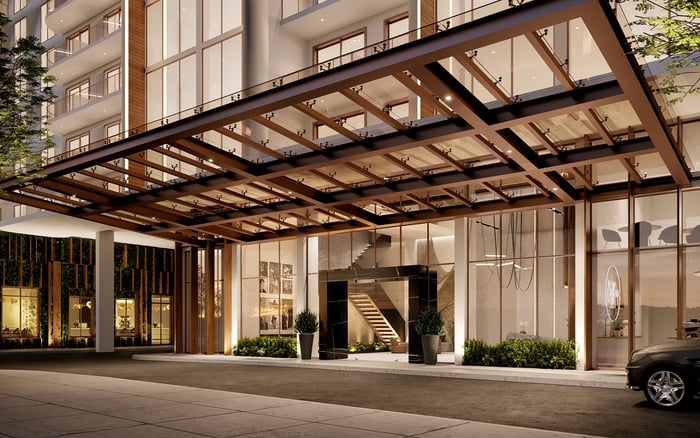
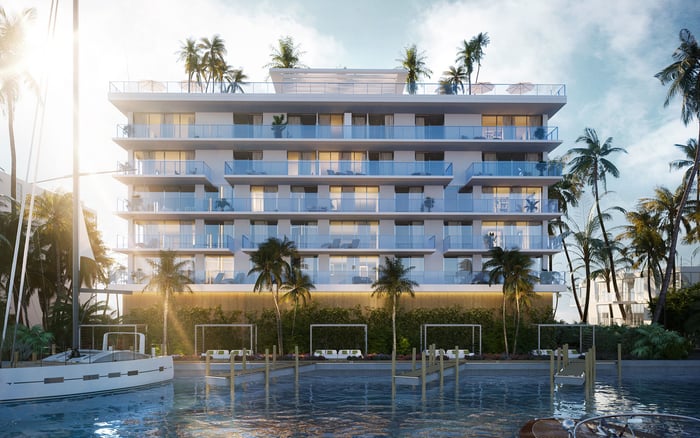
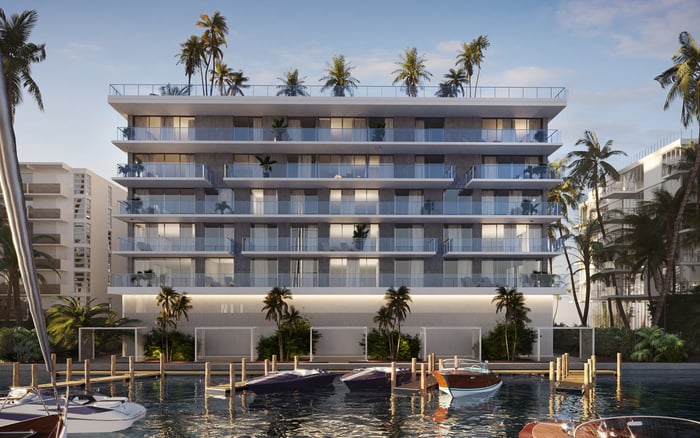
Alma and La Baia North offer distinct Bay Harbor Islands ownership propositions. For family offices, the decisive comparison is not residence count or waterfront positioning, but documented emergency access, inspection responsibilities and vendor mobilization arrangements.
For a family office, a coastal residence is both a private retreat and an asset that must remain manageable when its owner is elsewhere. After a storm, the questions are immediate: who can enter, who can assess damage, who can authorize work, and who communicates the next decision?
Alma and La Baia North present different settings for that review. One is an intimate, interior-island proposition; the other combines bayfront living with waterfront amenities. Neither has an established occupied-building storm-performance record or documented vendor-response times in the available evidence. This is a comparison of diligence priorities, not a ranking of proven resilience.
The meaningful luxury is a clear chain of responsibility when the owner cannot be present.
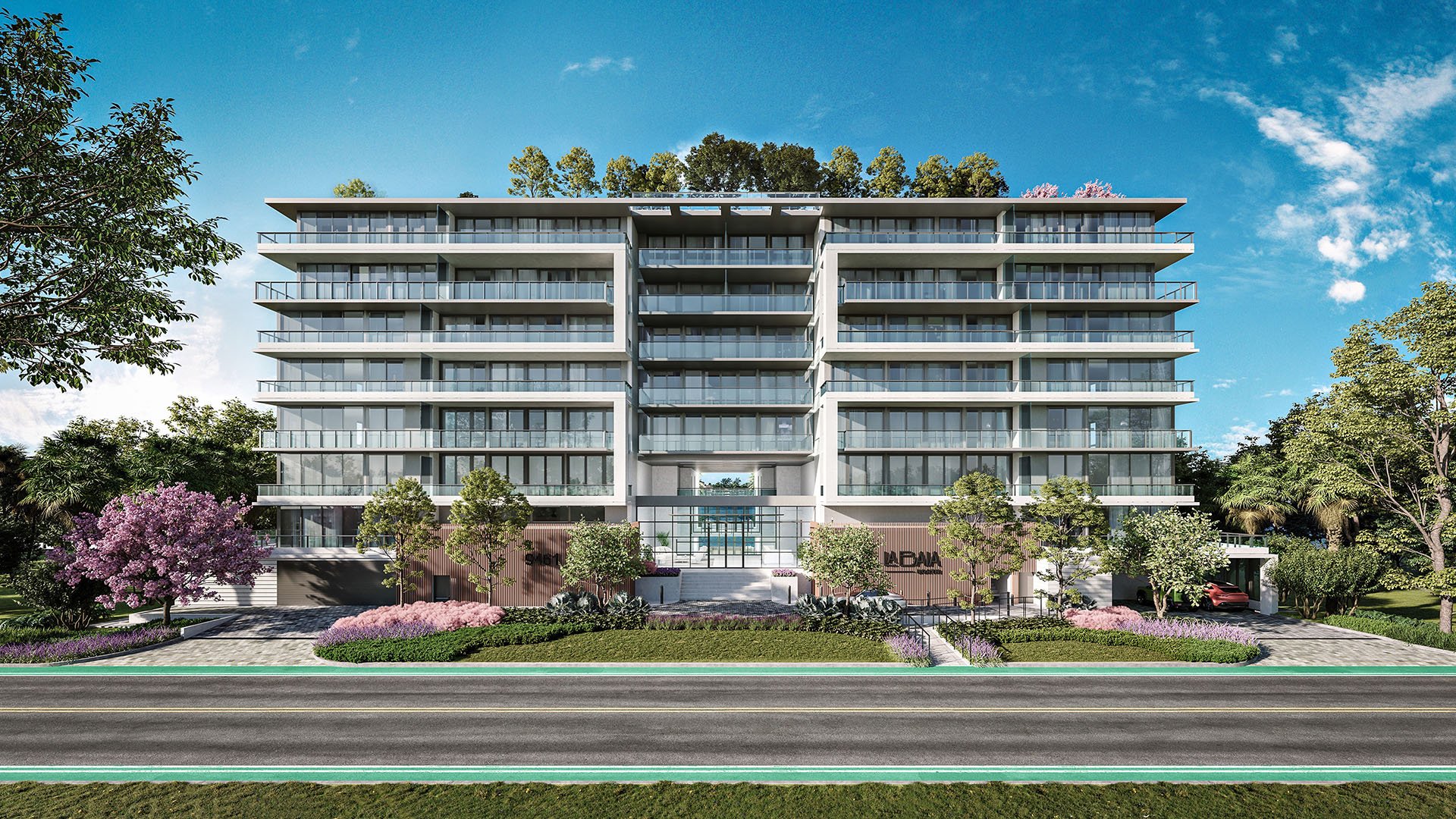
Alma Bay Harbor Islands is planned as a seven-story condominium at 1160 101st Street, on an interior-island, non-bayfront site. Its nine residences should not be confused with the combined 18 residences marketed across Alma and sister building Mila.
Islands Development Group is the developer, with architecture by Kobi Karp. The advertised offering emphasizes “Wellness Minimalism,” private elevator entries, Italian kitchens and flow-through terraces. The collection spans two to five bedrooms and approximately 2,800-3,900 square feet.
For an absentee owner, those attributes raise specific questions rather than provide operational assurances. How would authorized personnel reach a residence if elevator service were interrupted? Who would inspect terraces and interior thresholds once safe access is restored? Where would association responsibility end and the owner's maintenance obligation begin?
Nine residences do not establish faster board decisions, deeper staffing or priority access to contractors. Nor does Alma's non-bayfront location establish lower surge exposure, cheaper insurance or faster reoccupancy. Those judgments require site-specific elevations, engineering and insurance review.
La Baia North Bay Harbor Islands is an eight-story, 57-residence bayfront development at 9481 East Bay Harbor Drive. Its 33,750-square-foot waterfront site and marketed private boat slips call for a different inspection agenda from Alma's interior-island setting.
Continuum Company is the developer, and the design team includes Luis Revuelta, Durukan Design and C. Wright Studios. Jacob Companies is identified as general contractor, with Continuum's internal construction team serving as owner's representative. These construction roles should not be mistaken for future association-management or emergency-response commitments.
The family office should request a responsibility schedule for waterfront amenities and any marine infrastructure serving the slips. Who would assess docks, associated electrical equipment and waterfront structures where applicable? Who could restrict access, commission specialist inspections and authorize reopening?
These are proposed diligence questions, not confirmed services. Waterfront positioning does not itself prove inferior resilience, just as an interior location does not prove superior protection. The comparison requires engineering detail, assigned responsibilities and written operating arrangements.
Alma's projected schedule is materially inconsistent: one estimate anticipates groundbreaking in Q4 2026 and delivery in Q4 2028, while another identifies a 2027 completion target. A family office should obtain a reconciled written schedule and have counsel review contractual delivery provisions before coordinating occupancy or household relocation.
La Baia North broke ground in October 2024 and had reached topping off by April 25, 2026. Its expected completion is Q1 2027. Topping off is a construction milestone, not confirmation of completion, occupancy approval or a guaranteed handover date.
La Baia North's August 2025 financing milestone included a $67 million construction loan from S3 Capital and approximately 75% presales at that time. Neither establishes funded association reserves or vendor standby contracts. Construction progress and future operating readiness belong in separate sections of the acquisition review.
Neither project's emergency unit-access authorizations, absentee-owner inspection service, spending authority or communication commitments are established here. Buyers should seek written arrangements rather than infer them from the level of service suggested by the marketing.
A proposed absence protocol should name a primary representative and an alternate, identify permissible access methods, and specify authorization for inspection and emergency mitigation. Counsel and management should confirm that the arrangement fits the governing documents, privacy requirements and applicable rules.
Spending authority deserves separate treatment. The family office should distinguish immediate damage-limitation work from permanent repairs, set approval thresholds and identify who can act if the principal is unreachable. An available contractor is of limited use if nobody present can approve the work.
The inspection deliverable should be equally explicit: time-stamped photographs, accessible areas checked, areas not accessed, observed conditions, actions taken and unresolved concerns. A reassuring message is no substitute for an inspection record with a defined scope.
A proposed inspection plan should begin with applicable access restrictions and a qualified assessment of building safety. Owner representatives should not treat unit-entry permission as clearance to enter an unsafe property or operate compromised equipment.
Ask management to distinguish an initial common-area assessment from an individual residence inspection. Request a sequence covering accessible signs of water intrusion, terrace drainage, doors and windows, and relevant building systems, with specialist escalation where warranted. The purpose is to establish who examines each condition, not to assume either project has a particular protective specification.
Impact-glazing ratings, backup power, floodproofing, pump capacity and seawall condition remain unverified. Request applicable design documents, commissioning records and maintenance obligations as they become available. Keep observations, professional findings and authorization to reoccupy distinct; each answers a different question.
A vendor directory is not a response commitment. Ask for executed agreements or proposed contract terms identifying service scope, dispatch procedures, priority provisions, exclusions and backup providers. Any promised response window should specify when the clock begins and how access restrictions or regional demand affect performance.
The same discipline belongs in the review of Mila Bay Harbor Islands, Alma's nine-residence sister building. Shared marketing is not evidence of shared staffing, vendor contracts or emergency coverage.
For either purchase, request an operating budget identifying emergency-service provisions, an explanation of reserve funding, relevant insurance terms and a sample owner update. Then test a tabletop scenario: the owner is overseas, connectivity is unreliable, and an inspection identifies water intrusion. Who receives the finding, approves mitigation and confirms completion?
The better fit is the residence whose setting suits the household and whose written arrangements support the family's expectations. Until those arrangements are documented, neither boutique scale nor waterfront amenities should be credited as a recovery advantage.
For a discreet review of Bay Harbor Islands residences and ownership priorities, connect with MILLION.
If branded residences are on your mind — as a home or as an allocation — we would be glad to share what we are seeing, privately.
Begin a quiet conversationAlma is marketed with nine residences. The combined total of 18 refers to Alma and its sister building Mila, with nine residences each.
Alma is listed at 1160 101st Street in Bay Harbor Islands, on an interior-island, non-bayfront site.
La Baia North is an eight-story, 57-residence bayfront development at 9481 East Bay Harbor Drive. Its marketing includes waterfront amenities and private boat slips.
The available evidence does not establish occupied-building storm performance or documented vendor-response times for either project. Neither can be ranked as the proven faster recovery option.
No. A non-bayfront location alone does not establish lower surge exposure, insurance costs or recovery time; site-specific engineering and insurance review are needed.
Published estimates conflict between a 2027 completion target and Q4 2028 delivery. Buyers should obtain a reconciled written schedule and review contractual delivery provisions.
The project had reached topping off by April 25, 2026, a construction milestone rather than confirmation of occupancy. Its published completion expectation is Q1 2027, not a guaranteed handover date.
It should identify authorized representatives, access methods, inspection scope, emergency spending authority and communication expectations. Those arrangements should be checked against the governing documents and applicable rules.
Request contract details covering scope, dispatch, priority provisions, exclusions and backup providers. A directory or construction-financing milestone does not establish a standby response commitment.
Impact-glazing ratings, backup power, floodproofing, pump capacity and seawall condition are not confirmed here. Buyers should request applicable engineering, commissioning and maintenance documentation.