
A family-office framework for House of Wellness Brickell, separating scheduled purchase payments from escrow protections, construction funding, and future association reserves.
For a family office considering House of Wellness Brickell, the central question is not simply whether the residence suits the household. It is whether the purchase agreement, liquidity calendar, and eventual ownership obligations align with the family's capital policy.
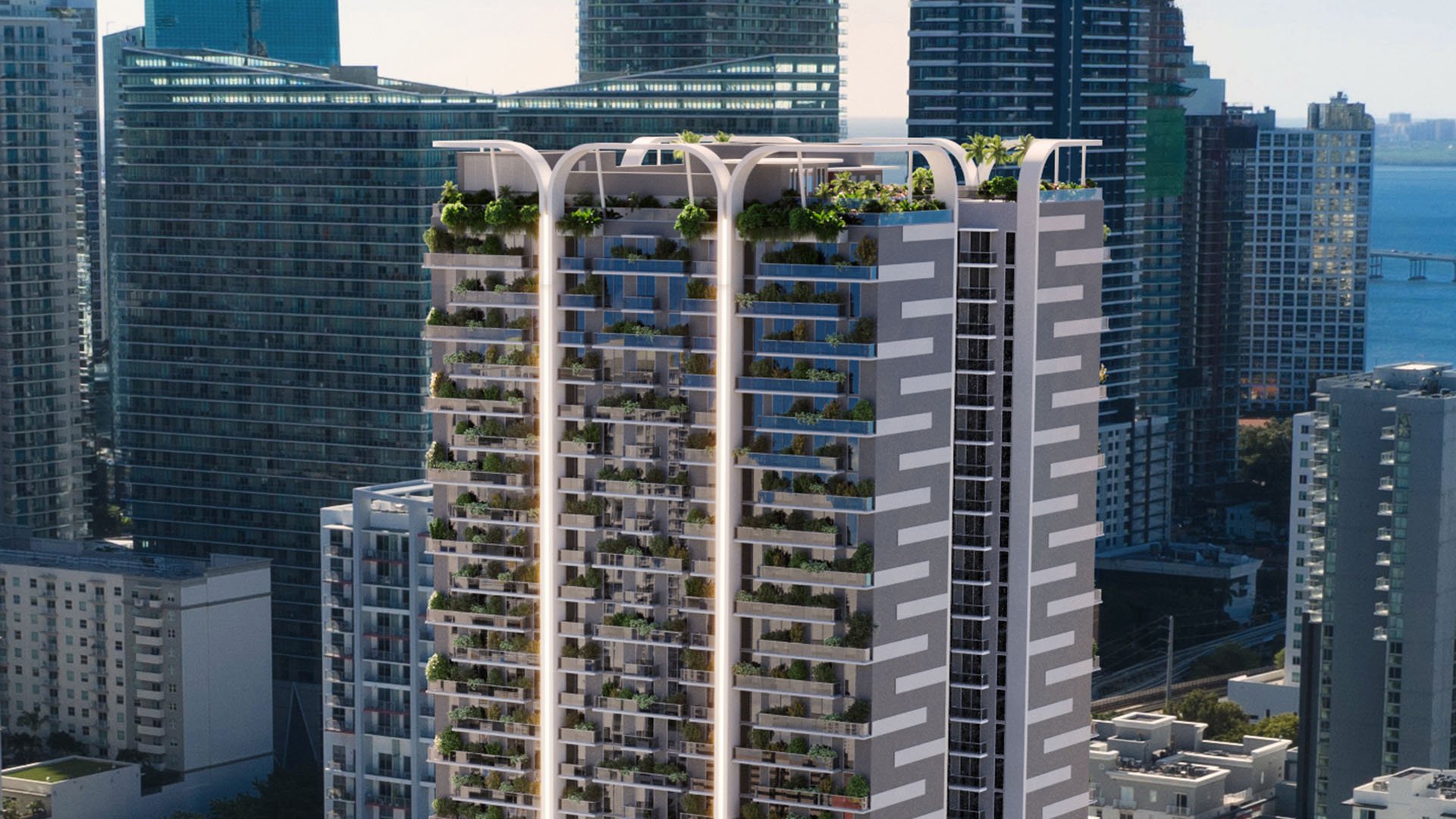
The North Development project is marketed at 152 SW 9th Street, Miami, FL 33130, directly alongside The Underline. Advertised starting prices are approximately $400,000, with delivery targeted for 2029. That year is a planning assumption, not a guaranteed completion date.
The distinction matters: the published payment schedule commits 40% of the purchase price before closing. The remaining 60% is the largest single scheduled capital call. A disciplined diligence file should separate buyer liquidity, escrow custody, developer construction funding, and association reserves. Each serves a different purpose; none should be treated as an interchangeable protection.
The published schedule calls for 10% at contract, followed by 5% after two months, 5% after four months, and 5% after six months. Another 15% is due at groundbreaking, with 60% at closing.
On an illustrative $400,000 purchase, those obligations become:
$40,000 At contract.
$20,000 After each of two, four, and six months.
$60,000 At groundbreaking.
$240,000 At closing.
The contract payment and three subsequent installments total 25%, or $100,000 in this illustration. Groundbreaking adds 15%, bringing the pre-closing commitment to $160,000. The advertised 10% reservation amount should never be mistaken for the full pre-closing exposure. Counsel should also reconcile the reservation language with the purchase agreement's treatment of that payment.
Maintain one calendar for elapsed-time installments and another for milestone obligations. The published schedule gives no specific groundbreaking date, so it does not establish when the additional 15% must be available. Do not assume that payment falls neatly after the six-month installment.
For a household also considering 2200 Brickell, use the same calendar template, but populate it from that property's own documents. This is a comparison framework, not an assumption that deposit terms match.
Before payment, the family office controls how it holds money earmarked for the purchase. After payment, custody and permitted use depend on the governing documents. These are distinct investment-policy questions.
For retained cash, a prudent mandate would prioritize access and capital preservation over incremental yield. Match liquidity to contractual notice periods and milestones, not solely to the targeted delivery year. Establish who may authorize transfers, what evidence is required, and how changes to the construction timetable reach the investment team.
For paid deposits, obtain the escrow agent's identity and the operative escrow provisions. Request written answers on permitted investments, permitted withdrawals, interest ownership, release triggers, and treatment following cancellation or delay. Ask whether restrictions change at particular milestones and how the buyer receives confirmation of balances and releases.
The project's escrow investment mandate and investment policy remain unverified diligence items. This does not establish that protections are absent. It means the investment committee should distinguish documented protections from assumptions before approving exposure.
The 60% closing installment exceeds all pre-closing installments combined. At the illustrative $400,000 price, the $240,000 balance covers only the purchase-price payment. Closing costs, financing expenses, furnishing, taxes, insurance, and post-closing working capital belong in separate budget lines.
Model three planning cases: the expected timetable, the earliest closing permitted by the agreement, and an extended construction period. These are liquidity scenarios, not predictions. Each should identify the funding source, the person responsible for mobilizing it, and any dependency on asset sales or financing.
If borrowing is contemplated, distinguish intended financing from a binding funding commitment. Ask counsel whether the purchase obligation depends on financing and what happens if proceeds are unavailable when payment is due.
When evaluating The Residences at 1428 Brickell alongside this purchase, compare the complete cash requirement and contractual timing, not entry payments alone. Do not presume equivalent financing or delivery protections.
Developer construction financing addresses the resources available to deliver the building. Association reserves address future common-property obligations. Evidence about one does not answer questions about the other.
Request construction-financing evidence, relevant funding conditions, and the contractual treatment of buyer deposits. Have counsel assess completion protections, deposit-release conditions, milestone definitions, extension rights, cancellation rights, delay remedies, assignment restrictions, and default consequences. Construction-financing terms and completion protections are not established here; both require documentary confirmation.
Separately, obtain the projected association turnover budget, reserve plan, and governance documents. Expected HOA expenses are approximately $1.60 per square foot per month, but that estimate is not a final association operating budget. It establishes neither the association's reserve balance nor its funding adequacy.
The reserve review should examine schedules, Structural Integrity Reserve Studies where applicable, engineering documentation, repair plans, and approved, pending, or discussed special assessments. For documents not yet available at the project's stage, request the expected delivery point and responsible party. Do not infer low assessment risk solely from new construction or import assessment figures from older Brickell buildings.
A wider shortlist can sharpen the decision without substituting reputation for evidence. If ORA by Casa Tua Brickell is also under consideration, apply the same questions about payment timing, deposit custody, delivery rights, and association funding, then evaluate its answers independently.
A useful comparison sheet separates purchase obligations from projected ownership costs and unresolved conditions. It should identify which amounts are fixed by contract, which depend on milestones, and which remain estimates. This keeps a compelling residential proposition from obscuring the terms under which family capital becomes committed.
The final investment memorandum should state the maximum pre-closing commitment, the funding source for the closing balance, and the additional ownership liquidity held outside the purchase price. It should also identify every protection still requiring counsel's confirmation.
Approve the acquisition against those conditions, not a delivery-year headline. The objective is straightforward: a residence that serves the household without forcing an avoidable asset sale, an unplanned borrowing decision, or an assumption about reserves that the documents do not support.
For a considered approach to South Florida residential acquisitions, explore MILLION.
If branded residences are on your mind — as a home or as an allocation — we would be glad to share what we are seeing, privately.
Begin a quiet conversationThe project is marketed at 152 SW 9th Street, Miami, FL 33130, directly alongside The Underline.
North Development is the developer behind House of Wellness Brickell.
Marketing materials target 2029 delivery, but that is not a guaranteed completion date. Buyers should confirm delivery obligations, extension rights, and delay remedies in the purchase agreement.
Advertised starting prices are approximately $400,000. The article uses that amount only to illustrate the published payment schedule.
The schedule is 10% at contract, 5% after two months, 5% after four months, 5% after six months, 15% at groundbreaking, and 60% at closing. Confirm the operative terms in the purchase agreement.
Published installments total 40% before closing, including groundbreaking. On an illustrative $400,000 purchase, that equals $160,000.
The published schedule ties the 15% payment to groundbreaking but supplies no specific date. Confirm the milestone definition and payment notice requirements in the agreement.
The 60% closing payment is the largest, equaling $240,000 on an illustrative $400,000 purchase. Closing costs and other acquisition and ownership expenses require separate funding.
The approximately $1.60 per square foot monthly estimate is not a final association operating budget and does not establish reserve adequacy.
Request escrow custody, investment, withdrawal, interest, and release provisions, together with cancellation and delay protections. Separately review the projected association budget, reserve plan, applicable structural reserve studies, engineering documentation, and assessment information.

.jpg&width=700&height=438&fit=cover)