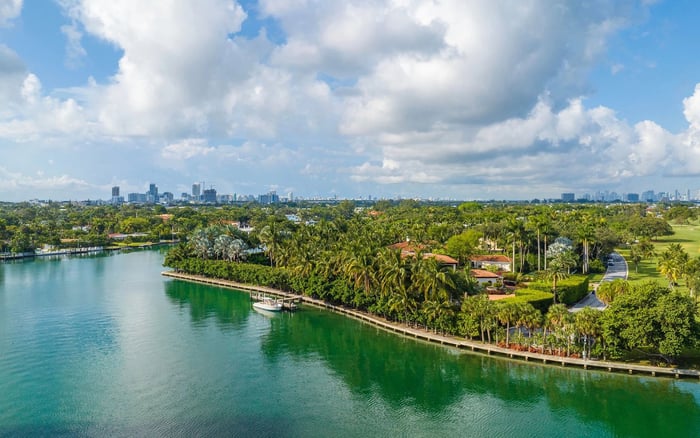
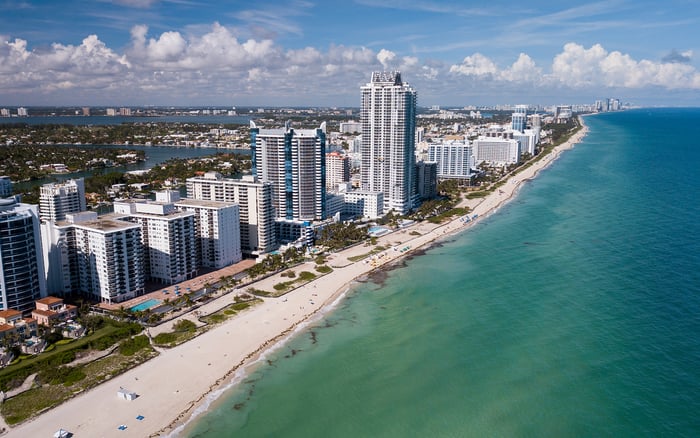
For a family office, choosing between a luxury condo and a waterfront estate means comparing shared infrastructure with direct operational control. Address-specific diligence, documented emergency power, evacuation planning, and accountable absence management should guide the decision.
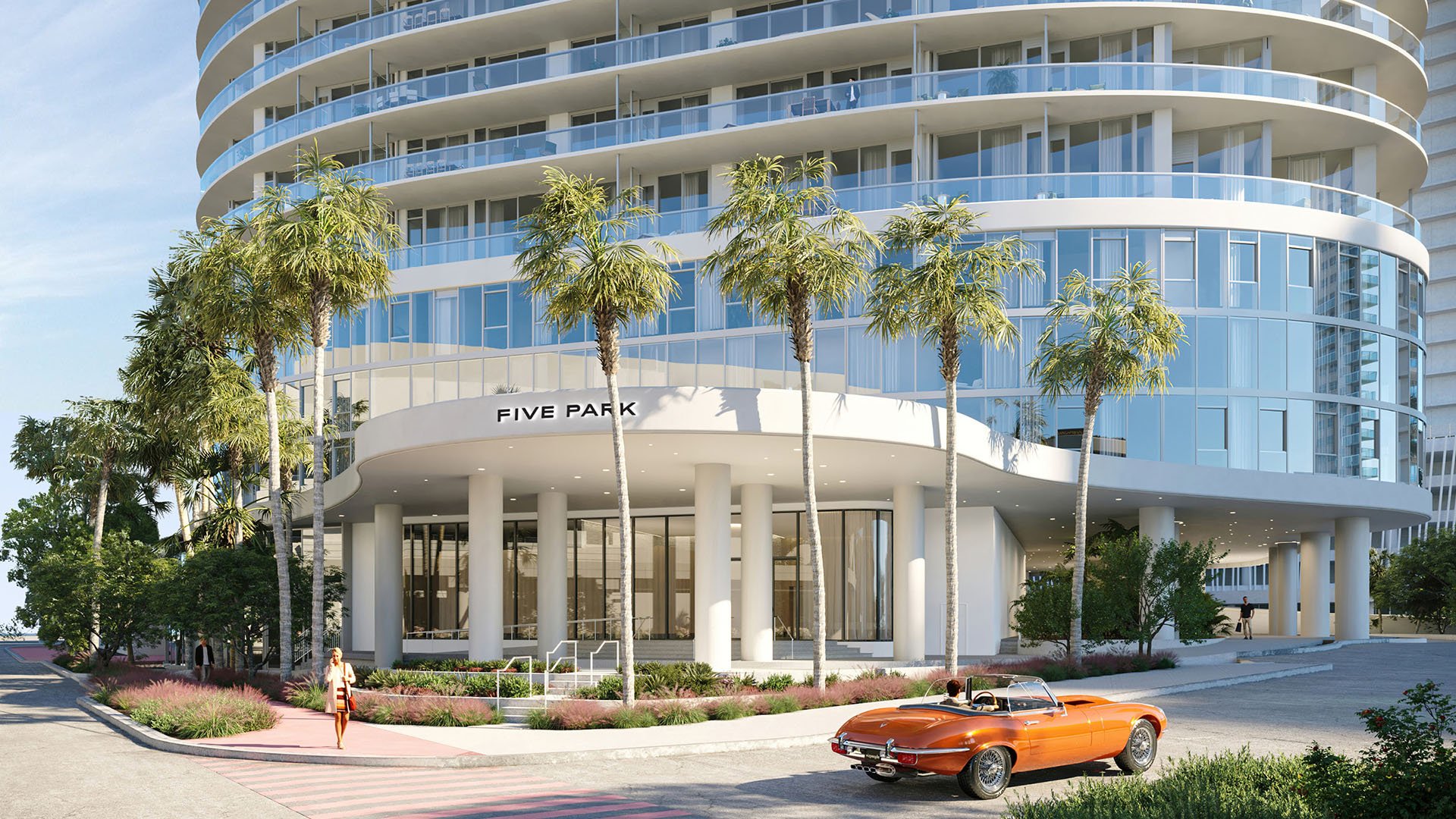
The distinction between a luxury condominium and a waterfront estate is not simply service versus privacy. For a family office, it is a choice between shared infrastructure and direct operational control. Neither ownership model alone establishes storm resilience. The more useful question is whether the residence has documented protections, clear responsibilities, and an executable plan when the family is elsewhere.
A Brickell search that includes Una Residences Brickell should begin with the same discipline as an estate acquisition: examine the property rather than infer performance from its address, architecture, or presentation. The projects referenced here provide acquisition context, not assurances about storm systems or safety.
The objective is not to eliminate every uncertainty. It is to identify dependencies before closing and determine which responsibilities the family office can credibly supervise.
For Miami-Dade acquisitions, begin with an address-based flood-zone search, then confirm the official designation through the county flood-zone hotline or an insurance agent. Neighborhood descriptions cannot substitute for this step. These considerations apply to Miami and Miami-Dade; acquisitions elsewhere require their own local review.
A flood-zone designation is a starting point, not a complete engineering assessment. For an estate, commission property-specific reviews of finished-floor elevation, drainage, seawall and dock condition, vulnerable equipment, and access routes. For a condominium, investigate shared infrastructure and the relationship between the residence, building entrances, and essential equipment.
A Miami Beach comparison involving The Perigon Miami Beach should maintain the same address-level focus. Proximity to water is a lifestyle consideration; diligence must establish how the particular property manages exposure and access.
Flooded roads deserve equal attention. Six inches of moving water can knock a person down, and one foot can sweep away a vehicle. An elevated living room does not resolve a compromised departure route.
The condominium decision should rest on documented responsibilities, not the assumption that a staffed building handles everything. Request the association's hurricane plan, engineering assessments, reserve information, insurance documents, and pending assessments. Have the appropriate advisers evaluate them together, not as separate administrative files.
Ask who protects openings, who communicates with absent owners, and what access arrangements apply before and after a storm. Establish where the association's duties end and the unit owner's obligations begin. A service expectation must become a written responsibility before it enters the family office's operating plan.
Backup power warrants particular scrutiny. Request separate documentation for elevators, water pumps, life-safety systems, and private units. The presence of a generator is not evidence that all four remain available.
The comparison is as much about governance as equipment: who can authorize work, what resources are available, and how the owner receives confirmation that preparation is complete.
An estate offers a framework for direct decision-making, but the family office must test whether it has the personnel and agreements to exercise that control. Assign responsibility for opening protection, equipment checks, grounds preparation, and storm communications. Give each task a named primary contact and a backup.
Protecting doors, windows, and other openings belongs in the preparation plan. Regular tree trimming also matters as a measure to reduce potential storm damage. Neither should depend on a last-minute conversation with an unavailable owner.
Treat the seawall, dock, drainage, and equipment elevations as subjects for professional review, not visual reassurance. Appearance alone cannot establish remaining service life or required improvements. Obtain a documented scope for any corrective work and make its timing part of the acquisition decision.
Direct control is valuable only when authority, funding, and execution are aligned.
Replace “Does it have a generator?” with a written schedule of required services. Request capacity, backed-up circuits, load-test records, fuel duration under the intended load, refueling arrangements, and equipment elevations. Apply the same standard to a private estate installation and a condominium's shared system.
For a Coconut Grove shortlist that includes Park Grove Coconut Grove, compare documented service coverage for the residence under consideration-not a generalized expectation of continuity in a luxury building.
Electrical utility and life-safety equipment should be evaluated for elevation above design flood elevation, or as high as an existing building allows. Ask a qualified professional to assess the actual configuration and its constraints.
Separate essential needs from preferred comforts. Identify the services the household requires, then verify whether the proposed backup arrangement supports them. Runtime, refueling availability, and restoration timing require property-specific evidence; none should become an acquisition assumption.
An evacuation order overrides a preference to shelter in place. Leave immediately when local officials direct evacuation. Orders can reflect a hurricane's track and projected storm surge, so the decision cannot rest solely on confidence in the building.
When high-rise sheltering is appropriate and no evacuation order applies, stay just above expected floodwater or storm surge, but no higher than the 10th floor. This is not a building-performance guarantee or permission to disregard evacuation instructions.
Maintain two weeks of medication, food, and water. Arrange assistance in advance for elderly residents, people with disabilities, and those with special needs through county emergency management registration. Register for official emergency text alerts as well.
The family office should document who initiates departure, who assists household members, and who confirms their arrival elsewhere. Property preparation must not delay compliance with an evacuation order.
For long absences, use a written property-management agreement covering inspections, opening protection, generator checks, remote alarms, photographic records, evacuation authority, and post-storm response. Define the inspection schedule and escalation process rather than relying on a broad promise to watch the property.
Specify spending authority and a substitute decision-maker when the principal cannot be reached. Require dated confirmation of preparation that clearly distinguishes completed tasks from items still awaiting attention.
Post-storm responsibilities should be equally explicit. Establish who coordinates assessment when access is safe and permitted, documents conditions, contacts advisers, and authorizes follow-up work. Remote monitoring should complement, not replace, a defined response process.
Before committing, compare both properties against the same four tests: exposure, emergency-power coverage, evacuation readiness, and absence management. Mark each item as documented, requiring professional review, or requiring corrective work. Do not convert an unanswered question into a favorable assumption.
The stronger choice is the residence whose evidence and operating demands fit the family's needs. Insurance costs, reserve adequacy, generator endurance, restoration times, and seawall longevity belong in property-specific review-not broad conclusions about condos or estates.
For a discreet conversation about aligning your South Florida residence with your family's priorities, connect with MILLION.
If branded residences are on your mind — as a home or as an allocation — we would be glad to share what we are seeing, privately.
Begin a quiet conversationNeither property type establishes safety on its own. Compare address-specific exposure, documented systems, evacuation arrangements, and management responsibilities.
Search the property's exact address on the county flood-zone map, then confirm the official designation through the flood-zone hotline or an insurance agent.
No. Elevation, drainage, seawall and dock condition, vulnerable equipment, and access routes require property-specific evaluation.
Request the hurricane plan, engineering assessments, reserve information, insurance documents, pending assessments, and documentation of backup-power coverage.
Request generator capacity, backed-up circuits, load-test records, fuel duration under the intended load, refueling arrangements, and equipment elevations.
Do not assume it does. Verify coverage separately for private units, elevators, water pumps, and life-safety systems.
An evacuation order overrides a shelter-in-place preference. Leave immediately when local officials direct evacuation.
High-rise sheltering guidance calls for staying just above expected floodwater or storm surge, but no higher than the 10th floor. This does not override evacuation orders or guarantee building performance.
Maintain two weeks of medication, food, and water. Plan emergency assistance in advance for household members who need it.
Include inspections, opening protection, generator checks, remote alarms, photographic records, evacuation authority, and post-storm response. Define spending authority and a backup decision-maker.
.jpg&width=700&height=438&fit=cover)