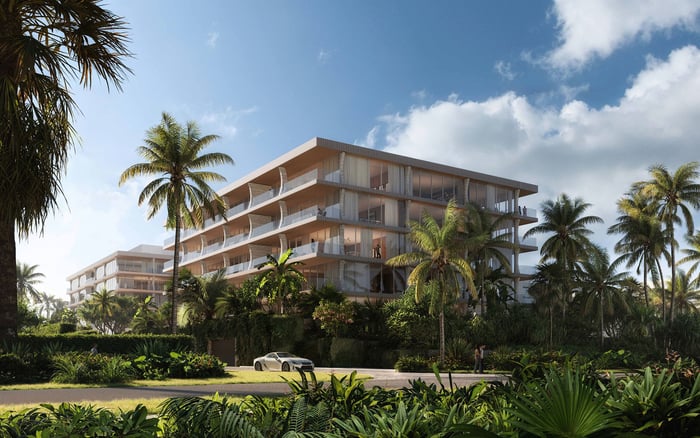
A disciplined acquisition framework for family offices assembling South Florida residential portfolios, separating insurance valuation, policy dispute clauses, association authority, and owner participation.

For a family office acquiring several South Florida residences, the objective is not simply to assemble exceptional addresses. It is to build a portfolio that remains manageable when an insurance loss, shared-system repair, or association disagreement interrupts daily life. The acquisition checklist should distinguish coverage, maintenance, decision-making authority, and dispute procedures-not collapse them into a single governance question.
A prospective acquisition at Una Residences Brickell therefore warrants its own document review, rather than conclusions carried over from another residence. Architectural appeal and location belong in the investment discussion; insurance obligations and owner rights require separate, property-specific analysis.
The governing principle is straightforward: standardize the family office’s questions, not the answers supplied by different associations.
Begin with a residence-by-residence register identifying the legal regime and governing documents. Florida condominiums under Chapter 718 and homeowners’ associations under Chapter 720 do not have interchangeable insurance or access frameworks. A portfolio-wide template should flag that distinction before anyone evaluates coverage or requests entry arrangements.
For each acquisition, request the declaration, relevant amendments, association procedures, and applicable insurance documents. Ask counsel to distinguish statutory obligations from governing-document provisions and arrangements the buyer hopes to negotiate.
That distinction is especially important when the family office seeks uniform communications, designated representatives, or recurring document delivery. These are sensible operating preferences, not automatic statutory entitlements. Record what is required, what is permitted, and what still needs agreement.
For Florida condominiums, adequate association property insurance is tied to replacement cost. That cost must be determined at least once every 36 months through an independent insurance appraisal or an update of a prior appraisal. This requirement concerns the insurance program’s valuation, not a residence’s purchase price.
Request the master policy, endorsements, limits, deductibles, and current and prior replacement-cost appraisals. Compare valuation dates with the insurance program, and ask the insurance adviser to identify discrepancies requiring clarification before closing.
Keep this review separate from any appraisal clause addressing a disagreement over an insurance claim’s valuation. For an acquisition at The Perigon Miami Beach, the same distinction should guide diligence without implying anything about the project’s policy terms.
Counsel should establish whether such a clause exists, what it addresses, who may invoke it, and what participation, if any, an individual owner has. Do not infer those answers from the replacement-cost appraisal requirement or association mediation provisions.
“Walls-in” is convenient shorthand, but an insufficient coverage definition for a carefully appointed residence. Florida’s condominium insurance framework generally addresses condominium property as originally installed, or replacements of like kind and quality, subject to statutory exclusions.
Owner-responsibility items include personal property, floor, wall, and ceiling coverings, appliances, cabinets, countertops, and specified fixtures and window treatments. A custom interior deserves an inventory-not an assumption that the master policy will restore everything visible inside the front door.
When evaluating Ocean House Surfside, apply that inventory discipline to the residence under consideration, without assuming project-specific coverage. Have the adviser map finishes and upgrades against the master policy and proposed unit-owner coverage, identifying uncertainties in writing.
Review loss-assessment protection separately. It is not blanket reimbursement for every special assessment, including expenditures unrelated to a covered direct loss.
Reconcile privacy and association access before a residence becomes intermittently occupied. Florida condominium law gives associations an irrevocable right of access during reasonable hours when necessary for specified association maintenance work or to prevent damage to common elements or other units. That is not unrestricted entry power for any purpose.
Florida’s HOA framework does not provide the same general entry right, making the declaration’s access provisions particularly important. Do not transfer a condominium access protocol to an HOA property without reviewing its basis.
Request written entry procedures and coordinate keys, alarms, emergency contacts, and entry documentation. For a prospective residence at Alba West Palm Beach, these are diligence questions, not representations about existing procedures.
A proposed family-office protocol should identify the primary contact and backup while respecting lawful association access. Internal preferences cannot displace applicable authority.
Maintenance responsibility does not, by itself, answer an insurance question. Florida condominium law assigns common-element maintenance to the association, while governing-document provisions remain relevant to particular components and limited common elements.
For façade, roof, glazing, or other shared-system work, ask three separate questions: who maintains the component, what insurance may respond to a loss, and who may approve the contemplated work? Review the declaration and applicable statutory approval requirements rather than assuming unrestricted board authority.
The family office’s acquisition memorandum should distinguish established obligations from unresolved interpretations. A clear maintenance allocation does not confirm that a particular repair is insured or that every proposed alteration may proceed without further approval.
Association-owner dispute resolution does not automatically govern an association’s claim against its insurer. Keep the policy review and statutory association procedures in separate parts of the acquisition file.
Florida’s condominium dispute framework establishes nonbinding arbitration for covered disputes and permits presuit mediation as an alternative for eligible disputes. Election, recall, termination, and other excluded or specially governed matters require separate classification.
For HOAs, a mediation demand is required before litigation for specified categories, including parcel or common-area use, covenant enforcement, document amendments, specified meetings, and access to official records.
Have counsel classify rental restrictions, design approvals, repair allocation, and assessment disagreements individually. Review association clauses against statutory owner pathways rather than assuming participation depends solely on board permission. Conversely, do not infer that an owner’s association-dispute rights confer participation in the association’s insurance appraisal process.
Conclude diligence with a concise exception schedule for each residence: unresolved coverage questions, appraisal dates, access arrangements, capital-work approvals, and dispute pathways. Assign each open item to the insurance adviser, association contact, or counsel rather than letting it disappear into a general document archive.
Ask counsel whether document-delivery commitments, clarification requirements, or other purchase-contract protections are appropriate and negotiable. Annual appraisal sharing, side letters, preferred mediator panels, and family-office signatory controls are proposed arrangements, not presumed rights. The objective is a defensible acquisition decision with fewer unresolved operating questions.
For a discreet perspective on assembling a South Florida residential portfolio, explore MILLION.
If branded residences are on your mind — as a home or as an allocation — we would be glad to share what we are seeing, privately.
Begin a quiet conversationFlorida condominium rules under Chapter 718 differ from HOA rules under Chapter 720. Insurance and access conclusions for one regime should not automatically be applied to the other.
Replacement cost must be determined at least once every 36 months through an independent insurance appraisal or an update of a prior appraisal.
No. The replacement-cost appraisal supports insurance valuation, while a policy appraisal clause may address claim-valuation disagreements and requires its own review.
Request the master policy, endorsements, limits, deductibles, and current and prior replacement-cost appraisals. Compare the valuation dates with the association’s insurance program.
No. Inventory finishes and upgrades, then map them against statutory exclusions, the master policy, and proposed unit-owner coverage rather than relying on walls-in shorthand.
No. It should not be treated as blanket protection for every assessment; the applicable policy and connection to a covered loss require review.
Florida condominium law provides an irrevocable access right during reasonable hours for specified maintenance needs or to prevent damage to common elements or other units. That authority is not unlimited.
Do not assume unrestricted board authority. Review the declaration and applicable statutory approval requirements for the contemplated work.
No. Covered disputes and eligible presuit mediation alternatives must be identified, while excluded or specially governed matters require separate classification.
Do not assume automatic participation. Counsel should review the actual policy and applicable law separately from the owner’s statutory association-dispute pathways.