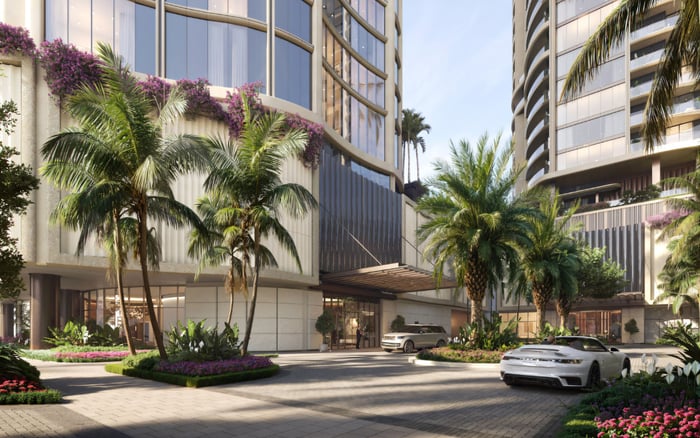
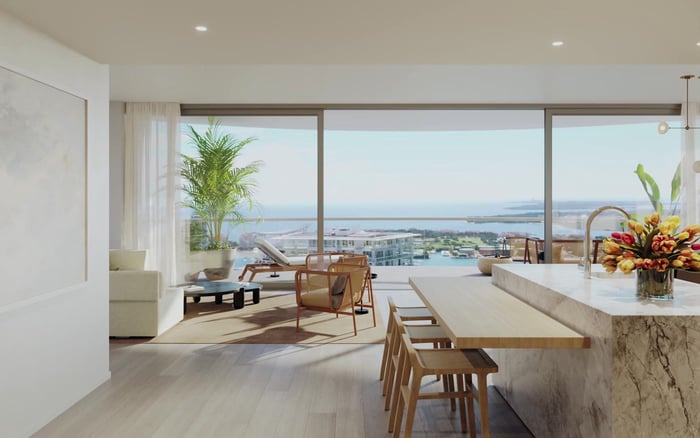
South Florida’s 2026 resale market rewards residences with broad end-user appeal, durable views, desirable elevation and carrying costs supported by genuine building quality.

In South Florida’s 2026 condo market, resale value increasingly depends on buyer-pool depth. The most defensible residence is not necessarily the one with the most elaborate renovation, but the one that can appeal to multiple future buyers through useful scale, a preferred view line, desirable elevation and credible carrying costs.
That distinction matters in a buyer-favored market. At the start of 2025, buildings at least 30 years old accounted for about 70% of nearly 25,315 South Florida resale listings. Meanwhile, sales in buildings under 25 years old increased 2% during 2025, even as the broader condo market declined. Newer inventory therefore entered 2026 with a comparative demand advantage, while older units faced greater competition.
Miami’s luxury demand has shifted toward larger, turnkey homes suited to primary living. The roughly 1,000-square-foot investor model has lost favor, narrowing the audience for compact layouts unless the pricing, location or views are compelling.
A larger residence can engage relocating households, local upgraders and second-home buyers seeking longer stays. Yet square footage alone is not enough. Buyers should test whether the plan accommodates privacy, storage and everyday living without excessive circulation space. This end-user lens is useful when comparing established towers with newer options such as Jade Signature Sunny Isles Beach.
For investment decisions, ask who would buy the home if rental assumptions weakened. A layout dependent on a single, narrow purchaser profile deserves a greater risk discount.
Views are difficult to manufacture and easy for the next buyer to compare. In the broad Fort Lauderdale waterfront market, direct-ocean residences have been positioned at $1,200-plus per square foot, Intracoastal units at $950-plus, city views at $750-plus and park views at $695-plus. These benchmarks illustrate the premium attached to protected water exposure.
Before evaluating kitchens or stonework, study the line at different hours. Consider neighboring structures, balcony orientation, glare, traffic, pool-deck noise and whether a partial view may become less persuasive over time. For an oceanfront comparison, Auberge Beach Residences & Spa Fort Lauderdale can serve as one market reference; in Miami Beach, buyers can likewise place The Perigon Miami Beach within a broader view-line comparison.
Waterfront value is also functional. In Fort Lauderdale, access, dockage, seawall condition, orientation and privacy can matter more than appearance alone.
Higher floors generally attract stronger demand where elevation improves water exposure, privacy and quiet. They can also shield a residence from direct street activity or amenity-deck noise. Lower floors without unobstructed water views do not offer the same combination and should be priced accordingly.
Elevation is not an automatic premium, however. Buyers should compare the exact line rather than the floor number in isolation. A lower residence with a coherent, open outlook may have a deeper buyer pool than a higher unit whose principal rooms face an obstruction.
Miami-Dade high-rise condo fees average more than $1,900 per month. Typical monthly ranges run from approximately $800 to $1,200 for mid-tier luxury, $1,200 to more than $2,000 for full-service towers, and $2,000 to more than $4,000 for ultra-luxury or branded properties. Some luxury charges range from about $1.50 to more than $6 per square foot each month.
The correct calculation is annual HOA fees plus property taxes, insurance and known or anticipated assessments, divided by the purchase price. Total annual carrying costs can approach 3% to 4% of value. That ratio enables a clean comparison among residences of different sizes and prices.
A high fee is not inherently damaging. It becomes a resale concern when service, reserves, management, structural work and amenities do not justify it. Older units that combine dated interiors with high fees or assessments tend to sell more slowly. When reviewing newer Palm Beach choices such as Forté on Flagler West Palm Beach, apply the same discipline rather than assuming newness resolves every cost question.
Score each candidate across four dimensions: household utility, view scarcity, elevation quality and all-in annual cost. Then identify competing listings with the same bedroom count, line and building age. Miami’s luxury condo market has carried more than 19 months of inventory, leaving weak lines and overpriced homes vulnerable to extended marketing periods.
This is the central pricing-and-trends lesson for 2026: cosmetic perfection cannot fully compensate for an inferior line or unsupported fee burden. Pay first for attributes that cannot be changed. Renovations can follow.
Buyer composition varies. Fort Lauderdale’s waterfront-condo pool comprises an estimated 35% Northeast relocations, 25% international buyers, 20% Florida upgrades and 20% investment portfolios. Palm Beach County’s coastal luxury segment has continued to draw strength from oceanfront and skyline-view properties.
Across these markets, the hierarchy remains consistent. Broadly useful layouts, convincing views, privacy and explainable ownership costs create more exit paths. Older, lower-floor or non-water-view units can still represent value, but only when the price acknowledges their larger competitive set.
What does buyer-pool depth mean? It is the number and variety of plausible future purchasers for a residence at a defensible price.
Which unit sizes have the broadest appeal? Larger, functional layouts suited to primary living currently engage more luxury buyers than compact, investor-oriented units.
Is an ocean view always worth the premium? Not automatically. Its value depends on protection, orientation, room exposure and the price difference versus alternatives.
Are high floors always better for resale? No. Higher floors often improve privacy, quiet and views, but the exact line remains more important.
How should I compare HOA fees? Compare fees per square foot and verify the services, reserves, management and building condition supporting them.
What belongs in annual carrying cost? Include HOA fees, property taxes, insurance and known or anticipated assessments.
Is a 3% to 4% carrying-cost ratio unusual? No. Total annual costs can approach that share of a condo’s value in South Florida.
Do renovated older condos have strong resale prospects? They can, but renovation may not overcome a weak view, lower elevation, high fees or assessments.
Why compare units within the same building? Same-building comparisons isolate the market value of line, floor, condition and layout more clearly.
What should a buyer prioritize first? Prioritize layout utility, durable view quality, elevation and justified carrying cost before cosmetic upgrades.
To compare the best-fit options with clarity, connect with MILLION.
If branded residences are on your mind — as a home or as an allocation — we would be glad to share what we are seeing, privately.
Begin a quiet conversation