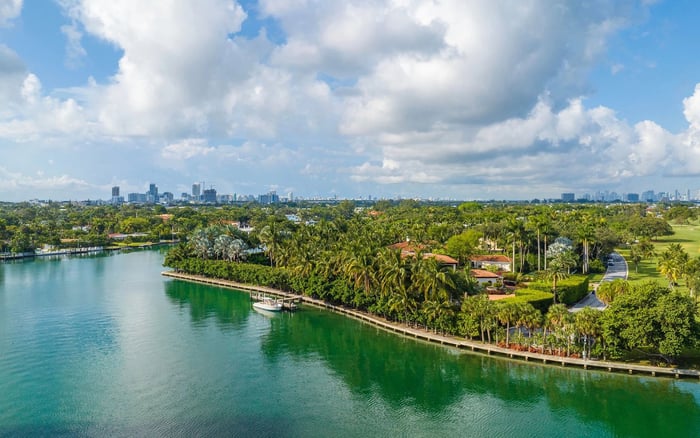
A precise due-diligence framework for verifying Fisher Island liens, permits, plans, boundaries, easements, and the contractual rights that shape island access.

Fisher Island may feel like its own private world, but property diligence remains rooted in Miami-Dade County systems. County folio numbers generally begin with “30,” while City of Miami folios begin with “01.” The distinction is consequential: the city’s municipal lien process is not the correct route for a Fisher Island property outside its jurisdiction.
Begin by confirming the residence’s 13-digit folio number, legal description, condominium name, unit designation, and any appurtenant spaces or parcels. The folio is the primary key for researching permits and property history. An address search can be useful, but a luxury transaction should never depend on the address alone, particularly when parking, storage, dockage, combined units, or separately described interests may be involved.
This Buyer’s Guide treats the folio as the spine of the file. Every search, title reference, survey instruction, and plan request should be checked against it before substantive review begins.
A polished closing file requires more than one definition of “clear.” Recorded liens and judgments are searched through the County Recorder’s Official Records, which extend from March 1, 1974 onward. The search should rely on the legal description and available recording references, not merely an owner’s name.
That review is distinct from county code-compliance liens, collections, violations, open permits, and expired permits. Each category requires separate examination. A basic permit list may reveal activity without establishing whether inspections were completed, a case remains open, or remediation could affect timing and cost.
For a resale at Palazzo del Sol or another established condominium, title counsel should coordinate the certified searches, estoppels, and association disclosures required for closing. Preliminary online review can illuminate the file early, but it should not substitute for closing-grade diligence.
Miami-Dade offers online access to permits, plans, Certificates of Occupancy, Certificates of Use, code-compliance records, product approvals, and zoning records. Searches can begin with the folio or address, then proceed to specific tracking, application, permit, or invoice numbers.
Do not stop at a chronological list. Open each relevant permit and examine its status, scope, inspection history, revisions, and final approval. HVAC replacements, impact windows, balcony work, and interior build-outs warrant particular attention because visible completion does not establish administrative completion.
The analysis becomes more exacting with combined units or materially altered residences. In a home at Palazzo della Luna, for example, the buyer’s team should compare the current configuration with approved plans, permit revisions, inspection results, and final approvals rather than relying solely on the residence’s presentation. Certificates of Occupancy and Certificates of Use can further test whether the legally approved configuration and use align with current conditions.
Historical architectural and structural records are organized by permit number, making permit research the necessary first step before requesting older plans. Digitized files may be available for download, while material still held on film may require an appointment or records request.
Plans are particularly valuable when walls have moved, terraces have been enclosed or resurfaced, units have been joined, or structural and mechanical work is visible. The objective is not merely to collect drawings. It is to reconcile approved intent, documented revisions, completed inspections, and the residence the buyer is actually acquiring.
For estate-style opportunities such as The Links Estates at Fisher Island, that reconciliation can inform the surveyor’s scope and the title lawyer’s review. It can also surface questions that should be resolved before the inspection period closes.
“Survey” is not a universal deliverable. For a condominium purchase, counsel and the surveyor should determine whether the transaction requires a boundary survey, elevation information, condominium map review, or another product tailored to the unit and its appurtenant areas.
Recorded plats, condominium maps, approved plans, and the current survey should be read together whenever boundaries, terraces, common elements, rights-of-way, or dockage are material. A waterfront outlook does not establish a legal right to use the land or water between the residence and the view. Likewise, a labeled parking or storage area should be matched against the governing documents and legal description.
This is particularly important when the property’s economic value includes outdoor area, garage allocation, or marina privileges. The surveyor should receive the title commitment and relevant recorded exceptions, while counsel should receive the survey early enough to address any conflicts.
On Fisher Island, access diligence extends beyond a conventional ingress-and-egress easement. Recorded easements and access instruments should be searched alongside liens and judgments, using the legal description and recording references. Yet recorded title is only one layer.
Condominium declarations, covenants, association disclosures, and operative agreements may govern ferry, security, parking, marina, guest, and service access. Club and beach privileges may also depend on current membership materials rather than the deed alone. In a gated-community setting, these practical rules are central to ownership, not peripheral amenities.
A buyer considering The Residences at Six Fisher Island should therefore ask a precise question about every important privilege: Is it deeded, assigned, licensed, association-controlled, membership-based, or subject to availability? The answer should be verified in the controlling documents, not inferred from marketing or customary use.
An efficient review follows a deliberate order: confirm the folio and jurisdiction; search permits, support cases, and code matters; inspect individual permit files and final inspections; search recorded liens, judgments, easements, and access instruments; retrieve relevant plans; and reconcile title documents with the appropriate survey product.
The buyer’s lawyer, title professional, surveyor, inspector, and condominium adviser should work from the same identifiers and documents. Before closing, every unresolved item should be assigned a disposition-whether clearance, correction, escrow, documentary confirmation, or another negotiated solution approved by counsel. Precision preserves optionality, especially when a residence includes uncommon physical alterations or access privileges.
Which jurisdiction handles Fisher Island property searches? Fisher Island properties fall under Miami-Dade County systems, not the City of Miami municipal lien process.
Why does the folio number matter? The 13-digit folio is the primary identifier for county permit and property-history research.
Is a recorded-lien search enough? No. Recorded liens and judgments must be reviewed separately from code-compliance liens, collections, violations, and permit issues.
What permit details should a buyer inspect? Review the scope, status, revisions, inspections, and final approvals for each material permit.
Which renovations merit close attention? HVAC replacements, impact windows, balcony work, and interior build-outs should be checked against permit and inspection records.
How are older building plans located? Historical plans are filed by permit number, so identify the relevant permit before requesting archived material.
What should buyers of combined units verify? Compare current conditions with approved plans, revisions, inspections, and final approvals.
Does every condominium buyer need the same survey? No. Counsel and the surveyor should tailor the product to the unit, boundaries, elevations, and appurtenant areas.
Where should easements be reviewed? Search recorded instruments using the legal description, then reconcile them with the survey and governing documents.
How should island access privileges be confirmed? Verify ferry, security, parking, guest, service, beach, club, and marina rights in the controlling recorded and current association materials.
For a confidential assessment and a building-by-building shortlist, connect with MILLION.
If branded residences are on your mind — as a home or as an allocation — we would be glad to share what we are seeing, privately.
Begin a quiet conversation