
Starting At$8,690,000
AreaGrove Isle
Completion Date2025

Every ultra-luxury residence rising across South Florida — many of which our clients see first, through relationships built over years.
 Now Selling
Two sculpted towers rising over Biscayne Bay, bringing the St. Regis legacy of bespoke service to Miami's most coveted waterfront. Full-floor and half-floor residences, private elevators, and a curated wellness and dining collection define the most anticipated arrival on the Brickell skyline.
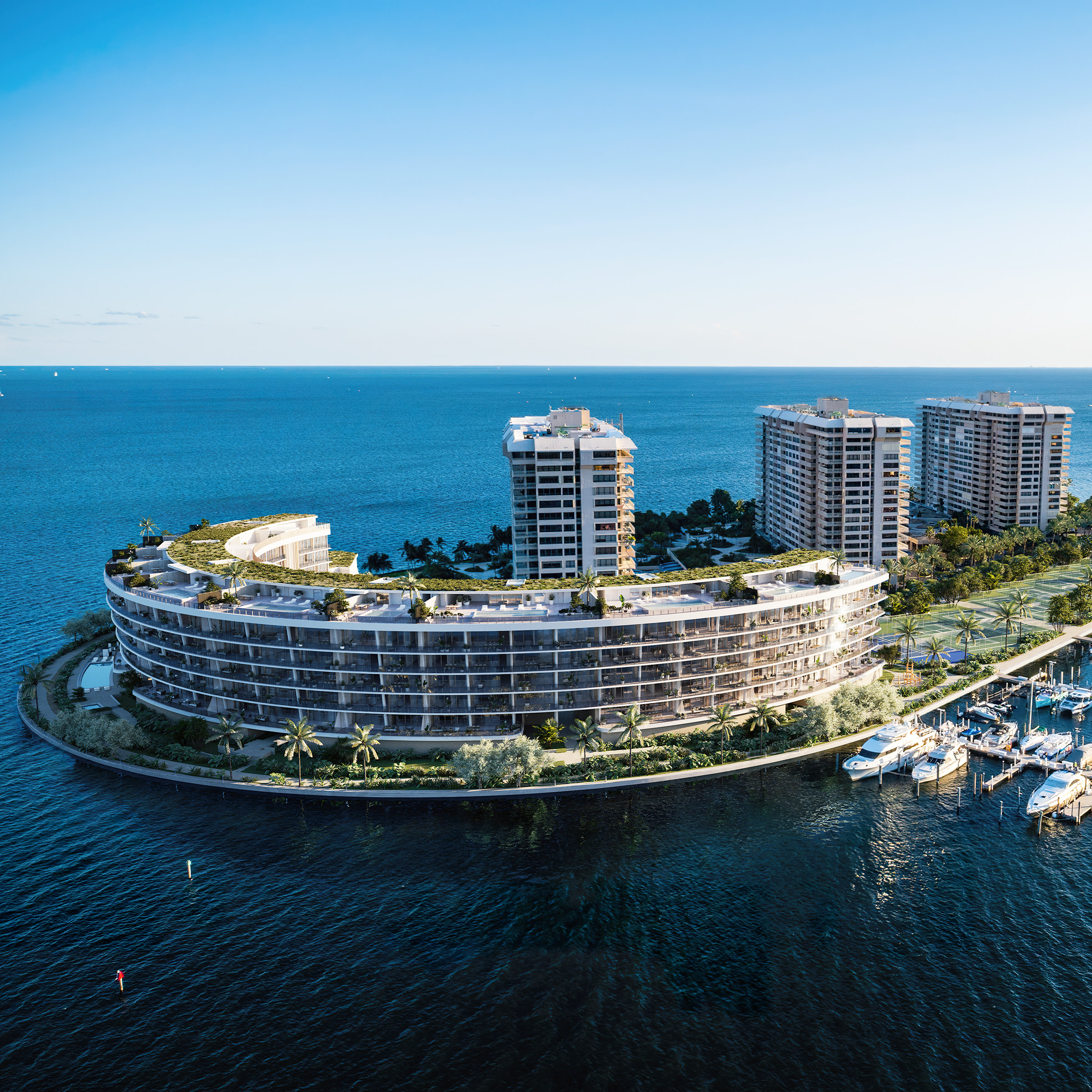
Grove Isle is a guard-gated residential island off Coconut Grove in Miami-Dade County, positioned for bayfront quiet without losing proximity to South Bayshore Drive. The setting reads discreet and operationally managed, with tower living that behaves differently than street addresses in the Grove. The immediate orbit includes Coral Gables, Brickell, and Key Biscayne, each reachable through familiar US-1 and causeway patterns. Grove Isle appeals to households prioritizing controlled access, predictable building operations, and a calmer return home after the Grove’s dining and waterfront parks.
Answers follow the area selected in the filters above.
Grove Isle is a private, guard-gated island just off Coconut Grove in Miami-Dade County, where routines feel residential rather than resort-driven. The access road and gatehouse create a natural buffer from the activity along South Bayshore Drive. Decision focus typically centers on building operations, lobby security posture, and how each tower handles vendor entry and deliveries on an island site.
Coconut Grove offers walkable dining and parks along the South Bayshore corridor, while Grove Isle trades that street life for a controlled perimeter and quieter circulation. The bridge connection makes the commute practical, but the island setting changes service logistics and guest management. Board culture and rules around contractors and move-ins often feel more structured on Grove Isle than in many Grove low-rise enclaves.
In Miami-Dade County, Grove Isle sits closest in lifestyle orbit to Coconut Grove, Coral Gables, and Brickell, with quick reach to Key Biscayne via the causeway network. Each adjacent submarket signals differently: Coral Gables leans estate streets and clubs, Brickell leans tower convenience, and Coconut Grove leans village privacy. Decision-making often turns on whether a buyer prefers a guard-gated island approach or a street-address profile in the Grove or Gables.
Access typically runs through Coconut Grove to US-1 and the I-95 spine, making Downtown, Brickell, and Coral Gables workable without crossing multiple bridges. Peak-hour movement concentrates around the US-1 corridors and the Brickell key ramps, so timing matters more than distance. Owners often evaluate valet efficiency, guest parking controls, and how the gatehouse queues during event-heavy weekends in the Grove.
Privacy is driven by the island gate, controlled entry, and the fact that casual foot traffic from Coconut Grove does not naturally spill onto Grove Isle. Discretion also depends on each building’s front-desk protocols and how strictly amenity access is monitored. A practical diligence step is reviewing visitor procedures and package handling, since island operations can amplify the importance of small security routines.
Grove Isle is primarily a high-rise condominium environment, distinct from the low-density streets of Coconut Grove and the estate parcels of Coral Gables. The island format tends to emphasize views, elevators, staffed lobbies, and managed amenities. Decision-useful details often include reserve discipline, ongoing capital planning, and whether a unit’s parking and storage align with full-time use.
As an island in Biscayne Bay, Grove Isle’s waterfront context elevates attention to coastal maintenance, wind exposure, and salt-air wear compared with inland Coral Gables. Inspections often focus on balcony edges, sliders, and mechanical corrosion typical of bayfront towers. Mitigation usually looks like strong building maintenance cycles, clear reserve planning, and documented façade and waterproofing work.
Boating culture in this area ties into Coconut Grove’s marina ecosystem and the broader Biscayne Bay corridor, with additional options toward Key Biscayne. Grove Isle itself feels oriented to tower living, so dockage solutions are typically evaluated through nearby marinas rather than assumed on-site. Decision points include bridge clearances, access time to the bay, and how hurricane season protocols are handled by the chosen marina.
The closest lifestyle concentration is Coconut Grove’s dining and waterfront park corridor around South Bayshore Drive, with Coral Gables’ Miracle Mile and Brickell’s dining scene within easy reach. The island setting often shifts social patterns toward curated outings rather than spontaneous street-walking. Practical considerations include valet norms in the Grove, traffic around weekend events, and whether a household prefers a quieter return to a gated island.
In Miami-Dade County, condo governance tends to be more operationally visible in bayfront towers, and Grove Isle is no exception. Buyers often look for transparent board minutes, reserve posture, and a clear stance on rentals and renovations, especially in buildings with long ownership histories. Nearby luxury comparables in Brickell and Key Biscayne can help benchmark how strict a building’s policies feel in practice.
On Grove Isle, strong management often shows up in orderly vendor procedures at the gate, predictable valet flow, and well-documented maintenance schedules suited to Biscayne Bay exposure. Inquiries commonly center on reserve planning, elevator modernization, and recurring waterproofing routines typical of coastal towers. A useful signal is how clearly the building communicates rules for renovations, deliveries, and staff access from Coconut Grove.
Lease posture varies by building, and Grove Isle’s island format can encourage tighter controls than some Brickell towers. Decision risk often sits in minimum lease terms, application timelines, and how strictly guest occupancy is monitored at the gatehouse. Reviewing the building’s rental policy alongside Coconut Grove and Key Biscayne comparables helps set expectations for flexibility and privacy.
Key Biscayne is beach-forward with a distinct island village dynamic and causeway-driven access, while Grove Isle is bayfront and tethered directly to Coconut Grove. Both offer controlled environments, but daily movement patterns differ, especially around bridge traffic and weekend flows. Governance diligence is similar: board posture, reserve planning, and hurricane readiness tend to matter more than aesthetic preferences.
Private aviation users commonly route through Miami-Opa Locka Executive or Miami Executive, with Miami International also practical from Coconut Grove corridors. Grove Isle’s access via US-1 can be efficient, but timing around Brickell and Downtown ramps is a real variable. Household staff and vendor scheduling often gets coordinated around flight windows to avoid gatehouse congestion on the island.
Seasonal use often emphasizes winter living in Coconut Grove’s social calendar while keeping Grove Isle as a quiet base with controlled access. Full-time patterns place more weight on service reliability, package handling, and building maintenance cadence under constant occupancy. Practical evaluation includes how the building handles extended absences, storm preparation checklists, and security checks at the gate.
Brickell prioritizes walkable density, rapid access to offices, and a more public streetscape, while Grove Isle prioritizes a gated island buffer beside Coconut Grove. The trade-off is convenience versus calm, with different noise profiles and guest management dynamics. Governance review in both areas benefits from scrutinizing reserve discipline and the building’s stance on short-term occupancy.
Bayfront tower inspections around Grove Isle and Biscayne Bay typically emphasize window and door performance, balcony conditions, and signs of salt-air corrosion in mechanical spaces. Elevator reliability, garage ventilation, and waterproofing history often matter as much as interiors. Comparing documentation practices with well-run buildings in Key Biscayne or Brickell can clarify whether the maintenance culture is proactive.
Security is layered through the Grove Isle gatehouse, building front desks, and controlled elevator access, creating multiple checkpoints absent from most Coconut Grove street addresses. Guest entry and vendor deliveries are operationally significant because everything funnels through the bridge. A decision-useful detail is how the building coordinates with the gate on visitor lists, contractor credentials, and after-hours access.
Staffing and vendors often come through Coconut Grove and Coral Gables, with common routes along US-1 and local Grove streets. On Grove Isle, service efficiency depends on loading procedures, freight elevator scheduling, and how strictly the gatehouse enforces vendor approvals. Households typically value buildings that handle packages and maintenance calls with clear, documented protocols suited to island logistics.
Grove Isle’s bay exposure near Biscayne Bay makes storm planning feel more immediate than inland Coral Gables neighborhoods. Mitigation tends to focus on building preparedness, glazing standards, generator and life-safety maintenance, and clear procedures for securing balconies. A practical diligence step is confirming how management communicates timelines, access restrictions over the bridge, and post-storm inspections.
Differences often show up in renovation cycles, lobby staffing standards, and how each tower approaches long-term capital planning under coastal conditions. Even with the same island address, governance tone can vary by board leadership and enforcement style. Reviewing meeting records, current projects, and contractor rules helps distinguish operational culture more than floorplan diagrams.
Because Grove Isle functions as a controlled island, deliveries and move-ins are typically scheduled with both the building and the gatehouse, unlike many Coconut Grove walk-ups. Freight elevator availability, loading access, and vendor insurance requirements can materially affect renovation timelines. Decision value often comes from confirming how strictly scheduling is enforced and whether weekend work is limited.
Many residents rely on Coconut Grove’s waterfront parks and paths near South Bayshore Drive, plus boutique studios in the Grove and Coral Gables. The island setting adds convenience for on-site amenities, but routines often extend off-island for variety. Evaluating amenity maintenance standards and access rules can be as important as the equipment list itself.
Coral Gables offers a different school and campus ecosystem feel, while Grove Isle is anchored to Coconut Grove access patterns in Miami-Dade County. Commutes often run along US-1 and local connectors, with timing influenced by Grove traffic and Brickell spillover. For decision-making, households often weigh drive-time reliability and building guest policies that affect caregivers and pickups.
Coconut Grove provides the closest dining orbit, with additional cultural and culinary depth in Coral Gables and the Design District farther north. Grove Isle residents often prefer the ability to retreat from the crowds after dinners along the Grove corridor. Practical considerations include valet saturation on weekend evenings and how quickly the bridge and gatehouse clear during event nights.
Parking is generally structured and rules-driven, reflecting the tower format and controlled access on Grove Isle. Guest parking procedures matter more here than in many Coral Gables single-family streets, because visitors pass through the gate and often rely on valet. Confirming assigned spaces, overflow practices, and EV readiness can prevent daily friction.
Executives often route from Grove Isle through Coconut Grove to Brickell and Downtown via US-1, with I-95 connections shaping broader regional movement in Miami-Dade County. The trade-off is predictable distance but variable congestion near the Brickell ramps. Some households choose to stage meetings in Brickell or Coral Gables to minimize peak-hour uncertainty.
Star Island is a high-visibility address near Miami Beach, while Grove Isle is lower-profile and oriented around a private residential community beside Coconut Grove. Discretion here comes from controlled access and fewer drive-by sightlines compared with celebrity-circulated islands. Evaluation tends to focus on operational privacy, including guest screening, staff entry, and lobby exposure.
Grove Isle offers a strong privacy buffer and bayfront atmosphere, but adds dependence on a single bridge connection through Coconut Grove. Service and emergency logistics can feel more procedural, and maintenance planning is more sensitive to Biscayne Bay conditions. The upside is a calmer perimeter with controlled entry, which many buyers value more than immediate walkability.
In Miami-Dade County, bayfront towers near Biscayne Bay often face heightened attention to building condition, reserves, and documented maintenance, and Grove Isle fits that pattern. Sensitivities frequently revolve around roof and façade upkeep, wind mitigation features, and the clarity of capital planning. Comparing the building’s documentation standards with peers in Key Biscayne or Brickell can reveal how smoothly renewals and compliance tend to run.
Grove Isle is largely established, while nearby Coconut Grove and Brickell continue to evolve with selective new and renovated product. The practical implication is that view corridors and traffic patterns around the Grove can shift as projects deliver. Pricing, availability, and terms may change, so decision-making often benefits from monitoring pipeline timing against desired privacy and access.
South Beach carries nightlife and tourist density, while Grove Isle is insulated by its gated island format next to Coconut Grove. Noise tends to be more about wind and bayfront weather than street activity. A decision-useful check is window and slider performance, plus how the building manages amenity events and quiet hours.
On Grove Isle, strong planning typically shows consistent long-term projects appropriate for coastal towers, such as waterproofing, concrete restoration cycles, and mechanical modernization. Buyers often look for disciplined budgeting, clear project scopes, and transparent communication from management. Similar benchmarks can be drawn from well-run buildings in Brickell and Key Biscayne, where reserve posture is heavily scrutinized.
Grove Isle sits close to Coconut Grove’s galleries and events, with the Design District reachable for major showrooms and art programming. The island base offers quiet storage and controlled access, which some collectors prefer over more public lobbies in Brickell. Practical diligence includes elevator dimensions, freight access protocols, and insurance requirements for art handlers entering through the gatehouse.
Renovations on Grove Isle are typically managed through formal building procedures, with contractor vetting and scheduled access coordinated at the gate and freight elevators. Compared with many Coconut Grove single-family projects, tower rules can be stricter on hours, debris removal, and material staging. Decision value often comes from confirming lead times for approvals and whether weekend work is permitted.
The controlled entry and limited through-traffic on Grove Isle can reduce casual exposure compared with high-visibility corridors in Miami Beach. Discretion still depends on building staff training, elevator access controls, and how amenities are monitored. Many evaluate whether arrivals can be managed through valet routines and whether guest screening at the gatehouse is consistently enforced.
Residents often keep weeknight routines close to Coconut Grove along South Bayshore Drive, while using Coral Gables and Brickell for broader dining options. The island setting makes returning home feel separated from the restaurant scene, which can be a meaningful quality-of-life factor. Practical considerations include traffic around Grove events and how reliably valet and the gatehouse handle late-evening returns.
View evaluation on Grove Isle typically considers Biscayne Bay exposure, afternoon light, and wind patterns rather than only skyline appeal. Orientation can also influence balcony usability and long-term wear, which ties back to maintenance expectations in a bayfront tower. Comparing sightlines toward Key Biscayne, Brickell, or Coconut Grove can help align the view with lifestyle priorities.
For Miami-Dade County alternatives, Coral Gables offers estate streets and club culture, Key Biscayne offers beach village living, and Brickell offers a high-rise urban grid. Grove Isle sits between these, delivering gated island calm with quick access to the Grove’s dining corridor. Many decisions come down to governance preference, access patterns, and how much street-level activity feels acceptable.