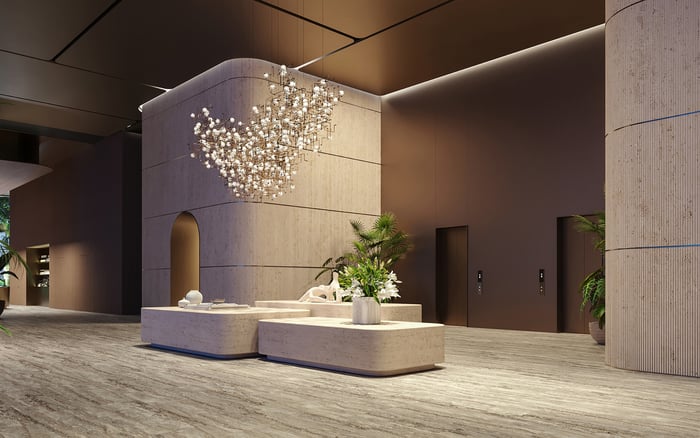
A buyer-focused framework for comparing privacy at two Miami branded residences through arrival design, residential circulation, access control, service procedures and governing documents.

For privacy-minded Miami buyers, the relevant experience begins before the residence itself. Vehicle arrivals, lobby access, elevator circulation, visitor screening, deliveries, household staff and amenity entry all affect how discreetly a property may operate.
This is why St. Regis® Residences Brickell and The Residences at Mandarin Oriental, Miami deserve a place in the same buyer conversation. Their names may establish service expectations, but a meaningful comparison must focus on the plans, procedures and documents applicable to each Miami residence.
A privacy review should map every stage between the street and the front door. Buyers can ask whether residents, guests, vendors and service personnel use the same arrival points and whether access changes during evenings, events or peak periods.
The vehicle sequence also warrants attention. A guided presentation should clarify how residents are identified, where visitors wait and how staff coordinate arrivals without creating unnecessary exposure. Buyers should request direct answers rather than infer privacy from renderings or branding.
Elevator and corridor design can shape daily discretion. Relevant questions include how many residences use each elevator bank, which credentials activate residential floors and whether visitors can move beyond approved destinations.
Service circulation should be reviewed separately. Buyers can ask how deliveries reach a residence, where packages are stored, how vendors are admitted and whether household employees follow distinct access procedures. The objective is to understand the entire operating path, not merely the resident entrance.
Hospitality-oriented service can support privacy when responsibilities are clearly defined. A concierge or residence team may coordinate guests and requests, but buyers should establish who authorizes access, records visitors and handles exceptions after hours.
Staffing descriptions should therefore be translated into practical scenarios. Ask what happens when an unannounced guest arrives, a large delivery requires access or a vendor needs to enter while the owner is away. Clear, repeatable answers are more useful than broad assurances.
Amenities may extend the private living experience beyond the residence, but access rules determine how controlled those spaces feel. Buyers should ask whether entry is credentialed, how guests are registered and whether any spaces are shared with other user groups.
Reservation procedures also matter. A buyer who expects to host privately should understand booking rules, guest limits, staff support and the route visitors take between arrival and the reserved space. These details can reveal whether privacy is embedded in operations or left to informal management.
A useful appointment schedule can include The Residences at 1428 Brickell and Una Residences Brickell alongside the two named properties. The purpose is not to assume equivalence, but to compare how each project addresses arrival, circulation, staffing and access control.
Using the same questions at every presentation makes the comparison more disciplined. Buyers can record which points are shown in plans, which are described as operating intentions and which are documented in materials available for review.
Current offering materials and governing documents should guide the final assessment. Buyers and their advisers should review visitor rules, leasing provisions, amenity access, staff procedures and any language governing building operations.
Privacy is strongest as a purchasing criterion when it can be traced to specific design decisions, enforceable rules and understandable service protocols. The two projects in the title belong in the conversation because they can be evaluated through that same rigorous framework rather than through brand perception alone.
Why compare these two Miami residences through privacy? The comparison gives buyers a focused way to examine how design, service and rules may affect discretion.
Does a luxury brand guarantee residential privacy? No. Buyers should verify the specific building plan, access procedures and governing documents.
What should buyers inspect during the arrival presentation? They should review vehicle access, visitor handling, waiting areas and the route from entry to residence.
Why is elevator circulation important? Elevator configuration and credentialing can affect who reaches residential floors and how much circulation residents share.
What delivery questions should a buyer ask? Ask where packages are stored, how large items are handled and which route delivery personnel use.
How should household staff access be evaluated? Buyers should confirm entry procedures, permitted routes and any registration or authorization requirements.
Can amenities affect privacy? Yes. Guest policies, access controls and reservation procedures influence how private shared spaces may feel.
What should buyers ask about visitors? Confirm how guests are approved, identified, directed and admitted outside normal hours.
Why use the same checklist at multiple projects? A consistent checklist helps distinguish documented features from general sales language.
Which documents deserve review before a purchase? Buyers and their advisers should examine current offering materials, governing documents and applicable access or use rules.
If you'd like a private walkthrough and a curated shortlist, connect with MILLION.
If branded residences are on your mind — as a home or as an allocation — we would be glad to share what we are seeing, privately.
Begin a quiet conversation