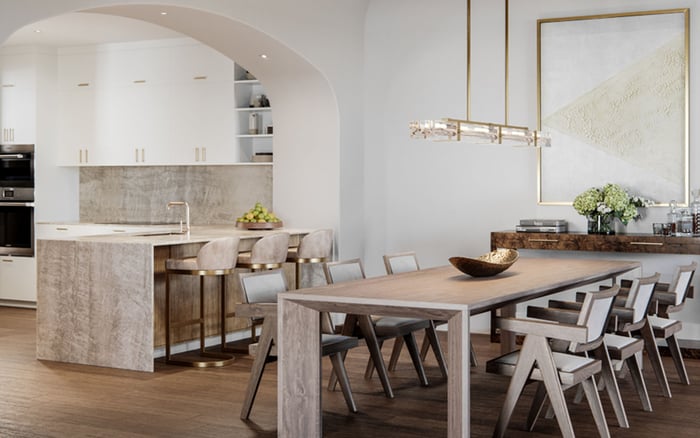
In a luxury condominium, operational rules can shape daily life more profoundly than stone, millwork, or appliances. Serious Coral Gables buyers should examine pet restrictions, service-elevator protocols, guest parking, and the documents that govern them before treating finishes as the decisive factor.

A beautifully resolved residence can elicit an immediate emotional response. Stone, millwork, lighting, and hardware are tangible, photogenic, and easy to compare. Yet the quality of condominium life often depends on less visible considerations: whether a dog complies with the governing rules, how a delivery reaches the residence, and where guests can leave a car.
For a serious Coral Gables buyer, these are not peripheral details. They are part of the property’s operating architecture. A disciplined review should therefore extend beyond the model residence to the declaration, association rules, meeting minutes, parking plan, and property-management records.
This lens applies whether considering Cora Merrick Park or another residence in the area. The objective is not to assume a particular policy, but to understand precisely how the building would accommodate the buyer’s household.
Pet friendliness is not a simple yes-or-no condition. The meaningful questions concern the number of animals permitted, size or breed limitations, registration, deposits, designated routes, common-area access, and protocols for staff or guests arriving with animals.
Buyers should describe their circumstances plainly. Does the household have one dog today but expect another? Will adult children visit with pets? Is a walker or caretaker likely to enter regularly? Does the preferred route cross formal resident spaces, or is another circulation path prescribed?
The same inquiry belongs in the evaluation of Ponce Park Coral Gables. Marketing language should never substitute for controlling documents and written clarification from the appropriate parties. Pets are part of daily life, so a rule that seems minor during a showing can become consequential after closing.
Service-elevator procedures shape the moments when a residence is most operationally demanding. Moves, furniture deliveries, art installation, appliance replacement, contractor access, floral deliveries, and catered events may all require coordination.
A buyer should ask how reservations are made, which hours apply, whether protective padding is mandatory, where vendors enter, and what deposits, insurance documents, or advance notices may be required. It is equally important to understand whether competing reservations can affect a preferred delivery window and how management handles an urgent replacement or repair.
This is especially important for buyers planning immediate customization. A perfect terrace or an elegant kitchen cannot compensate for a renovation schedule that conflicts with the owner’s expectations. Before committing, test the proposed move-in and improvement plan against the written procedures rather than relying on informal assurances.
Guest parking can determine whether entertaining feels graceful or improvised. The critical issues extend beyond the number of spaces. Buyers should examine access controls, valet procedures, overnight restrictions, time limits, vehicle registration, event protocols, and any distinction among resident, household-staff, and visitor parking.
Consider real scenarios. Can several dinner guests arrive at approximately the same time? What happens when family stays for a weekend? Where does a private chef, caregiver, tutor, or contractor park? Is there a clear process when a guest arrives in a vehicle that cannot be accommodated under the usual arrangement?
At The Village at Coral Gables, as with any candidate property, the prudent approach is verification rather than inference. A townhouse buyer and a condominium buyer may have different expectations, but both should map the arrival sequence from street to residence.
Association materials are often treated as legal formalities. For a luxury buyer, they are also a lifestyle document. They define how private ownership intersects with shared circulation, staff, security, parking, contractors, and neighbors.
Begin with the declaration and current rules, then review relevant meeting minutes, parking plans, and management records. Request written clarification when language is ambiguous. Confirm that the materials supplied are current and whether any proposed changes could affect the buyer’s intended use.
The exercise should be specific. A household with two cars, frequent overnight guests, a large dog, and regular art handling requires different answers than an owner who visits occasionally and rarely entertains. Even a comparison with Park Grove Coconut Grove should center on operational fit, not surface similarity or proximity alone.
A boutique property may feel personal and composed, but scale alone does not resolve questions about circulation or access. Fewer residences can still mean formal delivery windows, carefully managed common areas, or limited parking options. A larger property may offer more infrastructure while imposing more detailed procedures.
Buyers should avoid treating either model as inherently superior. The relevant question is whether the system is predictable, clearly documented, and compatible with the owner’s habits. Good operations are often experienced as ease, but that ease is typically supported by rules, staffing, physical planning, and consistent administration.
Before finishes dominate the decision, present the household’s likely routines as a concise set of scenarios. Include pets, vehicles, recurring visitors, domestic staff, deliveries, renovations, events, and periods of extended absence. Wherever possible, request answers grounded in the governing materials.
Then distinguish preference from necessity. A particular stone can often be changed. A favorite fixture can be replaced. Shared-building procedures cannot be individually redesigned with the same freedom. Serious buyers therefore price not only the residence they see, but also the daily experience the property permits.
Why can pet policies matter more than finishes? A finish may be replaceable, while pet rules can directly determine whether the residence suits the household.
What pet details should a buyer verify? Review permitted numbers, size or breed provisions, registration, deposits, access routes, and common-area rules.
Why examine service-elevator procedures before closing? They can shape the scheduling and handling of moves, deliveries, installations, repairs, and contractor access.
What should buyers ask about elevator reservations? Ask about booking, operating hours, deposits, insurance requirements, protective measures, and competing reservations.
Why is guest parking a luxury issue? Parking affects the ease and discretion with which family, friends, staff, and vendors arrive.
Which parking questions deserve written answers? Clarify access, valet service, time limits, overnight use, registration, event handling, and vehicle restrictions.
Which documents should be reviewed? Examine the declaration, association rules, meeting minutes, parking plans, and relevant property-management records.
Should verbal assurances be enough? Material points should be reconciled with current governing documents and appropriate written clarification.
How should second-home owners approach these rules? Test the procedures against guest stays, caretaker access, deliveries, vehicles, and periods of absence.
What is the best overall due-diligence test? Walk through realistic household scenarios and confirm that the documented operating model supports them.
To compare the best-fit options with clarity, connect with MILLION.
If branded residences are on your mind — as a home or as an allocation — we would be glad to share what we are seeing, privately.
Begin a quiet conversation