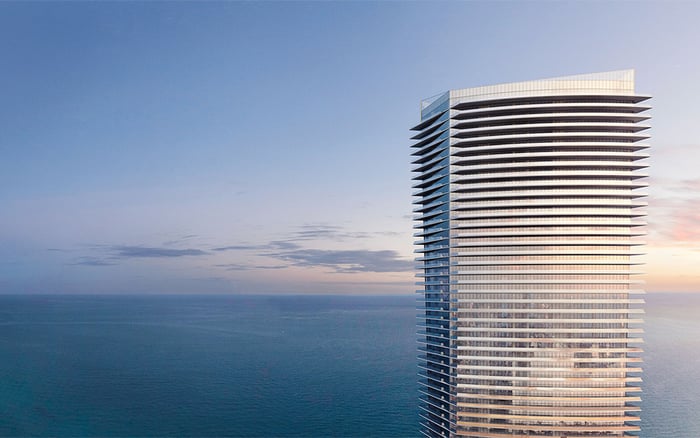
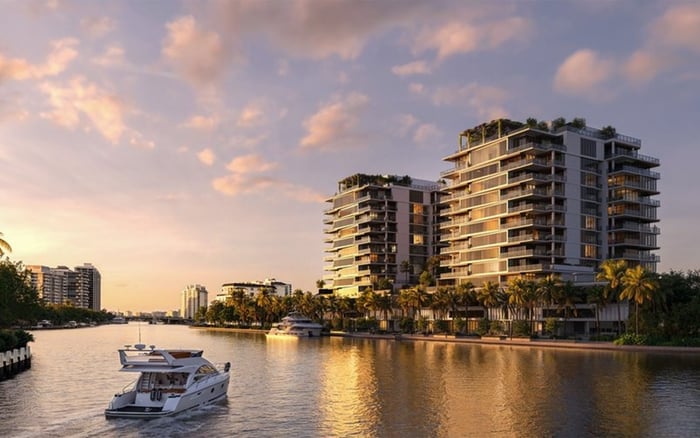
Buyers comparing Armani Casa Sunny Isles Beach and Rosewood Residences Hillsboro Beach should examine how residents, guests, tenants, vendors, and staff move through each property. Governing documents, access procedures, circulation plans, and on-site observations can clarify how privacy is intended to function in daily use.

For buyers comparing Armani Casa Sunny Isles Beach with Rosewood Residences Hillsboro Beach, privacy should be evaluated as a practical operating system. The central questions are who may enter, which areas each person may use, how access is granted, and where different routes intersect.
A polished arrival or recognized brand does not by itself establish residence-owner privacy. Buyers should follow the likely paths of owners, household members, invited visitors, approved occupants, vendors, delivery personnel, and building staff. Each group may encounter different entrances, checkpoints, elevators, corridors, amenity areas, and service zones.
Residential privacy depends on who may enter, where they may go, and how they move through the property.
This review is relevant across South Florida branded residences. Different circulation approaches may also be encountered at The Ritz-Carlton Residences® Sunny Isles and Four Seasons Hotel & Private Residences Fort Lauderdale. Each property requires an independent review of its governing documents and operating procedures.
The privacy review should begin before anyone reaches a residence. Buyers can ask how vehicles, pedestrians, invited guests, deliveries, and service providers enter the property. The answer should identify the responsible checkpoint, the authorization process, and the route from arrival to destination.
For Armani Casa Sunny Isles Beach, consider how the oceanfront setting may affect movement among the residential entrance, amenity areas, and beach access. Ask whether guest authorization occurs before arrival or at the property, whether access is limited to an approved destination, and how staff respond when a visitor’s plans change.
Apply the same method at Rosewood Residences Hillsboro Beach. Request a clear explanation of the intended resident, guest, and service journeys. If separate routes or elevators are presented as part of the privacy strategy, determine where that separation begins, where it ends, and whether users converge at any lobby, amenity entrance, or outdoor space.
Elevators are only one part of circulation. Buyers should understand which elevator banks serve residences, amenities, parking or arrival areas, and service functions. They should also ask whether access permissions are tied to a particular floor or destination and how temporary credentials are managed.
Service circulation deserves equal attention. Housekeeping, maintenance, moving crews, contractors, deliveries, and emergency work can create regular activity even when residential corridors appear quiet. A useful review follows those users from the service entrance through staging areas, elevators, back-of-house corridors, and the residence threshold.
The goal is not complete visual separation at every moment. It is to determine whether the planned routes are coherent, supervised, and consistent with the buyer’s expectations. Any unclear transition point should be addressed in writing before purchase.
Shared areas can have access rules that differ from residential floors. Pools, beach facilities, lounges, wellness spaces, dining venues, and event areas should therefore be evaluated one by one rather than treated as a single amenity category.
For each space, ask who may enter without an owner present, whether visitors must be accompanied, and whether approved occupants receive the same privileges as owners. Buyers should also determine whether guest limits, reservation systems, operating hours, or event procedures can affect availability and atmosphere.
Oceanfront circulation requires a two-way review. It is important to understand how residents and their guests move from the building to the beach, but also how access from the beach toward pools, dining areas, lobbies, or elevators is controlled. Staffed service does not automatically answer the access question; current procedures and credentials do.
Private events warrant additional attention. Buyers can ask which areas may be reserved, who may sponsor an event, how attendees are registered, and whether event activity changes normal circulation. The governing documents and current rules should clarify any enforceable limits.
Terms such as “resident,” “guest,” “private,” and “exclusive” can sound precise while leaving important operational questions unanswered. Buyers should identify how each term is defined in the applicable documents and how management applies that definition in practice.
The term “resident,” for example, may require clarification regarding owners, household members, tenants, family members, or other approved occupants. “Guest” may involve different rules depending on whether the visitor is accompanied, attending an event, using a dining space, or entering an amenity area.
Rental and occupancy provisions should be reviewed in the same context. Buyers need to understand the approval process, permitted occupancy, access credentials, and amenity rights that apply to approved occupants. Rather than relying on assumptions, request the current language that governs each category.
Marketing materials communicate a project’s intended experience, but buyers should review the declaration, rules, operating agreements, access procedures, and any available circulation plans together. A general right in one document may be qualified by a detailed process in another.
Begin with guest registration, identification, accompaniment, and amenity access. Then review occupancy provisions, vendor protocols, deliveries, credential management, after-hours entry, and event procedures. If the property is not yet operating, distinguish between documented commitments and procedures that may be established later.
A practical document review can be organized around several sample journeys. Trace an owner arriving by car, an invited dinner guest, an approved occupant heading to the beach, a vendor entering a residence, and an attendee arriving for a private function. For each journey, identify the entrance, checkpoint, credential, elevator or corridor, permitted destination, and exit route.
An on-site visit can show how planned circulation feels in practice. When possible, observe the arrival area, lobby, elevator approach, amenity entrances, beach connection, and visible service routes during an active period. Note where people wait, where paths cross, and whether access checks appear consistent.
Ask the appropriate representative to explain how credentials are issued, limited, replaced, and deactivated. Request a circulation diagram if one is available, and compare the explanation with the applicable documents. For a property that is not yet operating, ask which procedures are fixed and which remain subject to future decisions.
The strongest privacy proposition is a legible and enforceable system that supports hospitality while distinguishing among residential, visitor, occupant, and service activity. For discreet guidance when evaluating South Florida residential opportunities, consult MILLION.
If branded residences are on your mind — as a home or as an allocation — we would be glad to share what we are seeing, privately.
Begin a quiet conversationCirculation shows how residents, guests, occupants, vendors, and staff enter and move through a property. It can reveal where routes remain separate or intersect.
Review vehicle, pedestrian, guest, delivery, and service arrivals. Identify the checkpoint, authorization process, and route to each destination.
Ask which elevators serve residences, amenities, arrivals, and service areas. Confirm how destination permissions and temporary credentials are managed.
Deliveries, maintenance, housekeeping, and contractors can create recurring movement. Buyers should trace these routes from entry and staging areas to the residence.
Review movement both from the residence to the beach and from the beach toward controlled areas. Confirm the checkpoints and credentials used in each direction.
Check access policies for pools, beaches, lounges, wellness areas, dining spaces, and events. Ask about accompaniment, guest limits, reservations, and operating hours.
The term may be applied differently to owners, household members, tenants, family members, or other approved occupants. Applicable documents should define each category and its access rights.
Request the declaration, current rules, relevant operating agreements, access procedures, occupancy provisions, and available circulation plans.
Observe arrivals, waiting areas, elevator approaches, amenity entrances, beach connections, and visible service routes. Note where users converge and how access checks operate.
Map realistic journeys for an owner, guest, approved occupant, vendor, and event attendee. Identify every entrance, checkpoint, credential, route, destination, and exit.