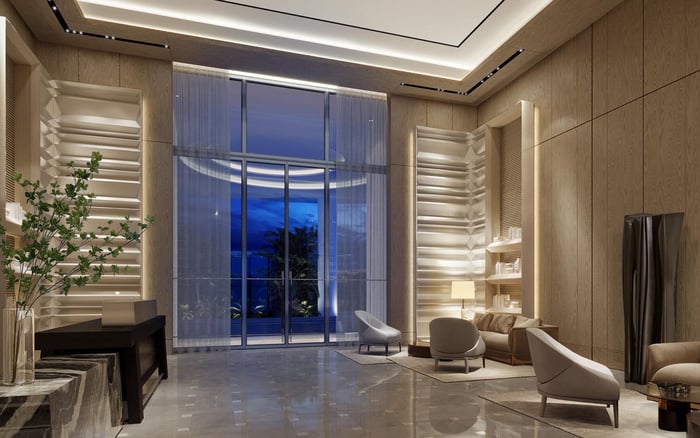
For South Florida buyers prioritizing residential discretion, the most useful comparison focuses on arrival, circulation, floor plans, service routines and shared-space exposure. Aria Reserve Miami and Miami Tropic Residences belong on the shortlist, subject to direct verification of current project materials and operating details.

For luxury buyers, residential discretion is not established by one amenity or a marketing label. It emerges from the complete experience: entering the property, moving through shared areas, receiving guests, coordinating deliveries and using the residence throughout an ordinary week.
That framework places Aria Reserve Miami and Miami Tropic Residences in a relevant South Florida comparison. Their inclusion does not presume that they offer identical experiences. It means each deserves project-specific review by buyers who want to understand how design and operations may support a more controlled residential routine.
A discretion-focused review should begin before entering the residence. Buyers can trace the path from vehicle arrival to the lobby, elevator and private threshold, noting where residents, guests, staff, vendors and deliveries may intersect.
Elevator configuration requires particular attention. The useful questions are not limited to whether access is described as private or restricted. Buyers should determine how many residences use each route, where visitors wait, how access is authorized and whether service movements follow a separate path.
The same scrutiny applies to parking and guest arrival. A polished entrance may create a strong first impression, but discretion depends on how the property functions during busy periods and routine service activity. Current plans and direct project disclosures should guide any conclusion.
Interior planning can be as consequential as building circulation. Buyers should consider whether bedrooms are separated from entertaining areas, whether a den or office can support confidential work and whether household staff can move through the home without disrupting private rooms.
Outdoor space also deserves practical analysis. A terrace may extend daily living beyond the interior, but its value depends on orientation, sightlines, access and the buyer’s intended use. The review should focus on the actual plan under consideration rather than a general description of the building.
Acoustics, storage and the relationship between entry areas and principal rooms are equally relevant. These details can influence whether the home feels composed when residents are working, hosting guests or managing household activity at the same time.
An extensive service offering may reduce the number of trips residents need to make, but buyers should examine how those services are delivered. Concierge assistance, valet operations, amenity reservations, package handling and vendor access all create points of interaction that require clear procedures.
Amenities should therefore be evaluated by usefulness rather than quantity. A workspace, wellness area or dining option may support a more self-contained routine when it matches the resident’s habits. Buyers should also ask how access is managed, whether guests may use the spaces and when demand is likely to be highest.
No design feature or service description should be treated as a guarantee of anonymity, confidentiality or security. Those issues require direct review of applicable systems, procedures and documents.
A disciplined search compares projects through the same questions. Alongside the two projects named in the title, buyers may consider EDITION Edgewater, Villa Miami and The Cove Residences Edgewater when assembling a Miami-area comparison set.
The purpose of a broader shortlist is not to rank properties from marketing materials. It is to identify meaningful differences in circulation, residence planning, service structure and shared-space exposure. The same review method should be applied to every candidate.
Buyers can strengthen that process by mapping a typical week. Arrivals, work calls, workouts, meals, guest visits, deliveries and pet care can reveal where privacy preferences meet building operations. This turns an abstract desire for discretion into specific questions for a sales team, adviser or document review.
Before reaching a conclusion, buyers should request current floor plans and direct explanations of access and operating procedures. They should identify elevator-sharing arrangements, guest waiting areas, delivery routes, parking processes, amenity rules and the movement of household staff or vendors.
The review should also distinguish proposed features from confirmed obligations. Renderings and general descriptions can help establish design intent, but purchase decisions should rely on current contracts, governing materials and disclosures reviewed with appropriate professional advisers.
Aria Reserve Miami and Miami Tropic Residences belong in the conversation because they provide two project-specific starting points for this analysis. The final judgment should remain personal: one buyer may value an extensive residential ecosystem, while another may place greater weight on limited interaction and simpler circulation.
What does residential discretion mean in this comparison? It refers to how arrival, circulation, interior planning, services and shared spaces shape a resident’s exposure during daily life.
Why consider Aria Reserve Miami? It belongs on a South Florida shortlist for buyers prepared to assess its current plans, access arrangements and operating details against their privacy priorities.
Why consider Miami Tropic Residences? It provides another project-specific option for evaluating how residence design and building operations may align with a buyer’s preferred level of discretion.
Are the two projects assumed to offer the same experience? No. Each should be reviewed independently through current documents, plans and direct disclosures.
What should buyers ask about elevators? They should ask how access is authorized, how many residences share a route and where guests, staff and deliveries circulate.
How can a floor plan support discretion? Separation among bedrooms, work areas, entertaining spaces and service paths may help different activities occur with fewer interruptions.
Do extensive amenities automatically provide more privacy? No. Their relevance depends on access rules, demand, guest policies and whether they genuinely support the resident’s routine.
What should buyers review about deliveries and vendors? They should confirm entry procedures, waiting areas, authorization practices and routes through shared or service spaces.
Can a project guarantee anonymity or confidentiality? No design or service description alone establishes either; buyers must evaluate applicable procedures, systems and documents directly.
How should buyers make the final comparison? They should map a typical week, apply the same questions to each property and verify material details with appropriate professional advisers.
To compare the best-fit options with clarity, connect with MILLION.
If branded residences are on your mind — as a home or as an allocation — we would be glad to share what we are seeing, privately.
Begin a quiet conversation