For Atherton buyers, Fort Lauderdale changes the aviation equation from proximity alone to airport fit. FXE, FLL, and OPF offer distinct advantages, while a disciplined peak-traffic test and a residence-specific operating review reveal whether a South Florida home will function as an effortless second base.
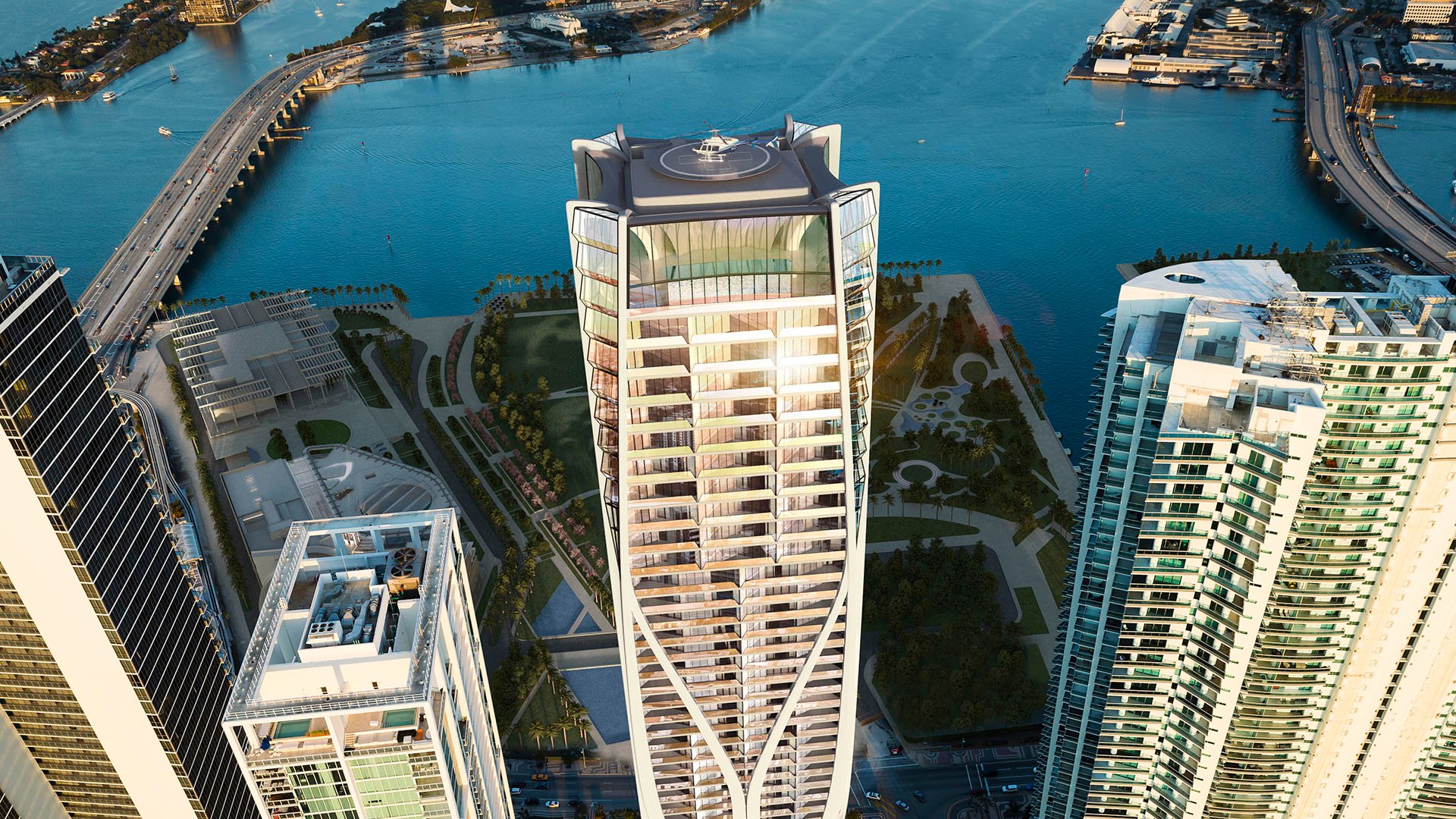
Atherton owners are accustomed to airport optionality. Palo Alto Airport is less than five miles away, while Hayward Executive, San Francisco International, and San Jose International are approximately 14, 15, and 16 miles away, respectively. The map looks compelling, yet each field serves a different mission. Palo Alto Airport's 2,443-foot runway limits aircraft flexibility, while private movements at San Francisco International share the region's principal commercial-airport environment.
Fort Lauderdale presents a different operating model. Rather than asking which nearby Bay Area airport offers the best compromise on a given day, buyers can build a repeatable plan around three South Florida gateways: Fort Lauderdale Executive Airport, Fort Lauderdale-Hollywood International Airport, and Opa-locka Executive Airport. Airport selection can follow aircraft size, international requirements, airline coordination, final destination, and the desired separation from passenger-terminal traffic.
The relevant luxury is not the shortest distance on a map, but the most repeatable arrival sequence.
For a second-home owner, that distinction matters. The residence, aircraft, ground transfer, provisioning team, and possibly a yacht must function as one itinerary. In Broward, aviation access is oriented around the coast, downtown, beaches, and marinas, making the airport decision unusually connected to the way a waterfront home is actually used.
Fort Lauderdale Executive Airport, or FXE, is a dedicated general-aviation airport without scheduled commercial airline traffic. It has two runways, multiple FBO choices, customs capability, and port-of-entry status. Its primary runway is approximately 6,002 feet, accommodating many business jets, although certain large heavy aircraft may face restrictions or require authorization.
The absence of airline service eliminates direct runway competition with scheduled commercial departures at FXE itself. It does not eliminate operational variability. Weather and regional air-traffic controls can still affect a trip, so buyers should not treat any airport as a guaranteed shortcut.
The more meaningful advantage is functional clarity. The estimated transfer from FXE to downtown is roughly 10 minutes, and the airport sits minutes from the coast. Subject to real-time road conditions, that proximity can make it the default gateway for many arrivals tied to Fort Lauderdale, Fort Lauderdale Beach, or a nearby marina. Buyers considering Auberge Beach Residences & Spa Fort Lauderdale or Four Seasons Hotel & Private Residences Fort Lauderdale should test the precise door-to-door journey rather than rely on a broad neighborhood estimate.
Fort Lauderdale-Hollywood International Airport, or FLL, complements FXE by combining airline and private operations. Private travelers use FBO facilities separate from the main passenger-terminal experience. The airport can be useful when a trip involves a heavy jet, an airline connection, or crew coordination that benefits from a commercial-airport setting. The estimated transfer to downtown is about 15 minutes, though actual timing should be tested under relevant traffic conditions.
Opa-locka Executive Airport, or OPF, offers a southern alternative. Its primary runway is approximately 8,002 feet and can accept aircraft up to the Global 7500 class without the restrictions cited for FXE. Its geography may also suit trips continuing toward Miami's resorts, nightlife, and business districts.
This network supports an aircraft-first decision rather than loyalty to a single field. FXE may offer the cleanest executive-airport pattern; FLL can support longer-runway and airline-connection needs; OPF can serve larger-aircraft missions and destinations farther south. An owner evaluating St. Regis® Residences Bahia Mar Fort Lauderdale can therefore establish a primary gateway and two deliberate alternatives instead of improvising after landing.
A polished sales-day transfer proves very little. A useful test compares identical travel windows, ideally on days that resemble the owner's actual pattern. If arrival is normally late Friday afternoon, test FXE, FLL, and the target residence during that period. Repeat the exercise in reverse during the expected departure window.
Measure the complete sequence: aircraft door to vehicle departure, airport exit, road transfer, property arrival, controlled-access entry, elevator journey, and the time required to make the residence fully usable. For a yachting household, continue the clock to the vessel or marina. A five-minute advantage on the road can disappear if handoffs at either end are cumbersome.
Keep aircraft type constant when comparing airports. A light or midsize jet may suit an FXE-centered plan that is inappropriate for a particular heavy-aircraft mission. International arrivals should also be tested against the intended customs process rather than a domestic itinerary. The objective is not to declare one airport universally faster. It is to identify the most reliable operating plan for the owner's aircraft, residence, and schedule.
Lock-and-leave should describe a verified procedure, not an architectural style. Branded residences may appeal to buyers seeking a managed ownership experience, but each buyer still needs to establish exactly what happens before arrival, during occupancy, and after departure. Building-specific policies and service scopes require direct confirmation.
Before purchasing, request a written walkthrough covering access permissions, guest and vendor entry, package handling, housekeeping coordination, climate monitoring, storm preparation, vehicle readiness, and emergency escalation. Determine who can enter the residence, who authorizes access, and how the owner receives confirmation that each task is complete. If the home supports yacht use, add marina coordination and luggage transfer to the review.
The same discipline applies beyond the beachfront. A buyer comparing an urban option such as Sixth & Rio Fort Lauderdale should run the same arrival drill used for a coastal property. This separates the appeal of the location from the quality of its operating sequence.
The Atherton comparison is not simply PAO versus FXE, or SFO versus FLL. It is a comparison between two networks and the compromises each mission demands. Fort Lauderdale's principal advantage is the ability to pair an executive airport without scheduled airline service with complementary longer-runway alternatives, then connect that choice to a coastal residence and marina-oriented lifestyle.
A prudent buyer should complete diligence with a primary airport, an aircraft-specific alternative, a tested peak transfer, and a documented home-opening protocol. When those four elements align, the property can function less like a distant asset and more like a prepared private base.
For discreet guidance on selecting and testing a South Florida residence, connect with MILLION.
If branded residences are on your mind — as a home or as an allocation — we would be glad to share what we are seeing, privately.
Begin a quiet conversationFXE is the clearest fit because it is dedicated to general aviation and has no scheduled commercial airline traffic.
The estimated transfer is roughly 10 minutes, although buyers should test their actual route during relevant traffic windows.
Its approximately 6,002-foot primary runway accommodates many business jets, but some of the largest heavy aircraft may face restrictions or authorization requirements.
FLL can be useful for heavy jets, airline connections, and crew coordination while providing private FBO facilities separate from passenger terminals.
OPF is a southern alternative with an approximately 8,002-foot primary runway and added flexibility for larger-aircraft missions or destinations closer to Miami.
No. Its lack of scheduled airline traffic removes direct airline runway competition at the airport, but weather and regional air-traffic controls can still affect operations.
They should test identical days and times, keep the aircraft mission consistent, and measure the entire trip from aircraft door to a fully usable residence.
It should verify access, vendor permissions, housekeeping, climate monitoring, storm preparation, vehicle readiness, package handling, and emergency escalation.
For yachting households, the relevant journey may continue beyond the residence, so luggage transfer and marina coordination can materially affect arrival friction.
The buyer should identify a primary airport, an aircraft-specific alternate, a tested peak transfer, and a documented home-opening protocol.