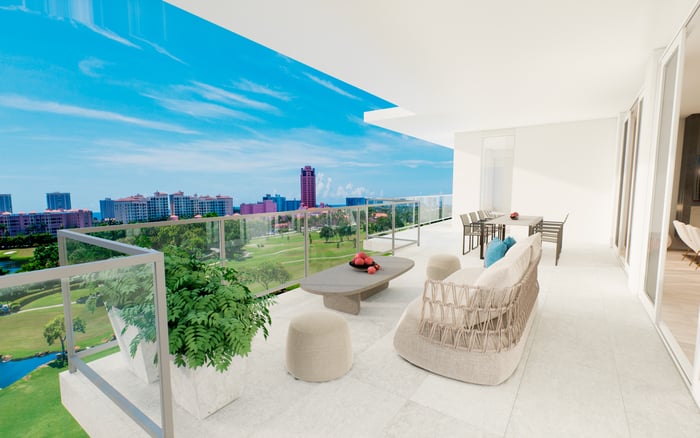
A discreet buyer’s guide to evaluating special-assessment culture before purchasing at Alina Residences Boca Raton, with questions for budgets, reserves, board communication, capital planning, and resale discipline.

For a luxury condominium buyer, the phrase special assessment can sound merely administrative. In practice, it is more revealing. It can show how a building plans, communicates, funds, prioritizes, and protects long-term value. Before buying at Alina Residences Boca Raton, the sharper question is not only whether a special assessment exists. It is whether the building’s culture treats assessments as rare, transparent, well-explained capital decisions, or as a recurring substitute for disciplined planning.
This is especially important in Boca Raton, where luxury buyers often value serenity as much as finish level. The best ownership experience is not simply a beautiful residence. It is a building where governance feels orderly, communications are prompt, and the cost of maintaining the asset is discussed with maturity rather than surprise. A buyer should approach the subject with tact, but also with precision.
A current budget can look composed while a building’s past tells a different story. Ask how many special assessments have been approved in recent years, what they addressed, how they were communicated, and whether they were paid in lump sums, installments, or another approved structure. The goal is not to penalize a building for investing in itself. The goal is to understand whether those investments were anticipated.
A well-run association may still approve a special assessment for a major improvement or an unexpected condition. What matters is the pattern. Were owners given context early? Was the scope clearly explained? Did the board connect the expense to asset preservation? Were alternatives discussed? A buyer can learn a great deal from the tone and sequencing of those answers.
In the context of Buyer's Guides, this is where a polished sales conversation should give way to document review. Minutes, budgets, reserve schedules, insurance line items, and owner communications often reveal more than a lobby tour ever could.
Reserve funding is not a glamorous subject, but it is central to luxury condominium life. Ask whether the association’s planning posture is conservative, reactive, or somewhere in between. Ask which categories are funded through regular assessments and which have historically required separate owner contributions. Ask whether upcoming capital needs are already reflected in the budget conversation.
This is not about demanding that monthly charges remain artificially low. In many premium buildings, owners understand that quality requires funding. The more relevant question is whether recurring dues are aligned with the level of service, maintenance, staffing, and future replacement obligations owners expect. Low monthly charges can appeal at first glance, but if they mask deferred work, they can become expensive later.
For Pricing & Trends analysis, assessment culture can influence how buyers interpret value. Two residences with similar asking prices may carry different risk profiles if one building communicates capital needs clearly and the other leaves owners guessing.
Special-assessment culture is also communication culture. Ask how owners are typically notified of major financial decisions. Are notices concise and legalistic, or do they explain the reason, timing, scope, and expected impact? Are meetings well attended? Are questions encouraged? Is there a history of owners receiving information before a vote rather than after momentum has already formed?
Luxury buyers should listen for specifics. A confident answer might describe a disciplined cadence: preliminary discussion, board review, professional input where appropriate, owner notice, vote, and follow-up. A vague answer may still be harmless, but it should prompt deeper review. In high-end living, uncertainty is rarely the amenity anyone intended to buy.
This is also where buyer representation matters. The right questions are neutral, not adversarial. They should signal that the buyer respects the building while also expecting serious stewardship.
A buyer considering Alina Residences Boca Raton may also be looking at other Boca Raton options, including Glass House Boca Raton, Mr. C Residences Boca Raton, or The Residences at Mandarin Oriental Boca Raton. The comparison should not stop at architecture, services, or brand atmosphere. It should also include the financial personality of each ownership structure.
Ask the same questions across the set. How are reserves framed? How do budgets evolve? What is the appetite for proactive improvement? How does the association or governing structure explain major costs? Does the building’s culture favor preserving the asset even when it requires difficult conversations?
This is not a search for the lowest possible monthly figure. In the ultra-premium market, the stronger asset is often the one with the clearer philosophy. Buyers who understand this distinction tend to evaluate condominium living less emotionally and more strategically.
Not every special assessment carries the same meaning. One may fund a thoughtfully planned enhancement that improves the ownership experience. Another may address a problem that should have been anticipated sooner. Ask whether past or proposed assessments were tied to planned modernization, compliance, insurance-related requirements, deferred maintenance, service upgrades, or other building needs.
The language matters. If every assessment is described as unexpected, ask why. If every cost is framed as urgent, ask what the long-range plan looks like. A mature building culture can acknowledge complexity without sounding surprised by ownership itself.
For a Resale buyer, this question can be particularly important. A residence may show beautifully, but the association’s record can affect negotiation strategy, buyer confidence, and the willingness of future purchasers to proceed without hesitation.
Before writing an offer, ask whether any discussions, studies, projects, or budget pressures could lead to a future special assessment. The answer may not be definitive, and that is acceptable. The point is to identify whether known topics are already under review. A forthcoming project is not necessarily negative. A lack of clarity around forthcoming projects is more concerning.
Buyers should also ask how pending or recently completed work is reflected in the seller’s obligations. If a special assessment has been approved, determine who is responsible for unpaid installments and how that is documented in the contract. If a special assessment has been discussed but not approved, consider how that uncertainty should be handled during negotiations.
This is where luxury discipline becomes practical. The most elegant transaction is the one in which financial expectations are settled before closing, not debated afterward.
The cost of a special assessment is important, but culture determines whether that cost feels like responsible ownership or unwelcome surprise. Ask whether owners generally support reinvestment. Ask whether board leadership appears stable. Ask whether the building is comfortable discussing maintenance before it becomes visible. Ask whether the tone around money is defensive or transparent.
Special-assessment culture is ultimately a proxy for trust. In a strong building, owners may not always enjoy paying more, but they understand why capital decisions are made. In a weaker culture, even modest expenses can create suspicion because the communication does not inspire confidence.
For buyers at Alina Residences Boca Raton, this lens can sharpen the entire due diligence process. It turns the conversation from “What will this cost me?” into “How is this asset being cared for?” That is the question that better reflects the way luxury real estate should be owned.
What is a special assessment in a condominium? It is an additional owner charge approved for a specific need beyond regular dues, often tied to capital work, repairs, or other association obligations.
Should a special assessment automatically discourage a buyer? No. The reason, planning history, communication quality, and long-term benefit matter more than the mere existence of an assessment.
What should I ask first at Alina Residences Boca Raton? Ask whether any special assessments are current, approved, pending, or under discussion, then request the documents that explain them.
Why does assessment history matter? A recurring pattern may suggest that regular budgeting has not fully anticipated capital needs, while a clear one-time assessment may be easier to understand.
How should reserves factor into my decision? Reserves help reveal whether the building is planning for future obligations or relying more heavily on future owner contributions.
Can special assessments affect negotiation? Yes. Approved or likely assessments can influence price, credits, closing terms, and the allocation of unpaid installments.
Is a lower monthly condo fee always better? Not necessarily. A lower monthly figure can be appealing, but it should be evaluated alongside reserves, maintenance planning, and future costs.
What documents should I review? Review budgets, meeting minutes, reserve information, owner notices, financial statements, and any materials related to approved or discussed projects.
How does this differ for New-construction ownership? New-construction buyers should still ask how future maintenance, reserves, warranties, and governance transitions are expected to be handled.
What is the best way to shortlist comparable options for touring? Start with location fit, delivery status, and daily lifestyle priorities, then compare stacks and elevations to validate views and privacy.
When you're ready to tour or underwrite the options, connect with MILLION.
If branded residences are on your mind — as a home or as an allocation — we would be glad to share what we are seeing, privately.
Begin a quiet conversation