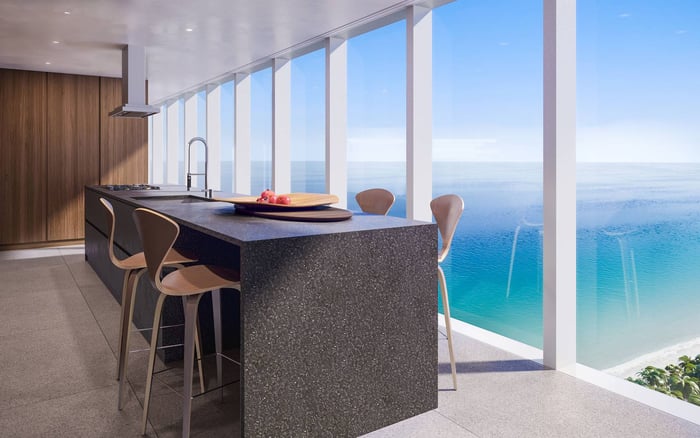
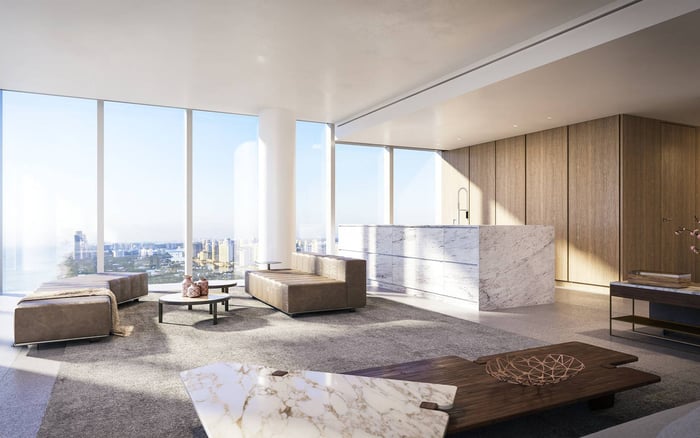
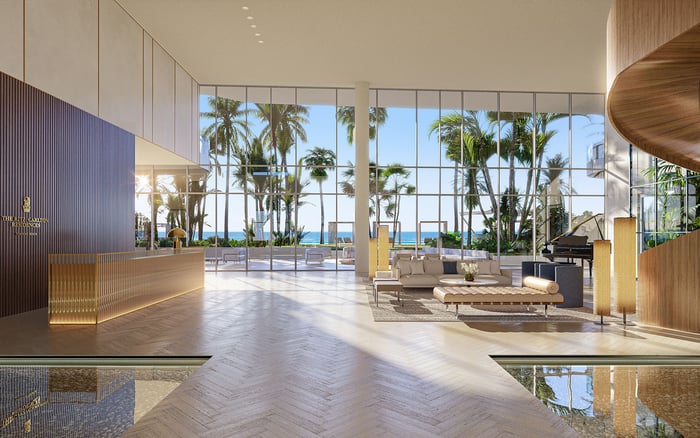
A discreet buyer’s guide to evaluating impact-glass specifications in Hallandale Beach luxury real estate, including approvals, installation quality, frames, balcony systems, acoustics, privacy, maintenance, and resale considerations.
In Hallandale Beach luxury real estate, glass is not simply a design gesture. It is the architectural membrane between ocean light, coastal weather, balcony living, interior quiet, and the owner’s long-term cost of care. A residence may present as impeccably finished, but the specifications behind its windows, sliders, curtain wall, and balcony doors deserve the same scrutiny as the kitchen, primary suite, parking, and amenities.
For buyers considering oceanfront condominiums, boutique waterfront buildings, or private club environments, impact-glass diligence should begin before contract, not after inspection. A graceful wall of glass can shape the entire experience of a home, from sunrise glare to evening privacy, from air-conditioning efficiency to how quietly the residence lives on a windy afternoon. In a market where views are central to value, the quality of the glazing system is part of the asset.
This buyer’s-guide approach is intentionally practical. It is not about memorizing technical jargon. It is about asking precise questions, requesting the right documentation, and understanding whether the glass system matches the caliber of residence you are buying.
Begin with the paperwork. Ask the seller, developer, association, or sales team for the product approvals, specifications, and window schedule for the actual residence or building line you are evaluating. Even the most polished sales presentation is not a substitute for knowing which glass and frame systems are installed.
You want to understand the glazing makeup, the manufacturer or system provider, the applicable approvals, and whether different elevations or openings use different assemblies. In a corner residence, for example, the fixed glass, operable windows, balcony sliders, and service openings may not all be identical. The question is not only, “Is it impact glass?” The better question is, “Which impact-glass system is installed in each opening, and how is it documented?”
For a buyer comparing 2000 Ocean Hallandale Beach with other coastal residences, the conversation should be grounded in documentation, not assumption. Ask for specifications in writing and have your inspector, architect, or construction advisor review them as part of due diligence.
A luxury residence can have excellent glass in one area and less compelling performance elsewhere. Ask whether all exterior openings are impact-rated, including sliding glass doors, fixed panels, bedroom windows, balcony doors, terrace access points, and any secondary openings near service areas.
The building envelope works as a complete system. Frames, anchors, seals, thresholds, drainage paths, and installation details all matter. A premium pane of glass can underperform if the frame is not appropriate or the installation was poorly executed. Buyers should ask whether the glass was installed as part of original construction, a building-wide replacement program, or a unit-level improvement. Each scenario raises different diligence questions.
In Hallandale, where new development and established condominium inventory can sit near one another in the same buyer search, this distinction is meaningful. A residence may be renovated beautifully inside while its exterior glass system remains from an earlier era, or it may have received upgrades that should be verified with permits, invoices, and association approvals.
Balcony doors often reveal the difference between a merely acceptable specification and a truly refined one. Ask how the sliders operate, how they seal, whether tracks are clean and properly aligned, and whether drainage details appear well maintained. Large glass doors should feel substantial without feeling stubborn. They should close with confidence, lock cleanly, and avoid excessive rattle.
Buyers touring Shell Bay by Auberge Hallandale or any other high-end Hallandale Beach residence should treat terrace transitions as a major part of the inspection experience. Open and close the doors yourself. Stand quietly near the glass. Listen for exterior noise. Feel for drafts. Observe whether glare, tint, and reflection affect the room in a way that enhances or compromises daily living.
A terrace may photograph beautifully, but the door system is what makes it usable. If the threshold is awkward, the rollers worn, or the seals tired, the luxury experience diminishes quickly.
Impact glass is often discussed in terms of protection, but for luxury buyers, comfort is equally important. Ask how the glass performs acoustically, particularly if the residence faces busy corridors, beach activity, marina movement, bridges, or amenity decks. Two residences with similar views can live very differently depending on the glazing system.
Tint and reflectivity also deserve careful review. A darker tint may reduce glare, but it can alter the purity of water views. A clearer system may preserve color and brightness, but buyers should test the space at different times of day when possible. In South Florida, morning and afternoon light can change a room dramatically.
Privacy is another subtle factor. Ask how visible the interiors are from adjacent balconies, neighboring towers, amenity terraces, and the beachfront. The most successful glass specification balances openness with discretion. It allows the residence to feel expansive without making the owner feel exposed.
Documentation should not stop at product approvals. Ask for available installation records, permits, warranties, association correspondence, and any service history related to leaks, seal failure, hardware replacement, roller repair, or water intrusion. In a resale, this can be especially revealing.
A building with strong maintenance practices may have a clear record of inspections and repairs. A less organized ownership structure may leave the buyer piecing together information from prior owners, managers, and contractors. Ask whether glass, frames, and sliding doors are considered unit owner responsibility, association responsibility, or a combination. This affects future cost, timing, and approval requirements.
When comparing Hallandale Beach with nearby coastal markets, buyers may also look at residences such as Bentley Residences Sunny Isles or Auberge Beach Residences & Spa Fort Lauderdale. The same principle applies across the coastline: the elegance of glass should be supported by clear ownership obligations and a realistic understanding of maintenance.
Impact-glass specifications can influence value in several ways. They affect perceived quality, inspection outcomes, renovation scope, comfort, and buyer confidence. If the glass system is older, inconsistent, poorly documented, or costly to maintain, it may become a negotiation point. If it is well documented, well maintained, and consistent throughout the residence, it can support a stronger ownership narrative.
Ask your advisor to separate cosmetic upgrades from building-envelope quality. New flooring, lighting, millwork, and furniture are immediately visible. Glass performance is quieter, but often more consequential. A buyer who understands the envelope can negotiate with more confidence and avoid being distracted by staging.
In the upper tier of Hallandale Beach, the best residences tend to feel calm, quiet, bright, and secure. Impact glass is a large part of that feeling. It should be evaluated with the same discipline as view corridors, ceiling heights, parking, private elevator access, and amenity programming.
Before making an offer, ask for the full specification package and then walk the residence with a disciplined checklist. Which openings are impact-rated? Are product approvals available? Are the frames original or upgraded? Were any replacements permitted? Who maintains the glass and hardware? Are there known leaks or warranty claims? Do the sliders operate smoothly? How does the residence sound with all doors closed? Does tint enhance or dull the view? Are future replacements subject to association standards?
These questions are not adversarial. They are the normal vocabulary of an informed luxury buyer. In Hallandale, where glass is central to the architecture of coastal living, the answers can clarify whether a residence merely looks polished or is truly built for ownership.
Is all impact glass the same? No. Buyers should compare the documented glass system, frame type, installation quality, and how each opening is specified.
Should I ask for product approvals before making an offer? Yes. Requesting documentation early helps your advisor evaluate the residence before inspection deadlines become compressed.
Do balcony sliders matter as much as windows? Yes. Sliders are central to terrace living and should be checked for sealing, alignment, locking, drainage, and ease of use.
Can a renovated condo still have older glass? Yes. Interior renovation does not automatically mean the exterior glass system has been upgraded or uniformly replaced.
Who usually maintains impact glass in a condominium? Responsibility can vary by building documents, so buyers should confirm whether the owner, association, or both are responsible.
Should I test the residence for exterior noise? Yes. Stand quietly near the glass with doors closed and listen from bedrooms, living areas, and terrace access points.
Does tint affect resale appeal? It can. Tint influences brightness, privacy, glare, and the perceived clarity of water or skyline views.
Are permits important for replacement windows or doors? Yes. Permits and association approvals help establish that replacements were completed through proper channels.
Can impact glass reduce future ownership concerns? Strong documentation and maintenance can improve buyer confidence, though every system still requires care over time.
What is the smartest first question to ask? Ask for the exact window and door schedule, including approvals, glazing makeup, frame system, and responsibility for maintenance.
For a confidential assessment and a building-by-building shortlist, connect with MILLION.
If branded residences are on your mind — as a home or as an allocation — we would be glad to share what we are seeing, privately.
Begin a quiet conversation