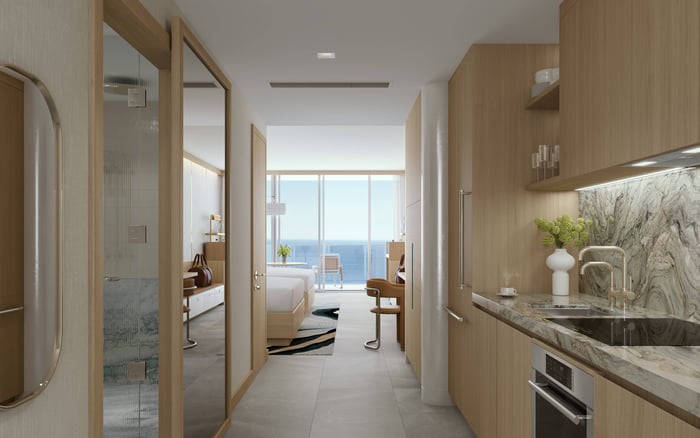
A refined wellness package should be judged by access, staffing, operating rules, costs, and emergency practicality, not simply by the scale of its pool deck or spa.

Wellness amenities can add meaningful convenience to a Pompano Beach condominium, but a brochure does not establish how those features will operate after move-in, what they will cost, or how convenient they will be from a particular residence.
Treat wellness as an operating system rather than a collection of photogenic rooms. Before making an offer, examine exclusivity, circulation, staffing, programming, fees, and healthcare access with the same care applied to views, finishes, and floor plans.
Establish who may use each pool, spa, fitness room, sauna, cabana, and treatment area. In a hospitality-oriented property, some facilities may be shared while others may be reserved for residents. Request a written breakdown of access rights, guest limits, operating hours, reservation procedures, blackout periods, and usage charges.
For branded properties such as W Pompano Beach Hotel & Residences, buyers should verify which spaces owners and their guests may use, when access is available, and whether separate charges apply.
Convenience is personal. Review the route from the contemplated residence to the fitness center, pool, spa, changing areas, and elevators. Consider whether using wet amenities requires crossing formal common areas, changing floors, or taking a less direct path.
Study floor plans and circulation diagrams, and walk the route when access is available. A visually impressive amenity may receive less everyday use if reaching it is inconvenient or compromises privacy.
A treatment room is not necessarily a staffed spa, and fitness programming may range from occasional classes to a structured calendar. Ask who provides treatments, whether practitioners are on-site, how far in advance appointments must be booked, and whether outside providers are permitted. Request the applicable menus and fee schedules.
At Waldorf Astoria Residences Pompano Beach, buyers should distinguish between the facilities represented in marketing materials and the services, access rights, and charges established in the governing and purchase documents.
Do not evaluate access to hospitals, emergency rooms, urgent-care centers, pharmacies, laboratories, or specialists by straight-line distance alone. Drive the likely routes under normal conditions and during peak beach traffic, then consider alternatives for weekends, seasonal congestion, and roadway delays relevant to the property.
The appropriate medical map depends on the household. Record travel times from the building entrance and consider whether parking or valet procedures could affect departure time. Confirm locations and operating details directly before relying on them.
Ask management or the sales team where AEDs are located, who is trained to use them, and which emergency-response procedures apply at the pool, spa, fitness center, garage, and residence levels. Confirm how emergency personnel gain access after hours and whether the elevator configuration can accommodate emergency needs.
A medical-concierge arrangement, if offered, should be defined in writing and should not be treated as a substitute for emergency services. At The Ritz-Carlton Residences® Pompano Beach, due diligence should clarify which wellness facilities apply to the contemplated residence, which may be shared, and which remain planned rather than delivered.
For a Pre-Construction purchase, confirm promised amenities in the purchase agreement and offering documents rather than relying solely on renderings. Review the proposed operating budget and condominium fees, and identify the assumptions covering labor, maintenance, towel service, cabanas, valet, and programming.
Ask whether classes, treatments, guest access, cabanas, or reservations carry separate fees. Also consider whether operating hours and services may change. A focused final review should reconcile the marketing plan, governing documents, budget, fee schedules, access rules, emergency procedures, and personally tested medical routes.
Should buyers prioritize pool-deck size? No. Access, privacy, staffing, programming, operating rules, and costs may be more useful measures of everyday value.
What does resident-only access change? It may affect crowding, privacy, reservation availability, guest use, and the consistency of the experience.
Are spa treatments included in condominium assessments? Buyers should not assume they are. Request written confirmation of treatment, class, cabana, towel-service, reservation, and guest fees.
How should medical proximity be tested? Drive relevant routes during normal and peak beach traffic, beginning at the building entrance rather than a general neighborhood location.
What should buyers ask about fitness programming? Confirm the schedule, instructors, capacity, reservation rules, personal-training options, and separate charges.
Why does amenity circulation matter? An indirect or exposed route between the residence, changing area, spa, and pool can reduce convenience and privacy.
Which emergency features deserve review? Ask about AED locations, staff training, response protocols, after-hours access, and elevator configuration.
How should hotel-branded amenities be evaluated? Separate residence-exclusive facilities from shared spaces, then verify hours, guest policies, reservations, and fees in writing.
What belongs in a Pre-Construction contract review? Confirm which wellness amenities appear in the controlling documents and identify any components that remain planned.
What budget questions matter most? Determine how staffing, maintenance, programming, towels, spa operations, and hospitality services are funded.
For a confidential assessment and a building-by-building shortlist, connect with MILLION.
If branded residences are on your mind — as a home or as an allocation — we would be glad to share what we are seeing, privately.
Begin a quiet conversation