A buyer-focused guide to evaluating privacy at The Cove Residences Edgewater through sightline discipline, elevator strategy, amenity circulation, and long-term livability.
Waterfront living in Edgewater is often framed through views, natural light, and proximity to Biscayne Bay. For a discerning buyer, the more important question is quieter: how private will the residence feel on an ordinary Tuesday morning, during a full amenity day, or as the surrounding skyline continues to mature?
That is the proper lens for evaluating The Cove Residences Edgewater. The value conversation should not stop at water exposure. It should account for how the home is positioned, what neighboring buildings can see, how residents move from arrival to elevator to front door, and whether amenities are planned to preserve calm rather than create cross-traffic.
In Edgewater, the premium is not simply waterfront. It is controlled waterfront living, where views, access, and privacy work in concert. Buyers using the shorthand Cove Miami in their searches should look beyond the name and treat the purchase as a study in spatial discretion.
Sightline analysis begins inside the residence, not with the marketing view. Stand where daily life actually happens: the primary bedroom, the kitchen island, the living room seating wall, the terrace threshold, and the shower if exterior glazing is nearby. Ask what can be seen from those positions and, just as important, who can see back.
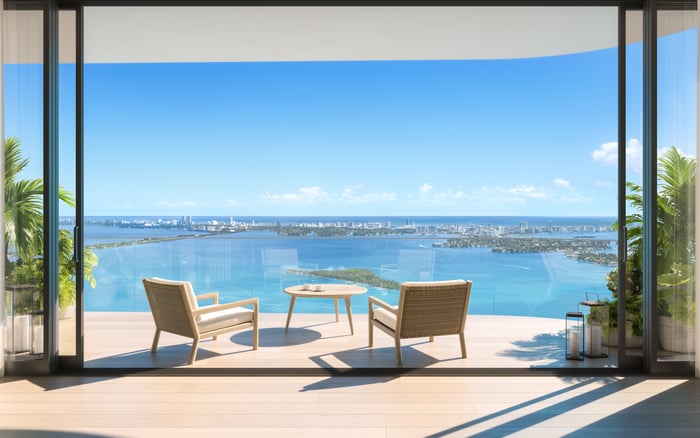
Waterview is not a single category. A residence may look toward open bay, across neighboring waterfront parcels, over a low-rise foreground, or into a corridor of future vertical development. Each orientation creates a different privacy profile. A direct bay-facing perspective can feel expansive, while an angled water view may still be valuable if it reduces exposure to nearby windows.
Balcony depth and railing design also matter. A terrace can function as a private outdoor room or read as a visible ledge, depending on how it aligns with adjacent towers. Buyers should consider whether outdoor furniture can be arranged away from direct view corridors and whether the terrace feels usable in the morning, at sunset, and after dark.
The most effective review is practical. Visit at different times if possible. Study floor plans with the same care given to finishes. Ask where neighboring towers sit in relation to bedrooms, terraces, amenity decks, and pool areas. A beautiful view is only part of the equation; the better question is whether that view allows the home to feel composed.
In luxury condominiums, privacy often begins before the residence itself. The elevator sequence determines how much of the building a resident must share, how directly guests are routed, and whether daily life feels hotel-like, private-club-like, or distinctly residential.
Buyers should ask direct questions. Is access private or shared? How are guests, residents, staff, deliveries, and service providers separated? Does the elevator open into a private vestibule, a shared corridor, or a more public threshold? How are amenity levels accessed, and can residents move between home and amenity spaces without passing through overly active zones?
These questions are not cosmetic. They shape daily rhythm. A discreet arrival sequence can make a full-service building feel personal. A less considered sequence can make even a large residence feel exposed, particularly on high-demand weekends or during peak social hours.
When comparing Edgewater options such as EDITION Edgewater and Villa Miami, the elevator conversation should be as central as the view conversation. The best building for one buyer may be the one that creates the least friction between private life and shared services.
Amenities are most successful when they feel close when desired and invisible when not. That balance is especially important in a waterfront setting, where pools, lounges, fitness areas, wellness spaces, and outdoor terraces may occupy some of the building’s most desirable areas.
The key is flow. Buyers should understand how residents reach amenity areas, where guests are checked in, how pool access is controlled, and whether amenity traffic passes near residential elevator banks or private corridors. A building can offer impressive shared spaces, yet the premium experience depends on whether those spaces are organized with restraint.
Sound and movement deserve equal attention. A pool deck may be visually stunning, but its relationship to nearby residences can affect privacy. A fitness or wellness area may be convenient, but convenience should not create unnecessary traffic outside homes. In a high-design tower, amenity planning should feel intentional rather than theatrical.
New-construction buyers should review amenity placement in relation to their preferred stack. The question is not merely whether a residence is near an amenity, but whether that proximity supports the way the buyer intends to live. For some, immediate access is a benefit. For others, distance from the social core is the greater luxury.
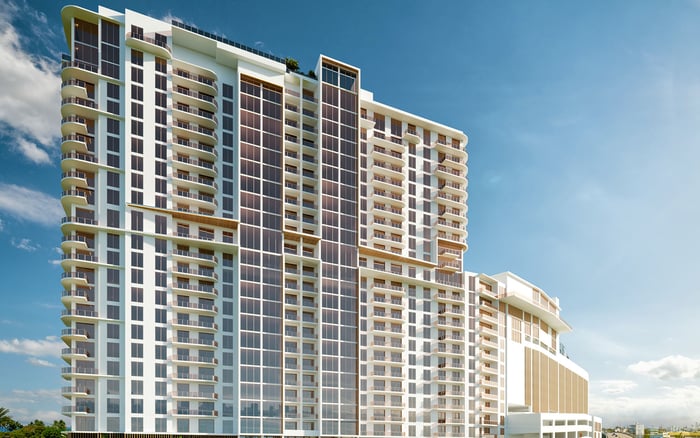
Edgewater is not a uniform market. It includes residences with different exposures, tower placements, arrival experiences, and relationships to Biscayne Bay. A buyer evaluating Aria Reserve Miami alongside The Cove Residences Edgewater should compare not only floor area and views, but the full privacy choreography.
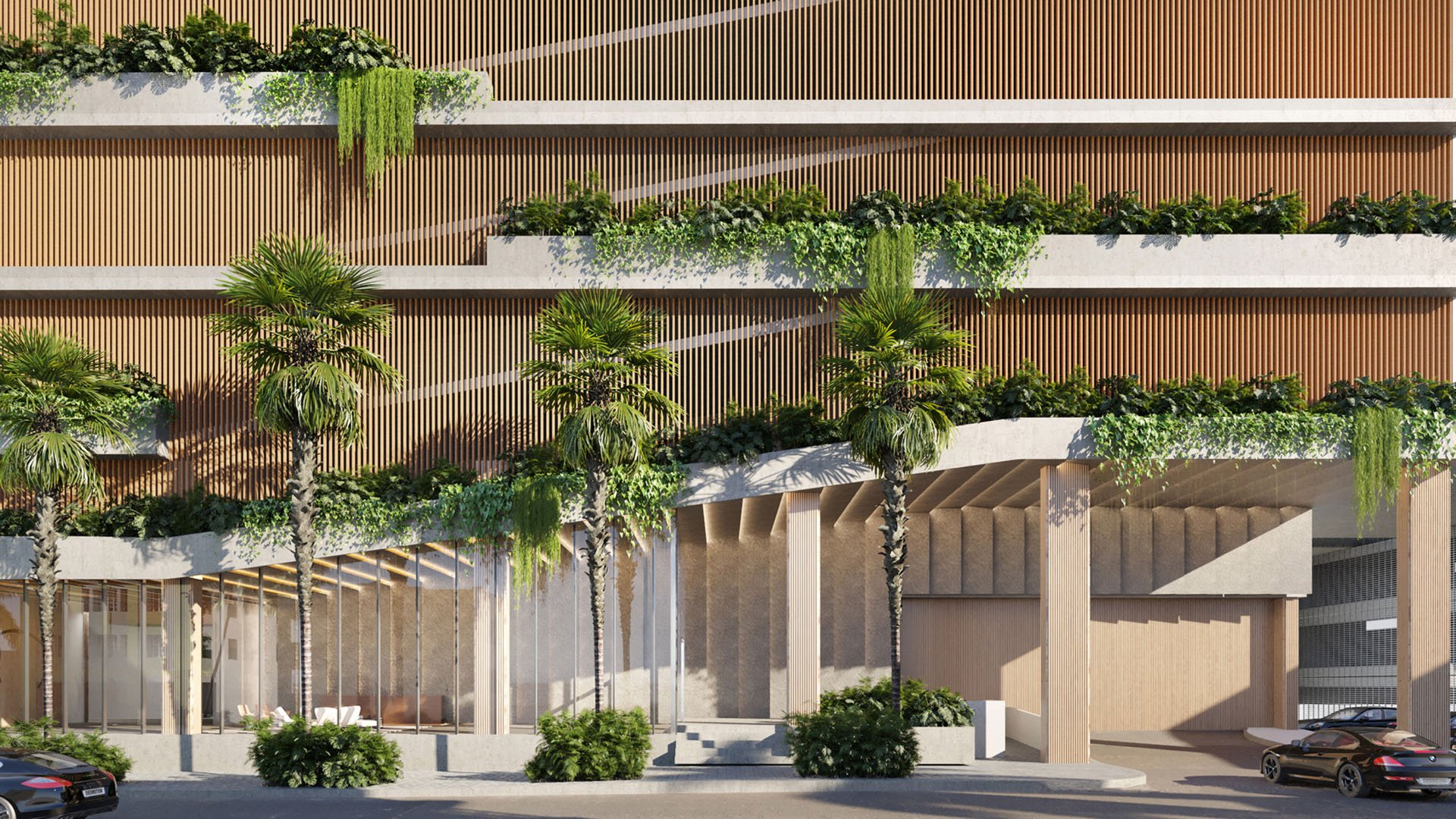
That choreography includes the approach from the street, lobby visibility, elevator routing, corridor design, terrace usability, and the separation between home and amenity life. It also includes how a residence may perform at night, when illuminated interiors can become more visible from surrounding buildings.
For buyers who prioritize discretion, the strongest choice may not always be the most dramatic view. It may be the residence with the best angle, the calmest arrival, the fewest directly facing windows, or the stack that sits outside the most active amenity sightlines. Privacy is cumulative. It is rarely one feature, and it is almost never captured by a single rendering.
A polished presentation can make every residence feel serene. Serious buyers should slow the process down and ask questions that reveal how the building will function once occupied.
Request the latest floor plan for the specific residence under consideration. Review the stacking plan, the position of elevator cores, and the relationship between private interiors and shared amenities. Ask how service access is handled. Ask whether guest circulation is distinct from resident circulation. Ask what can be seen from the terrace, and what can be seen into it.
The goal is not to find a residence with no exposure at all. Urban waterfront living always involves some relationship to neighbors, boats, streets, and skyline. The goal is to understand the exposure and decide whether it aligns with your threshold for privacy.
A well-chosen Edgewater residence should feel open to the bay and guarded from the unnecessary. That is the rare balance sophisticated buyers seek: light without display, amenities without intrusion, and access without spectacle.
What does waterfront privacy mean at The Cove Residences Edgewater? It means evaluating views, neighboring sightlines, elevator access, amenity traffic, and terrace usability together rather than judging privacy by water exposure alone.
Is a direct water view always the most private option? Not always. An angled water view can sometimes reduce direct exposure from neighboring towers while still preserving a strong connection to the bay.
Why are elevator layouts important for privacy? Elevators shape how residents, guests, staff, and service providers move through the building. A more discreet sequence can make daily life feel calmer and more private.
Should buyers study amenity locations before choosing a residence? Yes. Amenity placement can affect sound, movement, visibility, and the feeling of separation between private homes and shared social spaces.
How should a buyer evaluate balcony privacy? Consider the terrace angle, neighboring windows, railing condition, furniture placement, and whether the outdoor space feels comfortable at different times of day.
Do higher floors automatically provide better privacy? Higher floors may improve exposure in some cases, but orientation, adjacent towers, and amenity relationships can be just as important.
What should buyers ask about guest access? Ask how guests are received, which elevators they use, and whether their path overlaps with private residential corridors or amenity routes.
How does Edgewater differ from more resort-style waterfront markets? Edgewater is an urban waterfront setting, so privacy depends on intelligent tower placement, controlled circulation, and careful view analysis.
Can amenities reduce a building’s privacy? They can if traffic, sound, or visibility is not well managed. The best amenity flow gives residents access without making shared spaces feel intrusive.
What is the most important takeaway for Cove Miami buyers? Treat privacy as a layered decision involving sightlines, elevators, amenity flow, and personal living habits rather than a single feature.
For a tailored shortlist and next-step guidance, connect with MILLION.
If branded residences are on your mind — as a home or as an allocation — we would be glad to share what we are seeing, privately.
Begin a quiet conversation